
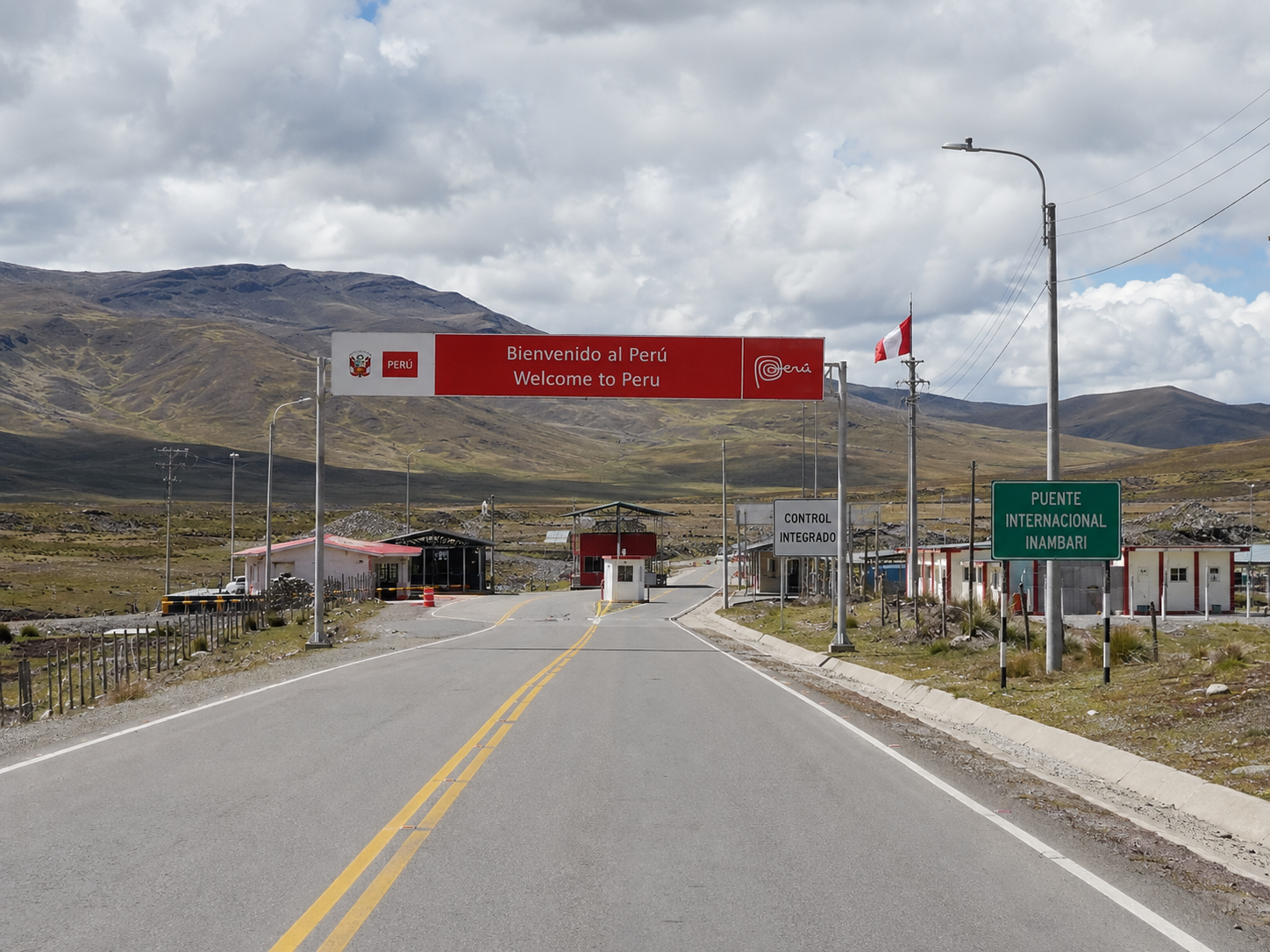


Peru is one of South America’s most compelling countries. You’ve got Lima, the Sacred Valley of the Incas, Machu Picchu, the Andes, the Amazon, a desert coast, and major altitude swings between regions. Traveling to Peru with a dog is possible, but it does require solid paperwork preparation before you go.
When you travel to Peru with a dog, you’re dealing with two things: entry into Peru and the return home. Entry rules are set by the Peruvian veterinary authority SENASA. The return is governed by the rules of the country the dog goes back to after Peru.
This article covers ordinary, non-commercial travel where a dog accompanies its owner or an authorized person. If a dog travels as cargo, for sale, for a change of ownership, or travels unaccompanied on a different itinerary, different rules may apply.
Quick overview
To enter Peru with a dog, you mainly need:
- an international health certificate issued by the official veterinary authority of the country of departure,
- valid vaccinations including rabies,
- confirmation of the dog’s health status,
- treatment against internal and external parasites,
- a document check and a clinical inspection of the dog on arrival in Peru.
For the trip home, the rules of the country you’re entering apply. If a dog is returning from Peru to the EU, you should expect a rabies antibody titer test — a blood test that verifies antibody levels after vaccination — because Peru is not on the EU’s list of countries for which this requirement is waived.
Entry conditions and documents
Peru requires the original international health certificate for dogs, issued by the official veterinary authority of the country of departure. This certificate must include information on vaccinations, the dog’s health status, and parasite treatments.
On entry to Peru, you’ll mainly present:
- owner and dog details,
- the original international health certificate,
- the dog’s valid vaccinations,
- proof of rabies vaccination,
- proof of deworming and treatment against external parasites,
- confirmation of the dog’s health status,
- proof of payment for the entry inspection fee, if required on arrival.
The international health certificate must be issued or endorsed by the competent veterinary authority of the country from which the dog is traveling to Peru. A regular vaccination booklet without official endorsement is not enough.
Interested in this destination? Would you like to visit it with your dog? Check the entry requirements directly in BorderCooler®.
Rabies vaccination and other vaccines
Your dog must have a valid rabies vaccination. SENASA states that rabies vaccination is mandatory for dogs and cats from 3 months of age.
For dogs, the certificate should also list other valid vaccinations. Peruvian rules specifically mention parvovirus, distemper, infectious hepatitis, leptospirosis, and rabies.
Before you travel, check with your vet that these vaccinations are up to date and correctly recorded in the documents.
Health statement and parasite treatment
Part of the entry requirements is a statement about the dog’s health status. The certificate must confirm that the dog is clinically healthy and shows no signs of infectious or parasitic disease.
The dog must be treated against internal and external parasites. SENASA notes that deworming and external parasite treatment should be carried out within the 30 days before travel.
This is not the same regime as the familiar 24–120-hour echinococcus treatment required for some European countries. For Peru it’s a general confirmation of parasite control, as required by SENASA.
Inspections on arrival in Peru
On arrival in Peru, present your documents to SENASA at the point of entry. This is typically Jorge Chávez International Airport in Lima, another international airport terminal, or a land border crossing.
SENASA will check your documents and then perform a clinical inspection of the dog to ensure it shows no signs of infectious, contagious, or parasitic disease.
For a straightforward trip with a dog, keep your documents handy so they’re easy to present right after landing or at the border.
Returning home from Peru
When returning a dog from Peru, it’s not Peru that decides — it’s the country you’re entering. Check in advance which documents your dog will need to return home.
The country of return may require, for example:
- a new veterinary health certificate,
- a valid rabies vaccination,
- microchip identification,
- import documentation,
- entry through a designated control point,
- a rabies antibody titer test, if required by the return country’s rules.
If you’re leaving Peru with your dog for another country, SENASA issues the exit certificate according to the destination country’s requirements. For returns, always check the rules of the specific country the dog is traveling to from Peru.
Returning with a dog from Peru to the EU
If a dog is returning from Peru to the EU, that’s an entry into the Union from a non-EU country. Peru is not on the EU list of countries for which the rabies antibody titer test is waived.
For a return from Peru to the EU, a dog will need, in particular:
- a microchip,
- a valid rabies vaccination,
- a rabies antibody titer test,
- an EU Pet Passport or the relevant veterinary health certificate for entry to the EU,
- a declaration of non-commercial travel, if using a veterinary health certificate,
- entry via an approved point of entry for travelers with pets.
If a dog normally lives in the EU, is traveling to Peru, and will return with an EU Pet Passport, arrange the titer test before leaving the EU and have the result entered in the passport. As long as the dog then keeps its rabies vaccination continuously valid, you’ll make the return to the EU much simpler.
If the test is missing and the dog is already in Peru, the return to the EU can become complicated. The test must follow a valid rabies vaccination, the sample must be analyzed in an approved laboratory, and if the test is done in Peru the dog cannot enter the EU earlier than three months after the blood draw.
Practical rules for staying in Peru with a dog
Peru is a large and geographically diverse country. Staying with a dog in Lima, in the Andes, on the coast, or in the Amazon can feel completely different.
In big cities you’ll find more veterinarians, pet shops, and places to stay that are used to hosting dogs. At the same time, expect heavy traffic, busy streets, and that indoor access with a dog is not guaranteed everywhere.
Always confirm accommodation directly. The “pet-friendly” filter in a booking system isn’t enough. Check size limits, any fees, whether your dog may be left alone in the room, and the rules for shared areas.
For domestic travel, check the rules with each specific carrier. Peru involves long distances, mountain routes, and big altitude differences. Policies for dogs can vary widely between buses, flights, and rental cars.
In the Andes, factor in altitude. Cusco, for example, sits around 3,400 m above sea level, and acclimatization usually takes dogs one to two days. A dog may react to altitude with fatigue, a reduced appetite, or struggling more with exertion. Plan your program gradually and watch your dog when moving into high-elevation areas.
In some areas you may encounter stray dogs. Most situations are uneventful, but keep your dog under control and don’t let it run up to unfamiliar animals. Before the trip, talk to your vet about protection against parasites, ticks, fleas, and insect-borne diseases. In some parts of Peru, especially warmer, tropical, or endemic regions, it’s worth considering prevention against leishmaniasis, which is transmitted by tiny biting sandflies.
When to start preparing
For a trip to Peru with a dog, start preparing in good time. First confirm which international health certificate your country’s veterinary authority will issue or endorse. Then check vaccinations, the health statement, parasite treatments, and carrier rules.
In practice, prepare above all:
- rabies vaccination and other required vaccinations,
- confirmation of the dog’s health status,
- treatment against internal and external parasites,
- an international health certificate,
- carrier rules,
- return-home rules.
If the dog will return to the EU after a stay in Peru, arrange the titer test well in advance. The blood sample can be taken no earlier than 30 days after rabies vaccination, and if the test is done in Peru the dog cannot enter the EU sooner than three months after the blood draw. The most practical solution is to do the test before leaving the EU.
Summary
Traveling to Peru with a dog is possible, but it requires getting the paperwork in order before departure. Your dog needs an international health certificate issued by the official veterinary authority of the country of departure, valid vaccinations, confirmation of good health, and treatment against both internal and external parasites.
On arrival in Peru, SENASA checks the documents and performs a clinical inspection of the dog. For the return trip, the rules of the destination country apply.
If a dog is returning from Peru to the EU, a titer test is required. The most practical approach is to arrange it before leaving the EU and have the result recorded in the EU Pet Passport.