
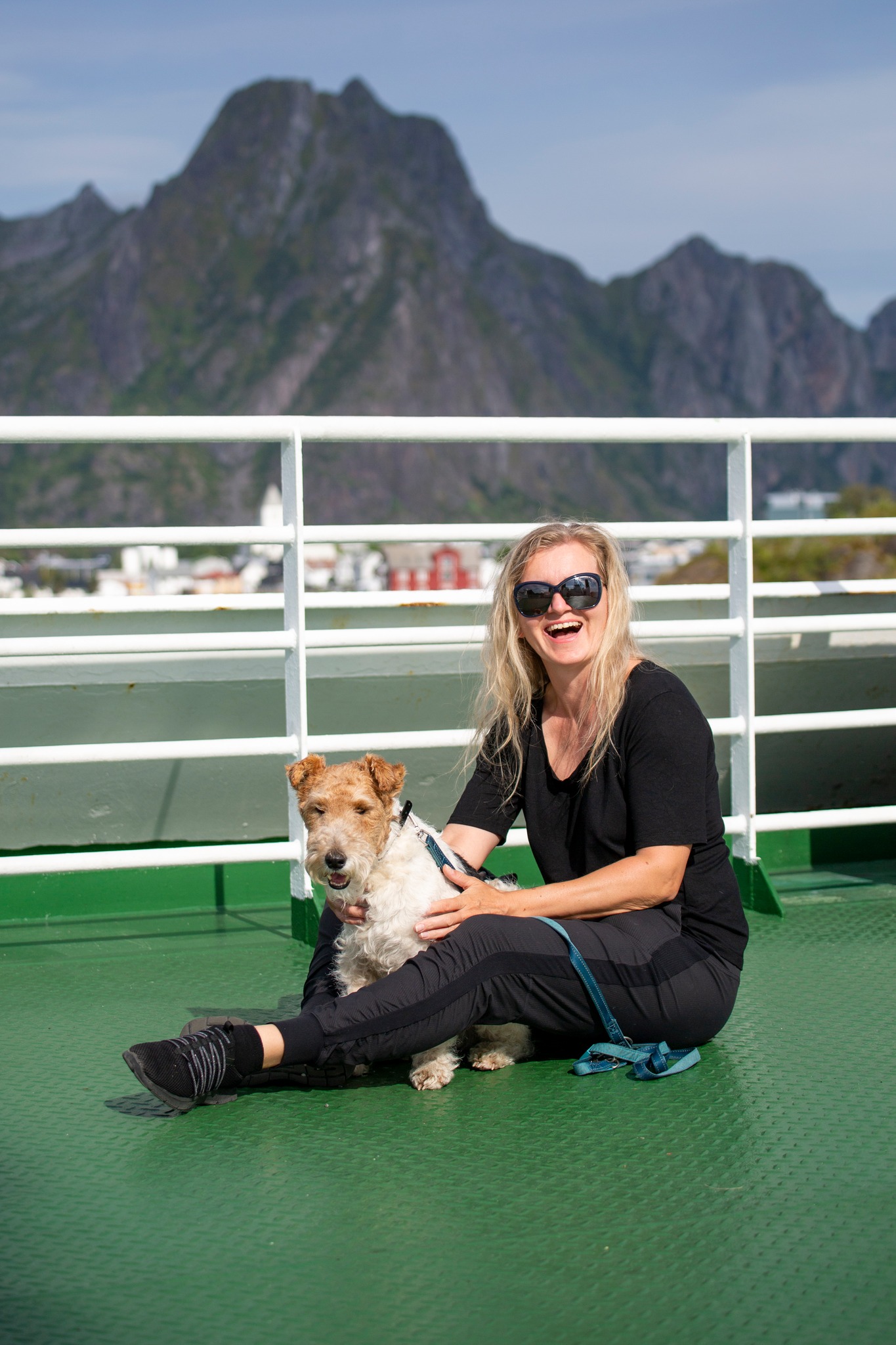


Ferry travel can be very practical when you’re on the move with a dog, but it’s also one of the least intuitive modes of transport. A ferry isn’t just a boat instead of a bridge. For a dog, it’s often a mix of noise, vibration, unfamiliar spaces and limited movement. Differences between routes and operators are often significant.
It’s crucial to distinguish between short crossings that last a matter of minutes to a few hours, and long crossings linking distant destinations, where you may be on board for many hours or even days. Rules, comfort and the overall challenge of travelling with a dog differ dramatically between the two.
Table of Contents
Short crossings vs long crossings
Short crossings
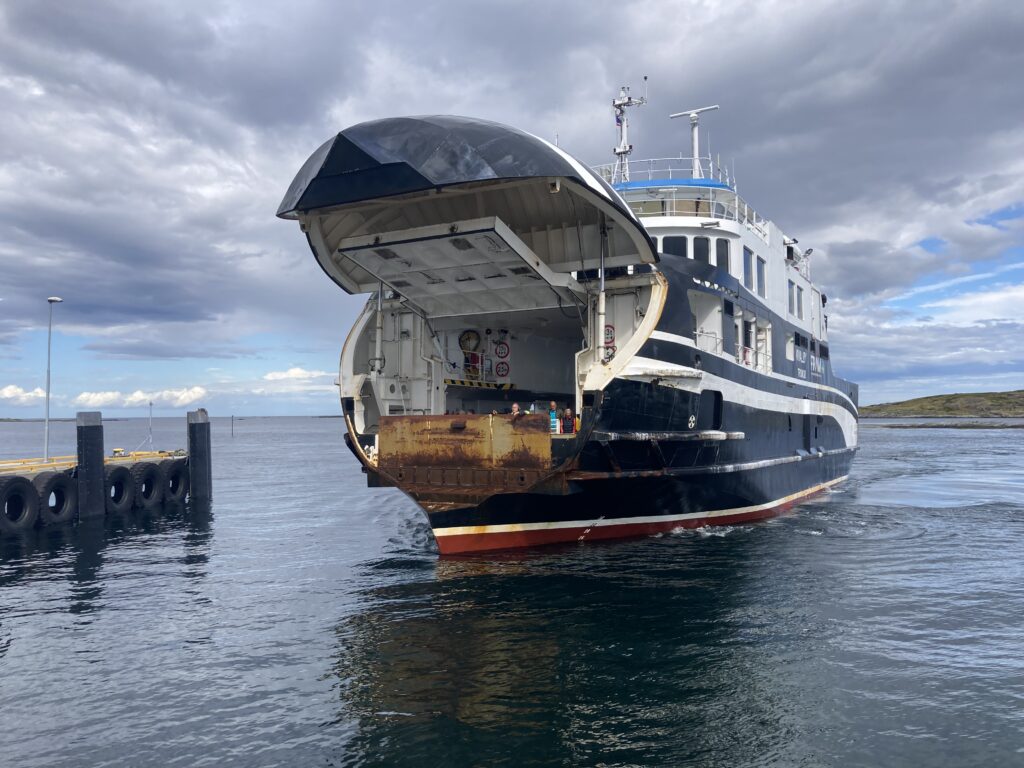
Short ferries, typically between the coast and nearby islands, are the simplest way to travel with a dog on the water. Sailings are frequent, quick, and the logistics are usually straightforward.
On these routes, dogs often stay in the car, or they may be allowed in certain outdoor or shared areas. The charge for a dog is often free or just a token fee. These crossings are ideal for introducing your dog to ferries and the onboard environment.
Long crossings
Long-distance ferries are a different story. Sailings can take several hours, an overnight crossing, or even multiple days. At that point it’s no longer just a transfer, it’s a stay on board.
This raises questions about where the dog sleeps, where it can move, how to handle toileting, and how it copes with noise and vibration. Long ferries are often the most demanding for a dog.
Are dogs allowed on ferries at all?
The first thing to check, before you plan anything, is whether dogs are allowed at all. There’s no universal rule – each operator sets its own conditions.
Differences can include:
- foot passengers and travelling with a car,
- the size or number of dogs,
- domestic and international routes.
Some ferries ban dogs entirely; elsewhere they’re allowed only under strict, specific conditions. Checking this in advance is essential.
Are you planning a trip abroad with your dog? Check the entry requirements for various countries directly in BorderCooler®.
Where and how your dog is accommodated on board
Conditions vary not only between operators, but often even between individual routes run by the same company.
The most common arrangements include:
- the dog must stay in the car for the entire crossing,
- the dog must be placed in its own or an assigned crate,
- the dog may be in a pet‑friendly cabin with the owner,
- the dog may move only within designated zones on deck.
It’s important to find out whether you’ll have access to the car deck during the crossing. On many ferries this area is off-limits while sailing, which can be a problem on longer routes. It limits access to your luggage, including your dog’s gear. And if your dog has to remain there, you may not see each other for several hours, which can be stressful for your dog.
Handy things to have with you on board
Wherever your dog is accommodated, it pays to keep a few basics within easy reach.
Specifically:
- food and water for the dog,
- waste bags,
- paper towels or wet wipes,
- a travel bowl.
These small items are the bare essentials. They won’t be needed on every sailing, but they can come in handy during embarkation, while waiting on board, or right after disembarking when your dog finally gets to stretch its legs.
Pet‑friendly cabins: comfort that takes planning
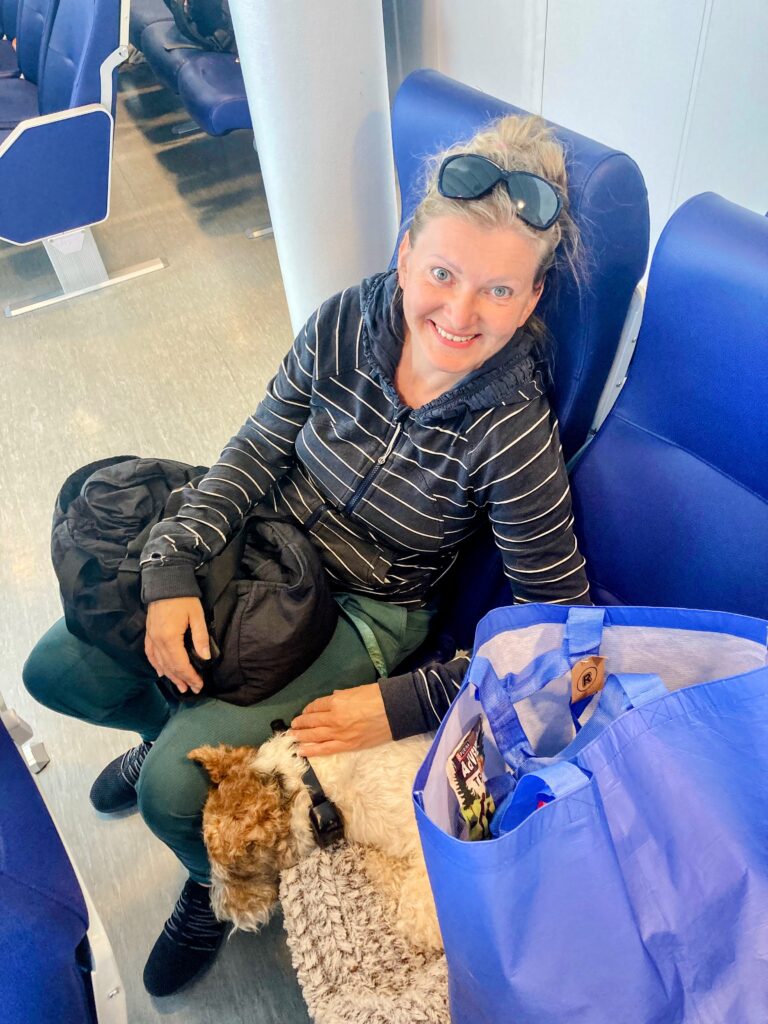
On longer sailings, a pet‑friendly cabin is the most comfortable solution. Your dog has a quiet, enclosed space, and you don’t have to spend the night in public areas.
Bear in mind that:
- cabins designated for travelling with a dog are noticeably more expensive,
- there are very few of them,
- they need to be booked well in advance.
If these cabins are sold out, the alternatives are far less comfortable. On some routes, cabin availability can determine whether the trip with a dog is feasible at all.
A long crossing without a cabin
As mentioned, a cabin isn’t always available. In that case, expect to spend most of your time in the ferry’s public areas.
Your dog’s movement may be restricted, and many parts of the ship are usually off-limits, especially restaurants, bars and play areas. Sleeping in public spaces is a chapter of its own. There’s a higher risk of contact with other passengers, children, and even other dogs on board just as yours is trying to rest. This often leads to barking, reactive behaviour and general nervousness.
In such an environment, the dog must be under constant control, and you should be prepared for a noticeable drop in comfort and possibly a sleepless night.
Noise, vibration and stress
Most ferries are noisy and constantly vibrating. These vibrations travel through the ship’s structure and are often far more intense for dogs than for humans.
Stress may show up as restlessness, trembling, reluctance to move, or complete withdrawal. Not every dog can cope with this environment, especially on longer sailings.
How to prepare your dog for a ferry
The biggest mistake is starting with a multi‑day trip. Gradual acclimatisation is far wiser.
We recommend:
- taking several short crossings,
- observing how your dog reacts to noise, vibration and the ship’s motion,
- increasing the duration gradually.
If your dog struggles on short ferries, long sailings are unlikely to be suitable.
Pet‑friendly facilities on ferries
The level of dog‑friendly facilities varies widely. Some ferries offer no special amenities; others provide designated outdoor areas or even dedicated dog rooms, something we’ve seen in the Nordic countries.
Don’t rely on that kind of comfort – always check what a specific ferry actually offers.
Cost of taking a dog
On short routes, carriage for dogs is often free or charged at a token rate. On longer sailings, costs rise, especially if the dog is accommodated in a cabin.
In many cases you’re not just paying for the dog, but for a specific cabin type or carriage arrangement. This can significantly affect your overall travel budget.
Conclusion
Ferry travel with a dog can be practical and comfortable, but only when it’s well planned. Short crossings are ideal for getting your dog used to the onboard environment. Long sailings require thorough preparation, early bookings and realistic expectations.
A ferry trip with a dog isn’t an adventure in itself. It’s a logistical test you’ll pass only if you prepare both yourself and your dog.