
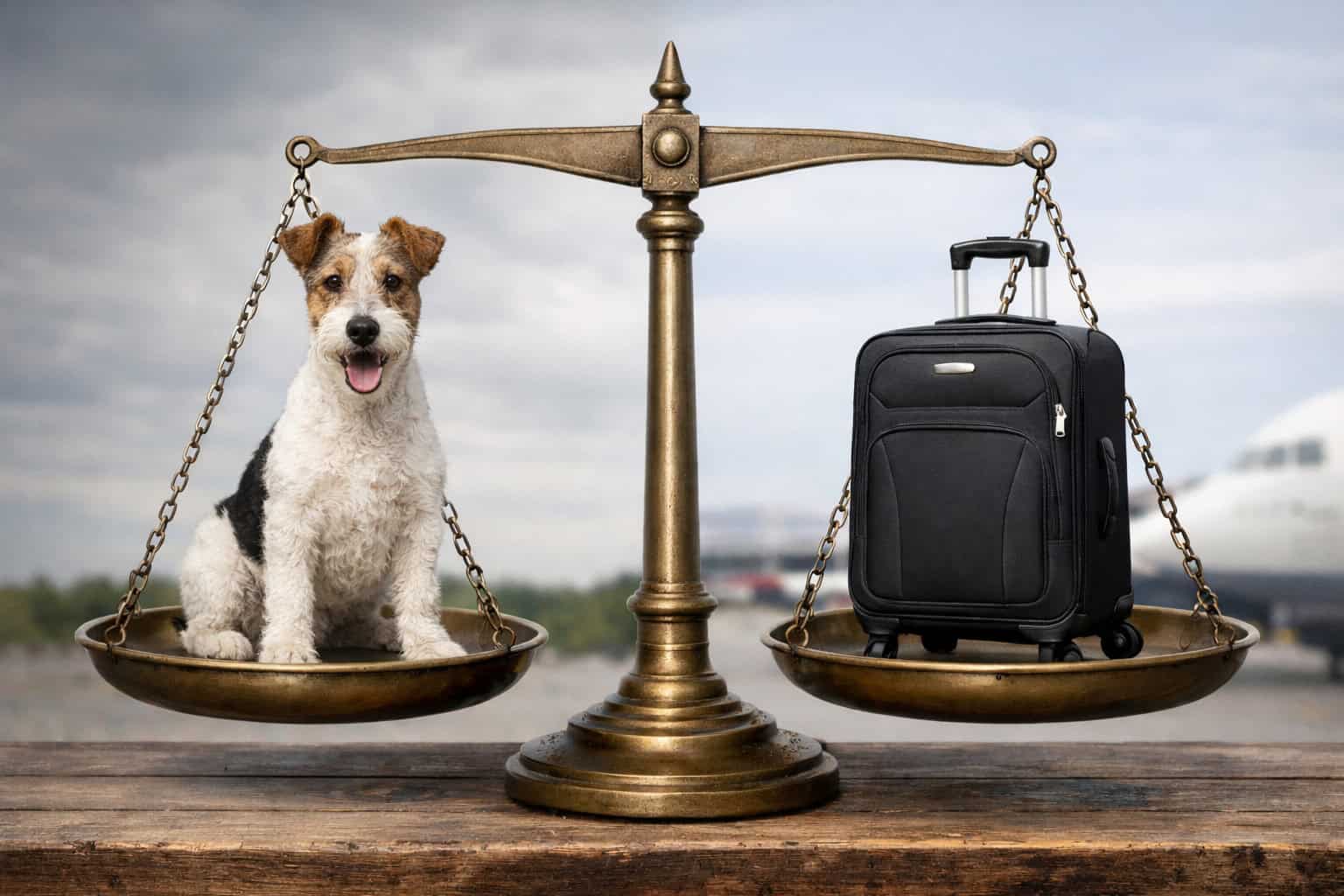


For many people, traveling with a dog feels natural; for others, it’s unthinkable or—at best—a major complication that can reshape a holiday or weekend away. The truth is, a dog is neither purely a “bonus” nor simply a “problem”—it’s a factor that changes how you travel. Let’s look at it systematically: the negatives, the positives, and the neutral side of traveling with a dog.
Downsides of traveling with a dog
The financial side
Traveling with a dog is usually more expensive.
Pet-friendly accommodation often costs more or adds a one-off or nightly pet fee. In transport—by train, bus, or plane—you typically pay a separate ticket or surcharge. On flights, those fees can be far from trivial. Then there’s gear and prep: a travel crate, a safe car setup, collapsible bowls, absorbent pads, or a pre-trip vet check.
On their own, these aren’t huge sums, but together they can push up your overall trip budget.
Limits on where and when you can go
Not everywhere welcomes dogs, and not every destination suits staying with one.
Many national parks, protected areas, museums, castles, and historic sites either ban dogs or impose strict rules. Plenty of beaches, pools, and city attractions become off-limits to you. Even though dining is slowly becoming more dog-friendly, access to restaurants and cafés still isn’t guaranteed. Traveling with a dog also narrows your accommodation choices.
If you enjoy weather extremes, your four-legged companion might not. It’s hard to have a pleasant beach holiday at 40 °C or a trip to freezing Greenland with a dog in tow.
All of this means more planning, more checking of rules, and sometimes letting go of certain places or experiences.
Logistics and responsibility
A dog adds extra responsibility to any trip.
You can’t schedule long transfers or demanding activities regardless of their needs. The day has to adapt to weather, the dog’s energy, access to water and shade, and time to rest. If a health issue crops up, priorities shift immediately and the itinerary can unravel.
Upsides of traveling with a dog
A calmer travel style
A dog naturally reshapes the itinerary.
The pace slows, the schedule is less packed, and extremes fade. There are fewer marathon days of transit, less frantic landmark-hopping, and fewer punishing activities. In their place: time in nature, walks, short outings, and spontaneous stops.
For many people, that’s a return to simpler, quieter travel.
Peace of mind and company
Traveling with a dog means you’re never entirely alone.
Dogs can lower stress, help you handle the unexpected, and bring a sense of home to unfamiliar places. They’re also natural icebreakers—people say hello, ask questions, and conversations start on their own.
A stronger bond and an ethical dimension
For many owners, bringing the dog along simply feels natural.
There’s no stress over finding a sitter or temporary care. Shared experiences strengthen the human–dog bond and create memories you wouldn’t have without them.
Are you planning a trip abroad with your dog? Check the entry requirements for various countries directly in BorderCooler®.
The neutral side of traveling with a dog
A dog as a variable, not a problem
A dog isn’t an advantage or a disadvantage in itself.
It’s a factor that changes the character of the trip. It influences your choice of places, the pace, and the daily rhythm. It nudges you to plan more realistically—with less emphasis on ticking boxes and more on comfort and well-being.
Solo versus group travel
A key difference is whether you’re traveling alone with a dog or with others.
If you’re solo, the entire plan has to fit the dog. In a group, things are more flexible—you can split activities. Some can tackle the demanding or dog-unfriendly options while someone else stays with the dog for a gentler plan.
The dog naturally slots into that calmer branch of the itinerary without unduly limiting anyone.
A shift in priorities
Traveling with a dog often changes what feels important on a trip.
Fewer places, more time. Fewer extremes, more balance. Less striving, more presence.
Conclusion
Traveling with a dog isn’t right for everyone or for every type of trip. It brings higher costs, restrictions, and responsibility. At the same time, it offers a gentler rhythm, a stronger sense of the moment, a unique kind of company, and often an easy path to more interaction with locals.
A dog isn’t something you toss in with your luggage. They’re another member of the trip, and like any human member they can shape the experience for better or worse. As a rule, the better trained the dog, the fewer the downsides.
If you accept that a dog will naturally reshape the itinerary and smooth out the extremes, traveling together can become a full, rewarding way to see the world.