

Traveling and taking longer trips with a dog eventually makes it clear that spontaneity has its limits — being responsible means preparing. Our packing list didn’t appear overnight; it grew out of experience, real situations, and the little problems we no longer wanted to solve on the fly.
Below is the gear we typically carry on longer trips. It isn’t a one-size-fits-all guide — just a practical look at our kit.
Table of Contents
Walks and exercise
This is the backbone of any outing — you won’t make it past the parking lot without it.
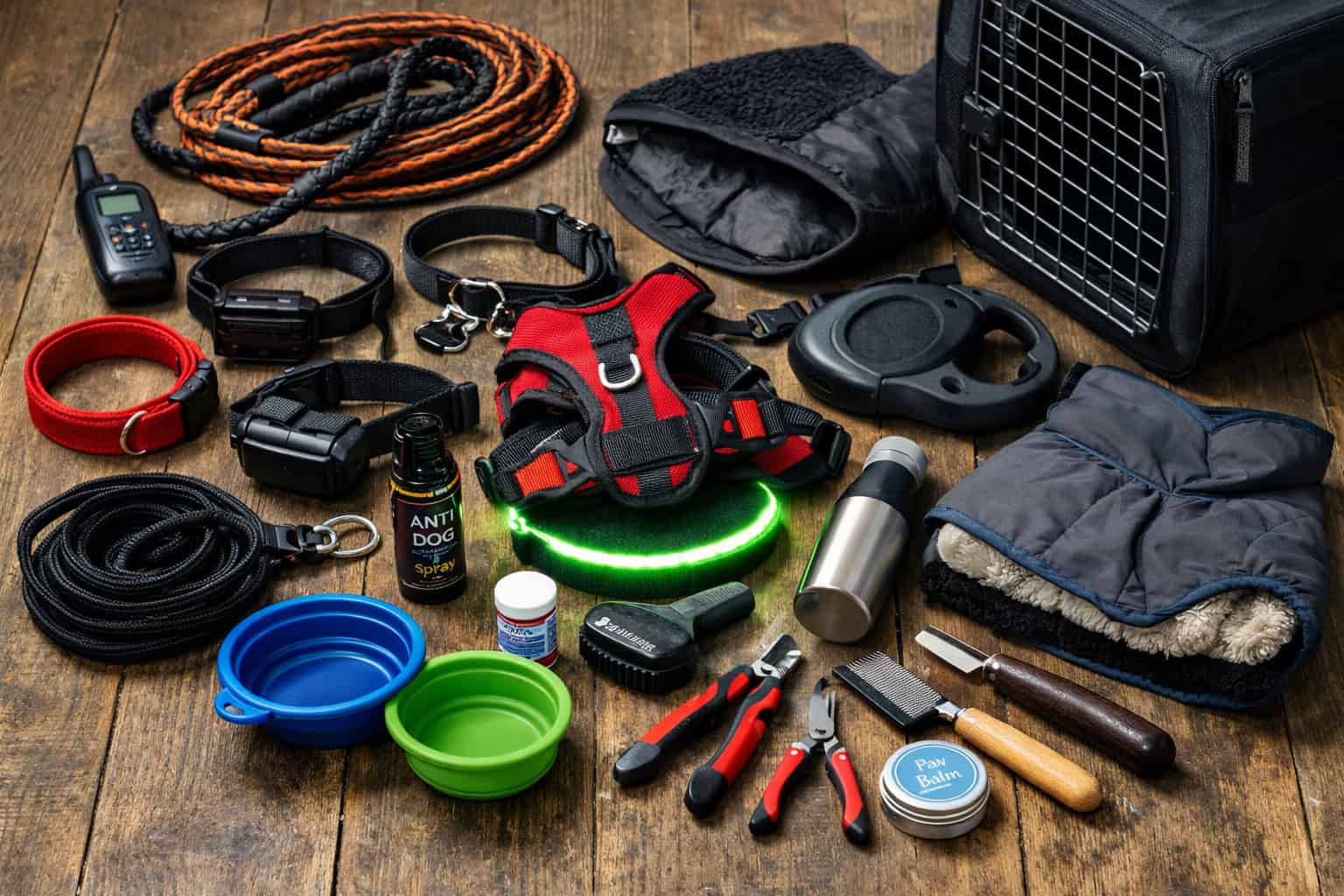
- Classic collar – simple and reliable. We use it when we’re 100% sure we’re in a safe environment and the dog will mostly be on a leash.
- Training collar (with vibration and electric pulse) + remote – a tool we almost always carry and use whenever the dog is off-leash (which, for us, is most of the time). It gives us much better control, even when the dog moves farther away. Not everyone will approve of this aid, but it has helped us prevent injuries, scuffles with other dogs, and more serious accidents. That said, its use is banned in some countries — we always check the rules before we go.
- Leash – a classic city leash for short walks. Ours has several metal rings placed along its length and clips at both ends, which makes it very versatile. You can adjust the length, link it to another leash, or use it to walk two dogs at once.
- Long hiking line – invaluable outdoors, where the dog needs more freedom but must stay under control. We use a light yet strong textile version — a webbing line about 15 meters long. It has served us well on high-mountain hikes where a sudden dash could mean a dangerous fall off the rocks.
- Hiking harness – a substitute for a regular collar that offers better control, especially in rough terrain. Unlike a collar, it distributes weight across multiple straps. You can lift the dog by the harness with one hand without the risk of choking, and it’s harder for the dog to slip out of it. We find it especially useful in dense forest and on exposed alpine sections.
- Deterrent spray for stray or unfamiliar dogs – safety gear we’d rather carry and never use than the other way around.
- Light-up collar – improves visibility at dusk, at night, or in the woods. We use simple illuminated loops that clip easily around the neck. USB-rechargeable versions have worked well for us. Don’t forget the right cable when traveling — the battery usually lasts only a few walks.
- Dog coat – useful in bad weather, cold, or wind. We recommend packing it for any trip to colder countries or whenever you expect to sleep outdoors (tent, car, etc.).
- Paw protection – a fairly new addition to our kit is protective booties. They’re handy for short walks in freezing weather and for trips to areas with sharp or prickly ground (sharp rocks, dry grasses, etc.).
Transport
Safe transport matters not only for the dog but for everyone else in the vehicle.
- Dog car seat – protects the interior and gives the dog a stable, familiar space while driving. In the event of an accident, it may help reduce the risk of injury.
- Dog crate – we use it mainly on longer journeys by plane or ferry, if required by transport rules. To help the dog get used to it, we’ve also used the crate in the car. We cover the role of the crate in more detail in a separate article on flying with a dog.
Are you planning a trip abroad with your dog? Check the entry requirements for various countries directly in BorderCooler®.
Food and water
Plans may change, but a dog’s basic needs stay the same.
- Travel bowls – compact, lightweight, and always on hand.
(We’ll keep adding items to this category.)
Health and comfort
You won’t use these every day, but at the right moment they can save you a lot of stress.
- Nail clippers – especially practical on longer trips when you can’t take care of it elsewhere.
- Stripping knives / brushes – basic coat care away from home.
Conclusion
Travel gear for a dog isn’t about carrying everything. It’s about having what lets you handle both the usual and the unexpected calmly and without unnecessary stress.
We’ll keep expanding and refining this list as we gather more experience on the road.