
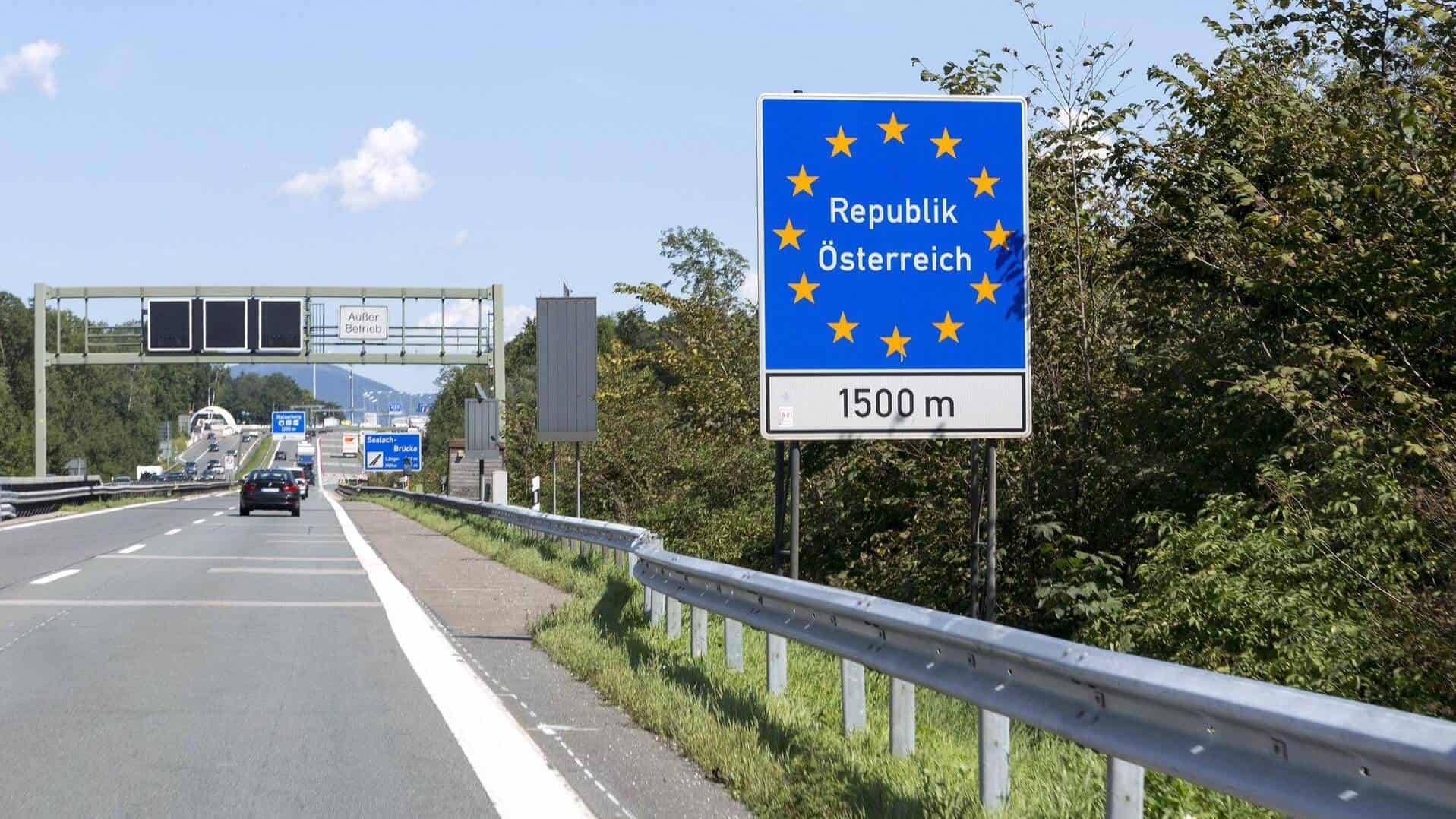


Austria is a country many people visit with their dogs — for the Alps, lakes, cities like Vienna and Salzburg, or as part of a longer trip across Central Europe. As an EU member state, entry is simpler when you’re coming from another EU country than when you’re arriving from outside the EU.
For a typical non-commercial trip with a dog to Austria, the essentials are a microchip, a valid rabies vaccination, and the right travel document. If the dog is arriving from the EU, an EU Pet Passport usually suffices. For entry from non-EU countries, expect to need a veterinary health certificate and, for some countries, a rabies antibody titer test. On a non-commercial trip, one person may travel with no more than five pets.
Pay even closer attention to your return journey, because your destination country may have significantly stricter rules than Austria itself.
Official information on traveling with pet animals within the EU is published by the Sozialministerium. Practical details on entry from non-EU countries and designated points of entry are available from the Bundesamt für Verbrauchergesundheit (BAVG).
This article covers a standard non-commercial trip where the dog travels with its owner or an authorized person. If a dog is transported as cargo, for sale, with a change of owner, or in larger numbers, different rules may apply.
Table of Contents
Quick guide: what your dog needs to enter Austria
For travel to Austria, the key question is whether your dog is coming from an EU country or from outside the EU — that determines which documents you need and whether a titer test is required.
If you’re traveling from the EU
For entry into Austria, have the following ready:
- a microchip, or an older readable tattoo applied before 3 July 2011,
- a valid rabies vaccination,
- an EU Pet Passport.
For a first rabies vaccination, allow a waiting period of at least 21 days. If the dog has continuous, on-time booster vaccinations with no lapse, no new waiting period applies.
If you’re traveling from outside the EU
For entry into Austria, have the following ready:
- a microchip,
- a valid rabies vaccination,
- a veterinary health certificate for entry to the EU,
- a declaration that the trip is non-commercial,
- for some countries, a rabies antibody titer test as well.
Echinococcus treatment is not required for entry into Austria.
Entry requirements for dogs coming to Austria from the EU
If you’re traveling to Austria from another EU country, it counts as movement within the EU. In that case, your dog needs:
- a microchip, or an older readable tattoo applied before 3 July 2011,
- a valid rabies vaccination,
- an EU Pet Passport.
For a first rabies vaccination, allow a waiting period of at least 21 days. If the dog already has continuous, valid boosters with no gap, no new waiting period applies. When traveling from the EU, a separate veterinary health certificate is usually not needed if the dog has a properly issued EU Pet Passport and meets the other conditions.
Interested in this destination? Would you like to visit it with your dog? Check the entry requirements directly in BorderCooler®.
Entry requirements for dogs coming to Austria from non-EU countries
If a dog enters Austria from a non-EU country, it is also an entry into the European Union. In that case, expect stricter requirements.
For entry, have the following ready:
- a microchip,
- a valid rabies vaccination,
- a veterinary health certificate issued by an official veterinarian in the country of departure,
- a declaration that the trip is non-commercial,
- for some countries, a rabies antibody titer test as well.
Austria’s official rules make a clear distinction for entry from non-EU countries: some countries allow entry without a titer test, while for all others a titer test is mandatory. Countries without a mandatory titer test include, for example, the United Kingdom, the USA, and Canada. The status of any given country can change, so always verify it before you travel. Animals must also enter via designated points of entry for travelers, where documentary and identity checks are carried out.
Microchip
A microchip is a basic requirement for a dog to enter Austria. It must be implanted before the rabies vaccination used for travel.
If the dog was vaccinated before being microchipped, that vaccination may not be accepted for travel. Whether traveling within the EU or entering from outside the EU, the microchip is crucial because it links the dog to the passport, the health certificate, and vaccination records.
Rabies vaccination
A valid rabies vaccination is one of the core requirements for traveling with a dog to Austria.
Before you go, check in particular:
- that the vaccination is still valid on the day of entry,
- that it was administered after the dog was microchipped,
- that you have the correctly completed proof of vaccination with you,
- and that at least 21 days have passed since the first vaccination.
If you’re coming from the EU or from a listed non-EU country, the rabies vaccination together with the other documents usually suffices. For an unlisted non-EU country, a titer test is needed in addition to vaccination.
Veterinary health certificate when traveling to Austria
A veterinary health certificate is required when traveling from a non-EU country. It must be issued by an official veterinarian in the country of departure and is time-limited for entry into the EU.
Under EU rules, the certificate is valid for 10 days for entry into the EU from the date of issue. After entry, it can also be used for onward movement within the EU for a limited period, provided the rabies vaccination remains valid. If the dog travels from the EU, an EU Pet Passport is used instead of a health certificate.
When a titer test is required
A rabies antibody titer test is not required on every route to Austria. What matters most is the country the dog is coming from.
It is generally not required when coming from the EU. Likewise, it is usually not required when coming from a listed non-EU country — typically the United Kingdom, the USA, or Canada — which are on the EU list of countries that do not require a titer test. It is mandatory when coming from an unlisted non-EU country. The test must be performed after rabies vaccination in an approved laboratory, and the relevant EU waiting period must elapse before entry.
If your dog normally lives in the EU, is traveling to an unlisted country, and will later return to Austria or another EU country, the most practical option is to complete the titer test before leaving the EU and have the result recorded in the EU Pet Passport.
Traveling to Austria with a dog by car, train, or plane
For many travelers, Austria is easy to reach by car, train, or air. That’s convenient, but it can also create the impression that for a short trip you don’t need to handle paperwork. In reality, you do.
When traveling by car, train, or plane, keep your dog’s documents handy. While borders in the Schengen Area may not look like classic veterinary checkpoints, police, carriers, customs, or a veterinarian can ask to see documents if an issue arises. If you’re entering Austria from outside the EU, make sure you know at which point the dog will enter the EU and where the documentary and identity checks will take place. Airlines also have their own rules for transporting animals in the cabin and in the hold, so for flights you need to meet both the veterinary rules and your carrier’s conditions.
If you’re planning a flight via Vienna, our experience at Vienna–Schwechat Airport may help — we describe how departure with a dog works there in practice.
Returning home from Austria
When returning with a dog from Austria, Austria’s rules aren’t decisive — it’s the rules of the country you’re returning to that matter.
Returning from Austria to an EU country
If a dog returns from Austria to another EU country and traveled in line with EU rules, the return is usually straightforward administratively. The basics remain the microchip, a valid rabies vaccination, and an EU Pet Passport.
Returning from Austria to a non-EU country
If a dog returns from Austria to a non-EU country, check the rules of the destination state. Some countries may require a health certificate, an import permit, parasite treatments, additional vaccinations, entry via a specific border point, or their own forms and a prior notice of arrival.
Practical tips for staying in Austria with a dog
For many travelers, Austria is a mix of mountains, cities, lakes, and short or longer drives. The practical side of your stay therefore depends on whether you’re planning time in Vienna, day trips into the Alps, or a transit across Austria to another country.
Always confirm accommodation directly. The “pet-friendly” filter in a booking system isn’t enough. Check your dog’s size, rules for rooms and common areas, any fees, and whether your dog may stay alone in the room.
If you’re planning mountain hikes or time by the lakes, think about weather, cable cars, seasonal restrictions, and route length. For city stays, plan public transport, parking, and your dog’s daily routine. In larger cities and main tourist regions, veterinary care is generally easy to access.
When to start preparing
If you’re traveling from the EU and your dog already has a microchip, a valid rabies vaccination, and an EU Pet Passport, preparation is usually simple.
If you’re traveling from a non-EU country, start earlier. Check:
- whether it’s a listed or unlisted country,
- whether you need a titer test,
- which health certificate will be required,
- which point of entry into the EU your dog will use,
- and what will be needed for the return home.
If your dog will return to a country with its own additional import requirements, factor those in before you depart.
Summary
Traveling to Austria with a dog is straightforward when your documents are in order, especially if the dog is coming from the EU. The essentials are a microchip, a valid rabies vaccination, and the correct travel document.
For travel from outside the EU, expect stricter requirements. In addition to a health certificate, a titer test may be required depending on the dog’s country of origin.
Focus most on where the dog is coming from and where it will return to. That determines whether it’s a simple intra-EU journey or an entry into the EU from a third country.
Frequently asked questions about traveling to Austria with a dog
What does a dog need to travel to Austria?
In most cases, a dog traveling to Austria needs a microchip, a valid rabies vaccination, and the correct travel document. From the EU, that’s usually an EU Pet Passport. From non-EU countries, a veterinary health certificate may be required and, depending on origin, a titer test.
Is an EU Pet Passport enough to travel to Austria?
Yes, if the dog is traveling from the EU and meets the other conditions. From non-EU countries, the EU Pet Passport alone is not sufficient if a veterinary health certificate or a titer test is required.
Do I need a titer test when returning to Austria from a non-EU country?
Not always. A titer test matters especially when returning to Austria from an unlisted non-EU country. When returning from a listed non-EU country, it’s usually not required.
Are the same documents enough when transiting Austria?
In most cases, yes, if it’s standard movement within the EU. If you enter the EU through Austria from a non-EU country, be aware that the documentary and identity checks may take place at the first point of entry to the EU rather than in your final destination.
Is echinococcus treatment required for entry to Austria?
No. Echinococcus treatment is not required on entry to Austria.