
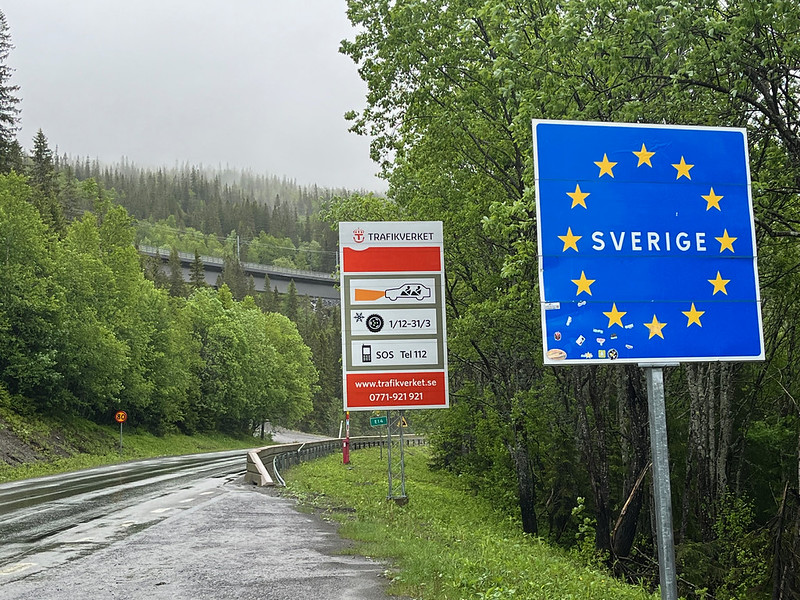


Sweden is one of the easier countries to visit with a dog, provided you have the basics in order. Compared with Finland or the United Kingdom, it offers one welcome perk: dogs entering Sweden are not required to be treated against echinococcus. The authorities recommend it, but it is not a condition of entry.
That doesn’t mean there’s no paperwork. Your dog must be properly identified, vaccinated against rabies, travel with the correct paperwork, and you’ll also need to make a customs declaration on arrival.
Quick overview by country of departure
At a glance:
- if traveling from an EU country, your dog needs a microchip, valid rabies vaccination, and an EU Pet Passport
- if traveling from some non-EU countries, a microchip, valid rabies vaccination, and a veterinary certificate for entry into the EU may be sufficient
- if traveling from non-EU countries where rabies is not considered under control, you will also need a rabies antibody titer test
- on entry to Sweden, a customs declaration is generally required; an exception may apply to non-commercial travel from Norway to Sweden if the dog travels with its owner and meets the entry requirements
- treatment against echinococcus is not required to enter Sweden, but Swedish authorities recommend it
Entry rules for taking a dog to Sweden from an EU country
If you are traveling to Sweden with a dog from another European Union country, the basics are fairly straightforward.
Your dog must have:
- a microchip
- a valid rabies vaccination
- an EU Pet Passport (EU pet passport)
- a customs declaration on arrival in Sweden, if required for your route
The microchip must be implanted before the rabies vaccination. If a dog is vaccinated before being microchipped, the vaccination may not be recognized for travel.
The rabies vaccination must be valid. After the first vaccination, allow a 21-day waiting period before it is valid for travel. For on-time boosters given before the previous vaccination expires, a waiting period usually does not apply.
The EU Pet Passport must be issued by a veterinarian and include the dog’s identification details, rabies vaccination, and owner information. If you are traveling from a non-EU state that follows similar pet-movement rules, the requirements may mirror those for travel from the EU. This includes, for example, Norway, Iceland, Switzerland, and Northern Ireland.
Interested in this destination? Would you like to visit it with your dog? Check the entry requirements directly in BorderCooler®.
Echinococcus treatment: not required for Sweden
When traveling to Sweden with a dog, echinococcus often comes up because it is a key requirement for some Nordic countries. Unlike Finland or Norway, Sweden does not require dogs to be treated against the tapeworm Echinococcus multilocularis on entry.
Swedish authorities note that the parasite is present in Sweden at low levels. They therefore recommend that dogs arriving from abroad are dewormed against echinococcus before travel.
In practice, this means:
- echinococcus treatment is not a condition for entry to Sweden
- if you want to do it, arrange it with a veterinarian before you travel
If you plan a broader Scandinavian itinerary, don’t look at Sweden in isolation. The rules can change as soon as you cross the next border.
Entry rules for taking a dog to Sweden from outside the EU
If you are traveling to Sweden with a dog from a non-EU country, the rules depend mainly on how that country is assessed in terms of rabies risk.
As a rule, you will need:
- a microchip
- a valid rabies vaccination
- a veterinary health certificate for entry into the EU, if the dog does not have a recognized pet passport
- a written declaration of the animal’s non-commercial movement
- a customs declaration on arrival in Sweden
- for some countries, a rabies antibody titer (serological) test as well
The veterinary health certificate is arranged in the country of departure. It is issued or endorsed by an authorized veterinarian, or by the competent veterinary authority under that country’s rules. The certificate must follow the EU template and prove that the dog meets the conditions for entry into the EU.
If you are coming from outside the EU, your dog’s first point of entry into the European Union also matters. If, for example, you first fly to another EU country and then continue to Sweden, document checks may take place in that first country of entry.
Non-EU countries with a simpler regime
Not all non-EU countries are treated the same. For countries the EU classifies under a simpler regime, a rabies antibody titer test is generally not required.
In practice, this may apply to travel from the United Kingdom, the United States, Canada, Japan, or Switzerland, for example. Always check your specific country’s status before you go, as lists and rules can change.
Even for these countries, your dog still needs a microchip, a valid rabies vaccination, and the correct travel document. For non-EU departures, this will often be a veterinary health certificate for entry into the EU.
Countries with a higher rabies risk
If a dog is coming from a non-EU country where rabies is not considered sufficiently controlled, a microchip, vaccination, and certificate are not enough. In that case, a rabies antibody titer (serological) test is required.
Blood for the test is drawn no sooner than 30 days after rabies vaccination, and the sample must be analyzed by an approved laboratory. The result must show a sufficient antibody level. In addition, a waiting period applies before entry to the EU, so this kind of trip cannot be sorted out at the last minute.
In practice, this can apply to travel from several countries in Latin America, Africa, or Asia. If you plan to travel to Sweden from outside the EU, start checking the rules well in advance.
Customs declaration for dogs on arrival in Sweden
Sweden has one practical requirement that is easy to overlook: in general, you should expect to make a customs declaration when arriving with a dog.
If you are traveling from another EU country, for example from Finland, and you have an EU Pet Passport, you can usually declare the dog online before your trip. On arrival you can then use the green customs channel, but be prepared to show the declaration confirmation and the dog’s documents if an officer asks.
There is an exception for non-commercial travel with a dog from Norway to Sweden, provided the dog travels with its owner and meets the entry requirements. This exemption is tied to the route from Norway to Sweden, not to the dog’s origin or the owner’s nationality.
If you are arriving from a non-EU country or if the dog is traveling as cargo, the animal must be declared at the border. In that case, use the red customs channel or contact a customs officer as instructed on site.
The simplest rule of thumb: before traveling to Sweden, always check whether your route requires a customs declaration and how you need to make it.
Our experience: the time we didn’t declare our dog in Sweden
We crossed Sweden with Ibo twice during our road trip through Scandinavia and the Baltic countries in the summer of 2024. The first time we arrived on the overnight ferry from Poland to Trelleborg and continued on toward Norway. Later we crossed Sweden again, this time heading from Norway toward Finland. On that long drive we also took a short break at Masugnsbyns naturreservat, a simple, handy stop to walk the dog and rest.
Back then we didn’t know about the customs declaration requirement, so we didn’t declare Ibo when entering Sweden. Today we know that, especially on the ferry from Poland to Trelleborg, we should have declared him.
Luckily, no one checked us while we were in Sweden. We don’t take that as proof that registration isn’t needed, though. We see it more as a practical lesson: even on routes that feel straightforward at the border, it’s easy to miss administrative details.
Document checks when traveling to Sweden
When traveling to Sweden, it can seem as if nobody looks at your dog’s paperwork, especially within the EU. That doesn’t mean you can skip it.
Documents can be checked by:
- customs on entry to Sweden
- the carrier before boarding a ferry or plane
- veterinary or customs authorities when arriving from outside the EU
- the relevant authorities during a random check
For travel to Sweden, have ready proof of microchipping, a valid rabies vaccination certificate, an EU Pet Passport or veterinary certificate, and the customs declaration confirmation if your route requires one.
Practical rules for dogs in Sweden
Sweden is a fantastic place to be outdoors with a dog, but local rules matter. Your dog should always be under control, and in nature you need to take extra care during nesting and breeding seasons for wildlife.
In practice, keep an eye on:
- rules for dogs in nature reserves and national parks
- local leash regulations
- restrictions on beaches, in parks, or by lakes
- rules for accommodation, ferries, and public transport
- your duty to clean up after your dog
When heading into Swedish nature, it’s wise to keep your dog reliably under control even where a leash isn’t explicitly required. At certain times of year the rules may be stricter to protect wildlife.
Summary of the rules for traveling to Sweden with a dog
With decent preparation, traveling to Sweden with a dog is relatively straightforward. For travel from the EU, the essentials are a microchip, a valid rabies vaccination, an EU Pet Passport, and—generally—a customs declaration on arrival in Sweden.
For travel from outside the EU, expect to need a veterinary certificate and, depending on the country of departure, a rabies antibody titer test. Sweden does not require echinococcus treatment on entry, but it is recommended.
The most practical advice is simple: check your documents, confirm the customs declaration for your specific route, and if you are crossing multiple borders, read up on the rules in each country in advance.