
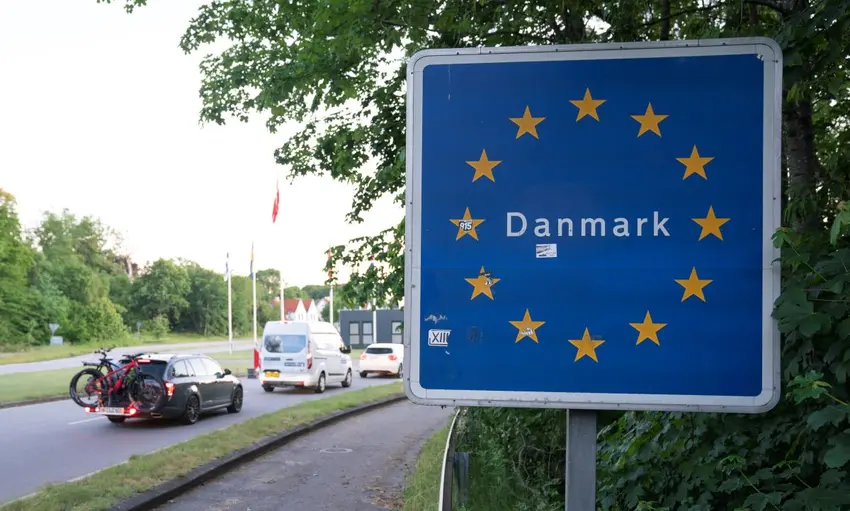


Denmark is a land of bridges, islands, coastal roads, ferries, sandy beaches and towns where a typical day often plays out by bike or by the water. It’s a very pleasant country to travel with a dog – distances are reasonable, the infrastructure works well, and getting to the coast, forests or smaller towns doesn’t require complicated planning.
From a veterinary point of view, however, it matters what kind of trip you’re making. Arriving in Denmark with a dog from another EU country is different from entering from outside the EU. In the first case, you’re moving within the EU’s harmonised rules; in the second, your dog is entering the European Union and the paperwork can be more involved.
Denmark also has its own rules that go beyond vaccination and a passport. Before you travel, check the ban on certain dog breeds, the practical conditions of your stay and, for longer visits, registration requirements. The Faroe Islands and Greenland deserve special attention. They are part of the Kingdom of Denmark, but have their own rules for travelling with a dog and you cannot automatically apply Denmark’s entry rules to them.
This article covers a normal, non‑commercial trip with a dog travelling with its owner or an authorised person. If a dog travels as cargo, for sale, for a change of ownership, or in a larger group of animals, different rules may apply.
Table of Contents
Quick overview: what a dog needs to travel to Denmark
For a trip to Denmark with a dog, the key factor is where your dog is coming from.
If you travel from another EU country, your dog needs:
- a microchip, or an older, legible tattoo applied before 3 July 2011,
- a valid rabies vaccination,
- a waiting period of at least 21 days after the first rabies vaccination,
- EU Pet Passport.
If the dog is arriving from a non‑EU country, you also need to consider:
- a veterinary health certificate for entry into the EU,
- a declaration of non‑commercial movement,
- entering via a designated point of entry for travellers with pet animals,
- a rabies antibody titre test, if required by the EU for the country of departure.
Denmark is not among the countries that require compulsory echinococcus treatment on entry for dogs. This obligation mainly applies to Finland, Ireland, Malta, Norway and Northern Ireland.
Before you set off, check whether your dog is affected by Denmark’s ban on certain breeds or their crosses.
Entry conditions for a dog coming to Denmark from an EU country
If you’re travelling to Denmark from another EU country, your trip falls under the EU’s harmonised rules for dogs, cats and ferrets.
Your dog must have:
- a microchip,
- a valid rabies vaccination,
- EU Pet Passport.
The microchip must be implanted before the rabies vaccination. If a dog was vaccinated before being microchipped, that vaccination may not be considered valid for travel.
After a dog’s first rabies vaccination there is a waiting period of at least 21 days before the vaccine is considered valid for travel. If booster shots are given on time, the 21‑day period does not apply.
The EU Pet Passport is the dog’s basic travel document within the EU. It contains the dog’s identification, owner details, rabies vaccination and any other veterinary records.
Interested in this destination? Would you like to visit it with your dog? Check the entry requirements directly in BorderCooler®.
Entering Denmark with a dog from a non‑EU country
If a dog is arriving in Denmark from a non‑EU country, it is entering the European Union. In that case, the EU’s rules for entry of dogs from third countries apply, and these are stricter than for travel between member states.
Your dog must have:
- a microchip,
- a valid rabies vaccination,
- a veterinary health certificate for entry into the EU,
- a declaration of non‑commercial movement,
- a rabies antibody titre test, if required for the country of departure.
The veterinary health certificate is issued by the official veterinarian in the country of departure. On entry into the EU, the certificate is valid for 10 days from the date of issue. Within this period, the dog must be checked at a designated point of entry, for example at an airport, port or border crossing. For travel by sea, this period is extended by the duration of the voyage.
After a successful entry check, the certificate can also be used for further movement within the EU, for up to 4 months or until the rabies vaccination expires, whichever comes first.
When a rabies antibody titre test is required
A rabies antibody titre test is required when entering the EU from countries that the EU does not consider to fall under its simplified rabies regime.
In practice, this means that for some non‑EU countries a microchip, rabies vaccination and health certificate are enough, while for others a titre test is also mandatory.
The test is performed on a blood sample in an approved laboratory and must follow a valid rabies vaccination. If you are travelling to Denmark from outside the EU, always check in advance whether the EU requires a titre test for your country of departure.
If a dog travels from the EU to a non‑EU country and is then due to return to Denmark or another EU country, check before you leave whether the EU requires a rabies antibody titre test on return from that country. If the test is required for your route, the most practical approach is to do it before leaving the EU and have the result recorded in the EU Pet Passport.
At the time of writing, a titre test is not required for entry into the EU when arriving from, for example, the following countries and territories:
United Kingdom, Northern Ireland, Switzerland, Norway, Iceland, Liechtenstein, Andorra, Monaco, San Marino, Vatican City, Canada, the United States of America, Australia, New Zealand, Japan and Argentina.
This is not a complete list. Always check the current list of countries and territories for which the EU does not require a rabies antibody titre test before you travel.
Where checks take place when entering from a non‑EU country
If a dog is entering Denmark from a non‑EU country, it must enter via a designated point of entry for travellers with pet animals. Documents and the dog’s identity are checked there.
By air, this typically means the airport where you enter Denmark. By sea it may be a port, and by land a designated border crossing. Check in advance whether your intended point of entry into Denmark is among the designated entry points for pet animals.
If you enter the EU through a country other than Denmark and continue to Denmark afterwards, the check will take place in the first EU country on your route. The onward journey to Denmark is then movement within the EU.
Banned dog breeds in Denmark
Denmark bans certain dog breeds and their crosses. This ban applies not only to residents but also to visitors. If your dog belongs to a banned breed or is a cross of one, you should not bring it to Denmark, even for a holiday.
At the time of writing, the following breeds and their crosses are banned in Denmark:
Pitbull Terrier, Tosa Inu, American Staffordshire Terrier, Fila Brasileiro, Dogo Argentino, American Bulldog, Boerboel, Kangal, Central Asian Shepherd Dog, Caucasian Shepherd Dog, South Russian Shepherd Dog, Tornjak and Sarplaninac.
If there is any doubt whether a dog belongs to a banned breed or a cross of one, the Danish police may require the owner to prove the dog’s origin. Breaching the ban can have very serious consequences, and the Danish authorities may even order the dog to be euthanised. If your dog resembles any of the banned breeds, check the situation before you travel and carry documents proving the dog’s origin.
Faroe Islands and Greenland: different rules from Denmark
The Faroe Islands and Greenland are part of the Kingdom of Denmark, but they have their own rules for travelling with a dog. You cannot automatically treat them as a standard trip to Denmark or simple movement within the EU.
Faroe Islands
You can’t take a dog to the Faroe Islands for a typical short holiday. Import of dogs and cats is largely limited to people with a permanent address in the Faroe Islands or those relocating for a longer stay. Import for stays shorter than three months, including transit through the Faroe Islands, is not permitted.
For permitted imports, you need a specific import permit, vaccinations, health checks and parasite treatment. If you’re planning to travel to the Faroe Islands with a dog, check the rules directly with the Faroese authorities. The standard Danish entry rules won’t be enough here.
Greenland
Greenland also has its own regime. Importing a dog or cat generally first requires written authorisation from the municipality the animal is heading to, followed by an import permit from the Greenland Representation in Copenhagen.
Each municipality in Greenland may set its own rules for dogs and cats. This means travel with a dog to Greenland must be arranged individually according to the exact place you’ll be staying. Again, the Danish entry rules are not enough.
If your dog already has an EU Pet Passport before travelling to Greenland, it can help especially with a later return to Denmark or another EU country, but entry to Greenland itself is governed by Greenlandic rules.
Also heading to Sweden with your dog?
The Öresund Bridge connects Denmark and Sweden quickly and comfortably, but there’s one point to remember when crossing with a dog: you must notify Swedish Customs (Tullverket) of your entry to Sweden, even for a simple day trip. The veterinary rules themselves are the same as in the EU – a valid EU Pet Passport and rabies vaccination. Sweden also has no ban on specific breeds, but requires dogs to be on a lead in nature from 1 March to 20 August.
A note for travellers to Bornholm: if you travel between Bornholm and the rest of Denmark via Sweden, your dog must meet Sweden’s entry rules — not just Denmark’s.
You’ll find more detailed entry conditions for Sweden in our article on travelling to Sweden with a dog.
Practical rules for staying in Denmark with a dog
Denmark is generally a pleasant country for travelling with a dog, but the rules vary by city, accommodation, transport operator, park, beach and season.
In larger cities you’ll find parks, vets, pet shops and accommodation that welcomes dogs. Still, indoor access to restaurants, shops or museums isn’t guaranteed. Terraces, parks, the outdoors and waterside walks are usually simpler than interiors.
Always confirm pet‑friendly accommodation directly. A booking filter isn’t enough. Check size limits, fees, whether the dog may be left alone in the room, and the rules for shared areas.
If you stay in Denmark with a dog for longer than 4 weeks, you must arrange registration in the Danish Dog Register. This usually doesn’t apply to a short holiday, but don’t overlook it for longer stays.
Denmark also has rules on owners’ responsibility. Check whether your liability insurance covers damage caused by your dog in Denmark. For longer stays or unclear situations, also check any local insurance requirements so you don’t end up solving this only after arrival.
On beaches the rules change with location and season. Outside the main summer months, visiting with a dog is usually easier; in peak season there may be time or area restrictions. Check the rules for each beach before you go.
When travelling by train, ferry, bus or metro, check the operator’s rules. Small dogs in a carrier may have a different regime from larger dogs on a lead. On longer journeys, remember your dog needs to handle busy stations, platforms and public transport.
When to start preparing
For travel from the EU
If you’re travelling to Denmark from another EU country and your dog already has a microchip, a valid rabies vaccination, an EU Pet Passport and is not a banned breed, preparation is usually straightforward. Check the vaccine’s validity for your whole stay including the return, the carrier’s rules, and any accommodation requirements.
For travel from a non‑EU country
If a dog is travelling from outside the EU, start preparations earlier. Check whether you need a titre test, which health certificate is used, who endorses it, and through which point of entry you can enter Denmark or the EU.
A titre test can’t be arranged at the last minute. The blood sample is taken no sooner than 30 days after the rabies vaccination. Processing times in the laboratory typically range from a few working days to several weeks, depending on the lab. If the test is required for your route, take care of it well in advance.
For travel to the Faroe Islands or Greenland
If you’re planning a trip to the Faroe Islands or Greenland, don’t start preparing under the standard Danish rules. First check whether importing your dog is even possible for your type of stay, then arrange import permits, local rules and your return home.
Summary
Travelling to Denmark with a dog is relatively straightforward when coming from the EU. Your dog needs a microchip, a valid rabies vaccination and an EU Pet Passport. Denmark does not require compulsory echinococcus treatment on entry.
If the dog arrives from a non‑EU country, you must follow the EU’s entry rules: a health certificate, a declaration of non‑commercial movement, a possible rabies antibody titre test, and entry via a designated point.
Denmark also bans certain dog breeds and their crosses. For longer stays, remember registration and liability insurance.
The Faroe Islands and Greenland have their own rules. Don’t plan a trip with a dog to these territories based only on Denmark’s rules — check local conditions and import permits first.
Frequently asked questions about travelling to Denmark with a dog
Does a dog need a titre test to travel to Denmark?
If you’re travelling from another EU country, you don’t need a titre test. For entry from a non‑EU country it depends on where the dog is coming from. Some countries have a simpler regime from the EU’s perspective; for others a rabies antibody titre test is mandatory.
Does Denmark require echinococcus treatment?
No. Denmark is not among the countries that require compulsory echinococcus treatment on entry for dogs. This obligation mainly applies to Finland, Ireland, Malta, Norway and Northern Ireland.
Can I travel to Denmark with a dog of a banned breed?
No. Denmark’s ban on certain breeds also applies to tourists. If a dog belongs to a banned breed or a cross thereof, you should not bring it to Denmark, not even for a short holiday.
Do the same rules apply to the Faroe Islands and Greenland?
No. The Faroe Islands and Greenland are part of the Kingdom of Denmark, but they have their own rules for entry with a dog. Check local conditions and any import permits before you travel.