

After a few days in the seaside town of Mejillones, we head south towards the summit of Cerro Paranal in the Atacama Desert. On the way we stock up at a mall in Antofagasta and treat ourselves to a good pizza. Just a few kilometres beyond the city, the landscape shifts into something that’s hard to put into words. Route 28 climbs into the surrounding hills and, after a few kilometres, joins Chile’s main north–south artery, Route 5. A little farther south we turn off onto road B710, which in under an hour brings us to the small airstrip used by staff at the Cerro Paranal observatory. Here we swing west (right) onto Acceso Observatorio Paranal and begin the climb to the observatory. The road threads through a desolate landscape, and the views give full meaning to the word “nothing”.
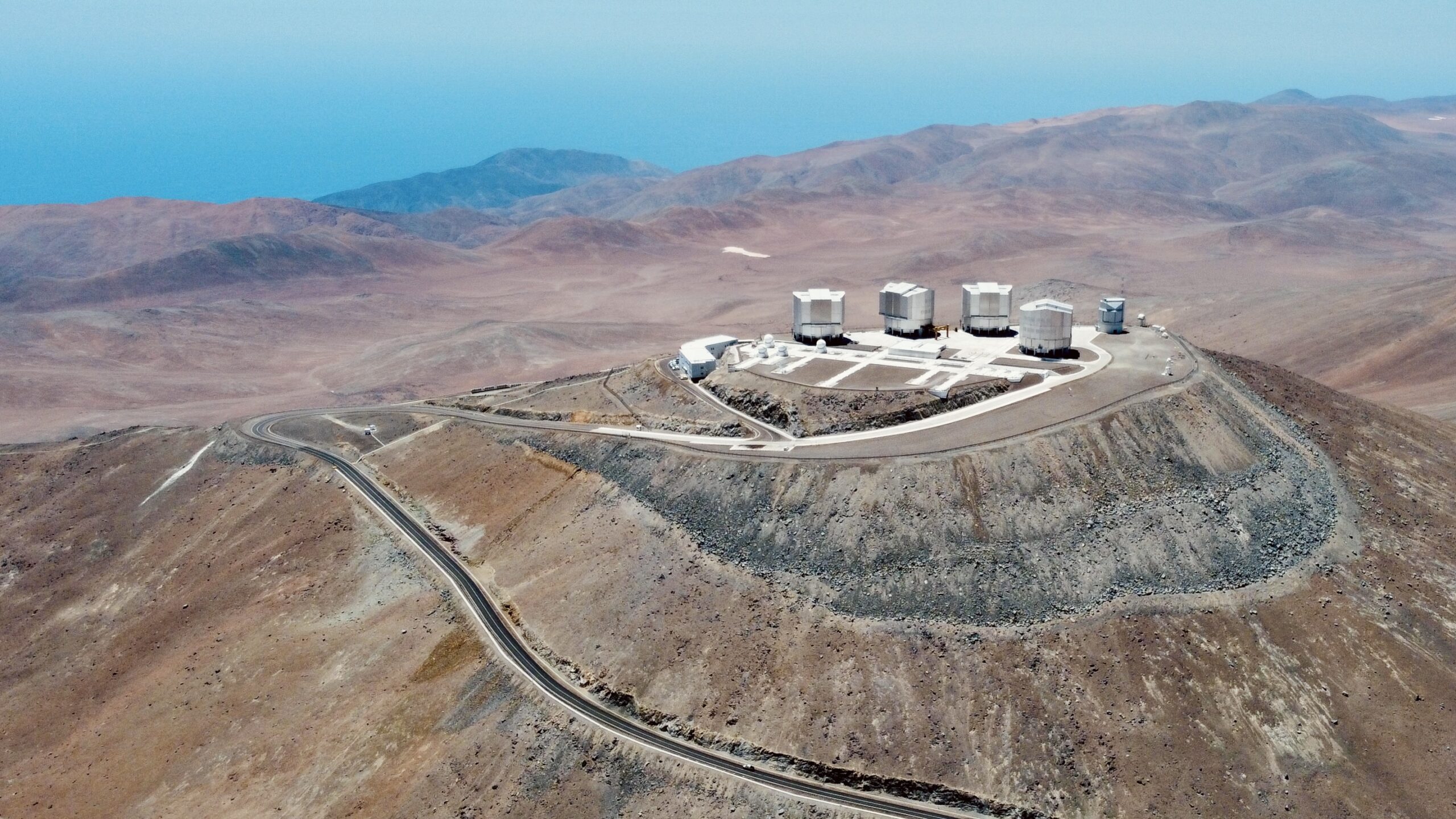
Our progress stops at the gate to the research area, at roughly 2,400 m a.s.l. The gatekeeper confirms what we basically knew: public visits are offered only once a week and must be booked in advance. We park by the gate and I pull out the drone. I try to fly as close as I can to the summit of Cerro Paranal, still a respectable 2.5 kilometres away and about 230 metres higher, at 2,635 m a.s.l. A strong wind keeps me from reaching the very top, but I still manage a few good shots.
We move on, looking for a good spot to watch the night sky, and end up finding one just beyond the entrance gate. There’s an open view in all directions, plus a clear line of sight to the summit and the observatory on it. We’re here far too early, night still a long way off, so—somewhat paradoxically—we pass the time sunbathing. The tyre tracks make it clear we’re not the only ones who come here. Even so, we end up spending the entire night completely alone. Exactly as we’d hoped.
All around are rolling hills and a desert that feels utterly abandoned. Despite the elevation—around 2,400 m—it’s surprisingly hot, roughly 30 °C. No water, no trees, no plants, no sign of life. Just dozens upon dozens of kilometres of nothing. The kind of place that reminds you how vast the world is—and how small you are.
Atacama – gateway to the cosmos
High elevation, zero light pollution and almost no humidity. These are exactly the conditions that make the area around Cerro Paranal one of the best places on the planet to observe the universe. It’s no coincidence the European Southern Observatory runs some of the world’s most powerful telescopes up here on the summit. Cerro Paranal is known beyond the scientific community, too: the final scenes of the Bond film Quantum of Solace were shot here. Look around and you understand why. The landscape feels raw, otherworldly, cut off from reality.
Across the valley we can see another giant telescope taking shape on nearby, much higher Cerro Armazones (3,046 m). Another sign that Atacama has a big future in astronomy.
The starry show begins
After a few hours of sunbathing, sunset slowly but surely arrives. We say goodbye to the day and get ready for the big show. For hundreds of kilometres around there are no sources of light. The sky is crystal clear and we sense an exceptional night ahead. Of course we need to change fast. This is the desert, and after sunset the temperature drops fast.
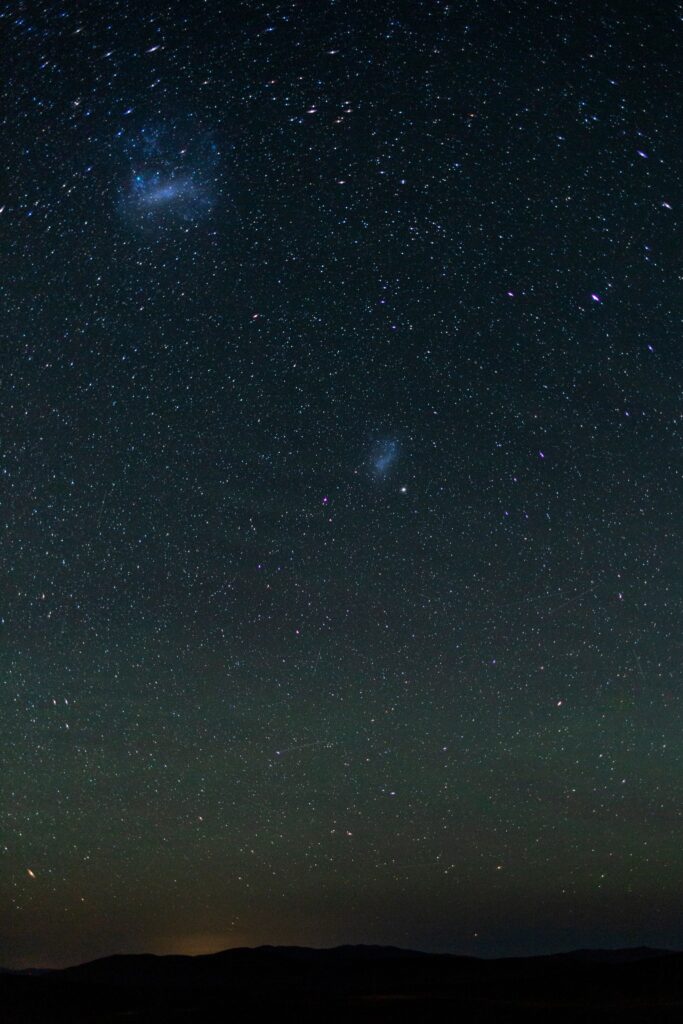
Evening twilight plays in incredible colours—from pale orange through pink and purple to deep blue. It starts subtly. First a few of the brightest objects appear—Jupiter, Mars, later Venus and Saturn. Only then do the first stars come out.
But things change fast. About two hours after sunset the stars are beyond counting. The Milky Way is plain to see, stretching across the sky like a luminous band. Above us it isn’t just a star show but a view into deep space—we can make out distant galaxies with the naked eye. When you realise you’re looking at objects millions of light‑years away, it hits you: this isn’t just a pretty night sky. It’s a truly cosmic experience.
Around midnight the observatory gets to work. A powerful laser beam shoots into the sky from the summit of Cerro Paranal. It calibrates the telescopes’ adaptive optics, which cancels out distortion caused by Earth’s atmosphere. To watch this live, in the absolute darkness of the desert, is a powerful—almost chilling—moment. Chilling also because in just a few hours the temperature has dropped from sunbathing‑friendly to near freezing.
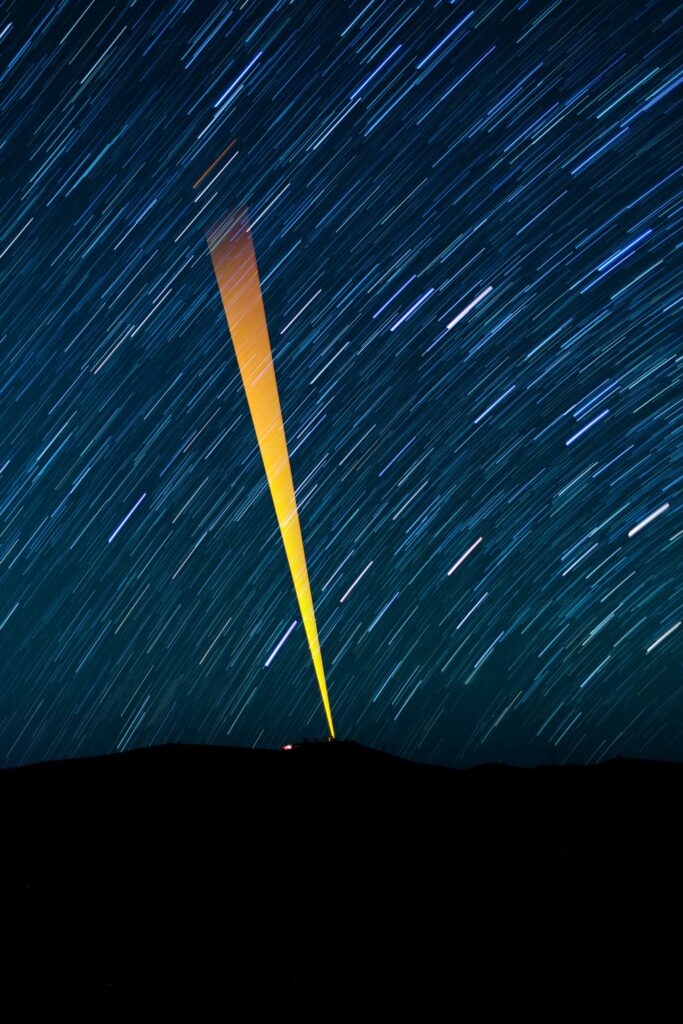
Time‑lapses beautifully reveal Earth’s rotation. The stars draw arcs across the sky and the night takes on a rhythm of its own. All that remains is to add the classic line: And yet it moves!
We could watch this show forever, but the falling temperature slowly drives us to seek warmth. First we try the bed of our pickup. It sounds like a great idea—roll out mats, crawl into sleeping bags and watch the night sky lying down until you doze off. Unfortunately the cold seeps through the truck’s metal and into our bags. After about an hour we retreat into the cab.
Make a wish
When the cold finally creeps into the cab as well, I grab a tripod, camera and headlamp—plus, crucially, hat and gloves—and head up a low hill a few hundred metres from the car. From there I have the whole of Cerro Paranal laid out before me. I set up the tripod, fire up the camera and program a 20‑minute time‑lapse. I secretly hope the activity will at least warm me a bit.
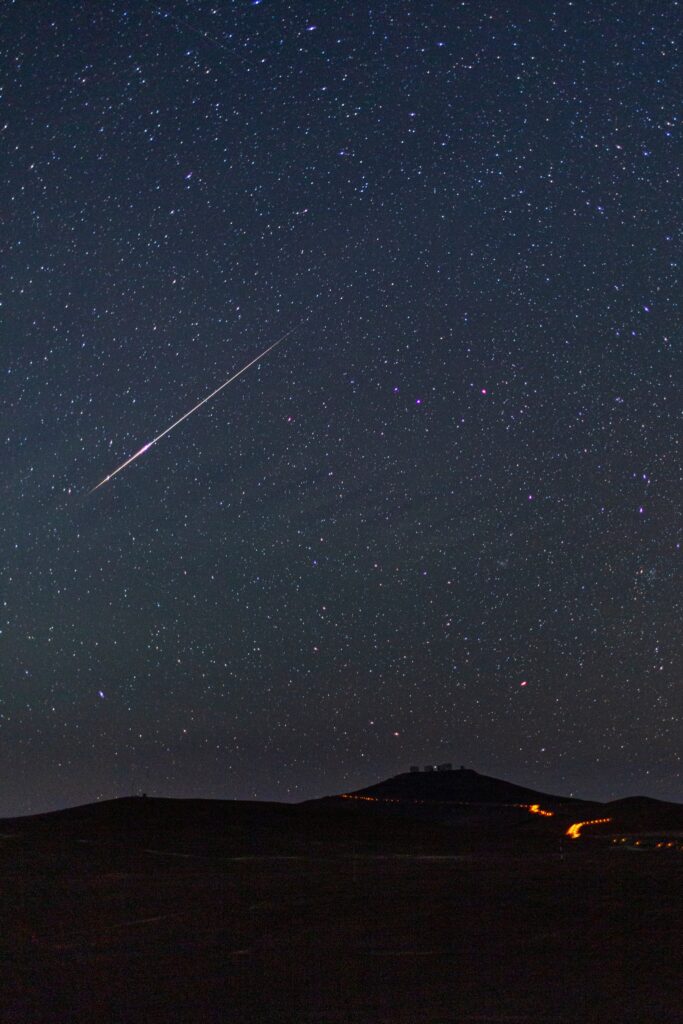
In the end, something else gets my blood moving. A few minutes into shooting I see a meteor streak from west to east—a long streak across half the sky right over the observatory, ending in a bright flash—and the celestial show is over. My eyes jump to the camera still clicking away. I just hope it caught the moment. Later it turns out it did—and at last one of my photographic dreams comes true: to capture a falling star.
Only in the small hours, just before sunrise, does the Moon rise. Everything around us starts casting shadows and the finer details of the night sky fade—the Moon simply drowns them in its glow. Moments before sunrise we watch the first light reflect off the telescopes atop Cerro Paranal. Tired, chilled to the bone, but full of one-of-a-kind experiences from this mystical place, we wait for the sun, hoping its rays will finally warm us.
Cerro Paranal Observatory
Construction of the Cerro Paranal observatory began in 1999. More than 30 metres were shaved off the mountaintop to create a level platform for the telescopes. It’s one of the largest astronomical projects of its kind anywhere. If you make it here, a tour of the observatory is absolutely worth it—we sadly didn’t have the time.
Just below the summit is the observatory’s support base: technical buildings, a gym, a heliport, a small airstrip and even a hotel.
Darkness as a commodity
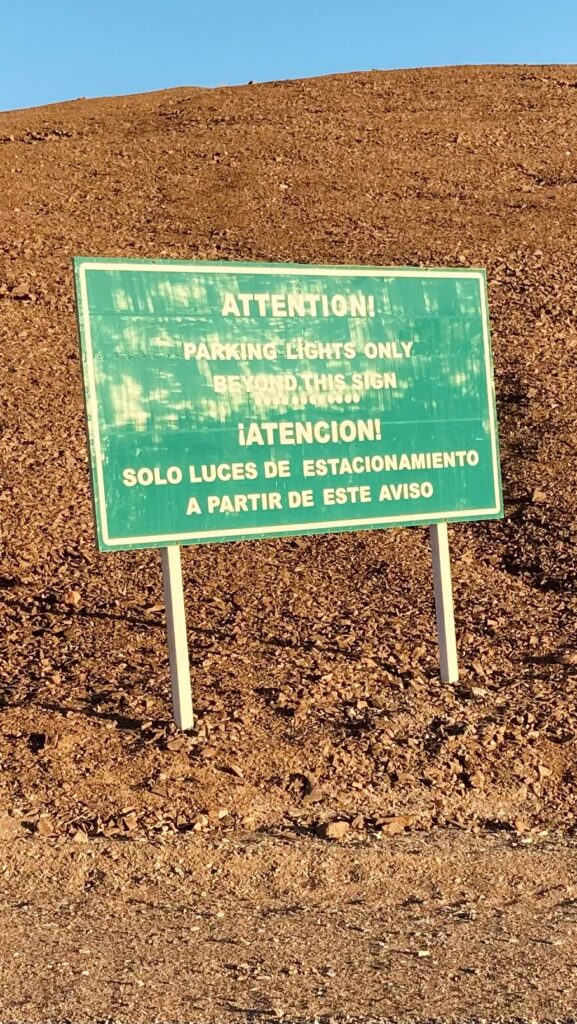
On the way back to the main road we pass a traffic sign that makes perfect sense here. Darkness is a precious commodity. If you want to drive here at night, you have to drive without headlights.
And that, more than anything, sums up Cerro Paranal: a place where darkness still belongs to nature—and to the stars. One last thing: if you ever come, time your visit for the new moon, when the Moon’s glow won’t spoil the unique experience of the night sky. Good luck!
Cerro Paranal facts
- Location: Atacama Desert, northern Chile
- Elevation: 2,635 m a.s.l.
- Climate: extremely dry, almost zero humidity, minimal cloud cover through the year
- Light pollution: virtually zero—one of the darkest places on Earth
- Observatory: operated by the European Southern Observatory (ESO)
- Main telescopes: Very Large Telescope (VLT) – four main 8.2 m telescopes + smaller auxiliary ones
- Construction started: 1999 (more than 30 m removed from the summit)
- Significance: one of the most important astronomical sites in the world
- Public access: by organised tours only; advance reservation required