

It all began innocently enough. It was one of those easygoing evenings on our journey through the Solomon Islands. Brano and I were on Gizo, in the island’s namesake town. The daytime bustle had faded, and hunger was quietly catching up with us.
We headed out. Best to drop any romantic notions: the town is small, with no busy promenades—just quiet lanes. Tourists are few. Finding a restaurant isn’t straightforward either. The map showed two back then—and even now it’s the same. Luckily they sit side by side, so we set off that way.
One is called Waterfront, the other—oddly—PT-109. We assumed the strange name was a map glitch and aimed for the first. Unfortunately, when we got there, Waterfront was closed. We had no choice but to try the curiously named PT-109.
An unexpected discovery
To our surprise, it was a real place—and open. We sat down and ordered. Soon enough, Brano started taking in the decor: walls full of World War II photos from when American and Japanese forces clashed here. The restaurant is decked out in period style, with artifacts from those turbulent times. We began to suspect that the mysterious “PT-109” meant something.
There’s Wi‑Fi, so we start googling. After a few clicks, an incredible story surfaces—one we’d never heard, and certainly not a tale we expected to stumble upon here.
What PT-109 really means
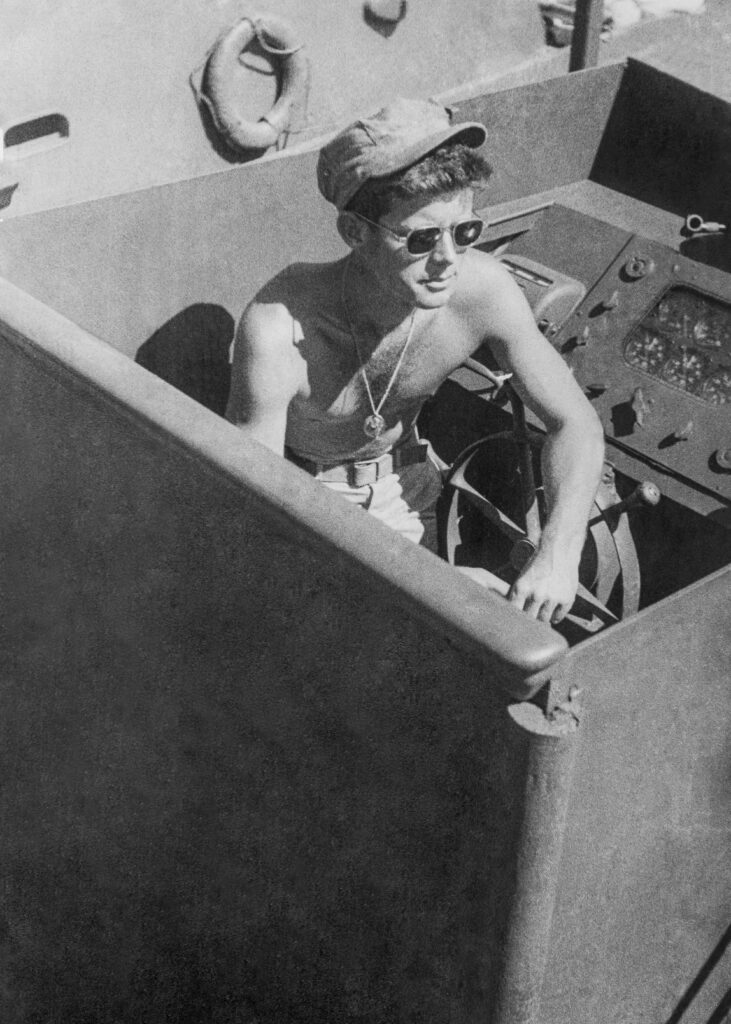
It turns out PT-109 was the designation of a U.S. torpedo boat that operated in these waters during World War II. Its skipper was none other than the future president of the United States—John F. Kennedy.
On the night of August 2, 1943, while patrolling Blackett Strait, PT-109 collided with the Japanese destroyer Amagiri. The massive destroyer cut the small boat clean in two. Two crewmen died instantly; the rest found themselves in the dark water, far from any help.
Despite an injured back, Kennedy took command. He gathered the survivors onto floating wreckage, and after a few hours they decided to swim for the nearest island. Back then it was called Plum Pudding Island. After the war, it was renamed Kennedy Island (Kasolo Island).
For several days the crew hid, went hungry, and hoped to be found. The turning point came when they met two local fishermen—Biuku Gasa and Eroni Kumana. They worked for the Australian Coastwatchers intelligence network, which monitored Japanese movements during the war, and traveled between the islands by canoe.
Kennedy quickly realized they were the crew’s best chance. He carved a plea for help into a coconut shell. That coconut became the key to saving the entire crew. The message reached American forces, and a few days later all the survivors were rescued.
After the war, the story of PT-109 became a legend in the United States. Kennedy spoke of it often, and the coconut that helped save his life later sat on display in the Oval Office.
Biuku Gasa and Eroni Kumana were invited to Kennedy’s inauguration. Colonial authorities, however, decided the trip was too difficult and that the men wouldn’t suit such an occasion. Instead, other representatives—who had nothing to do with the rescue—were sent to the United States. The real heroes stayed home, without fame, recognition, or reward. Their names only began to return to the historical record many years later.
Off to Kennedy Island!
As we read this almost unbelievable story, we quickly check the map to see exactly where Kennedy Island is—and make another surprising discovery. It’s only a few kilometers away. The decision is instant and without hesitation. Tomorrow we’re going to Kennedy Island.
The next day we line up a small boat and a local fisherman willing to take us. We set off straight from Gizo and head for the island we’d learned so much about the day before. We pass a smaller island with the local airstrip and continue east.
Before we reach the island, we stop for a short break at one of the many coral reefs. Brano’s goal is clear: spear a decent fish for lunch. While he hunts, I snorkel in the crystal-clear water. The marine life is spellbinding. I don’t see any big fish, but it’s a beautiful sight all the same.
After a few minutes, the idyll is broken by Brano’s call—lunch is secured. We climb back into the boat, confident we won’t go hungry today, and point the bow toward Kennedy Island.
The island that saved a president
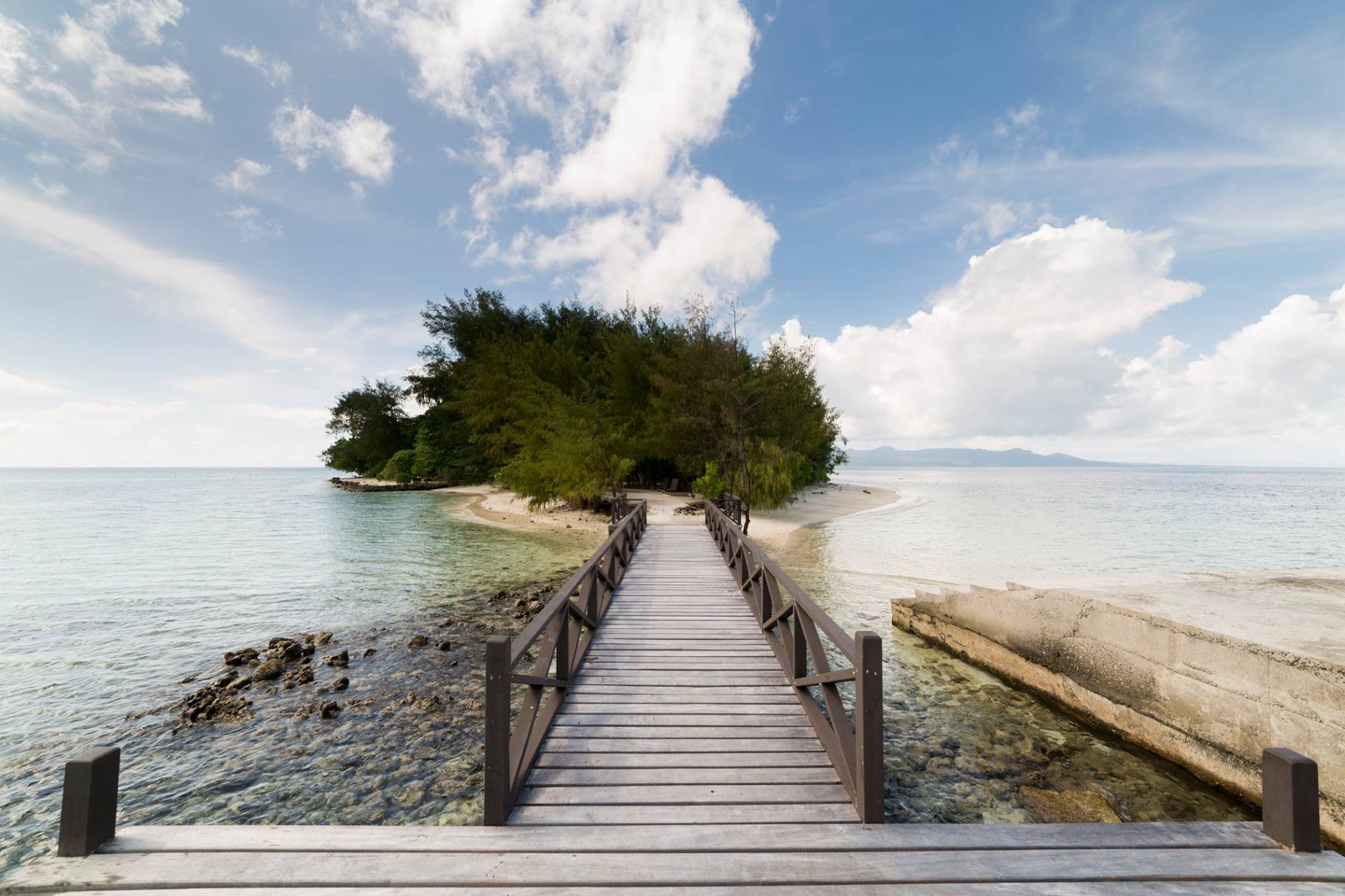
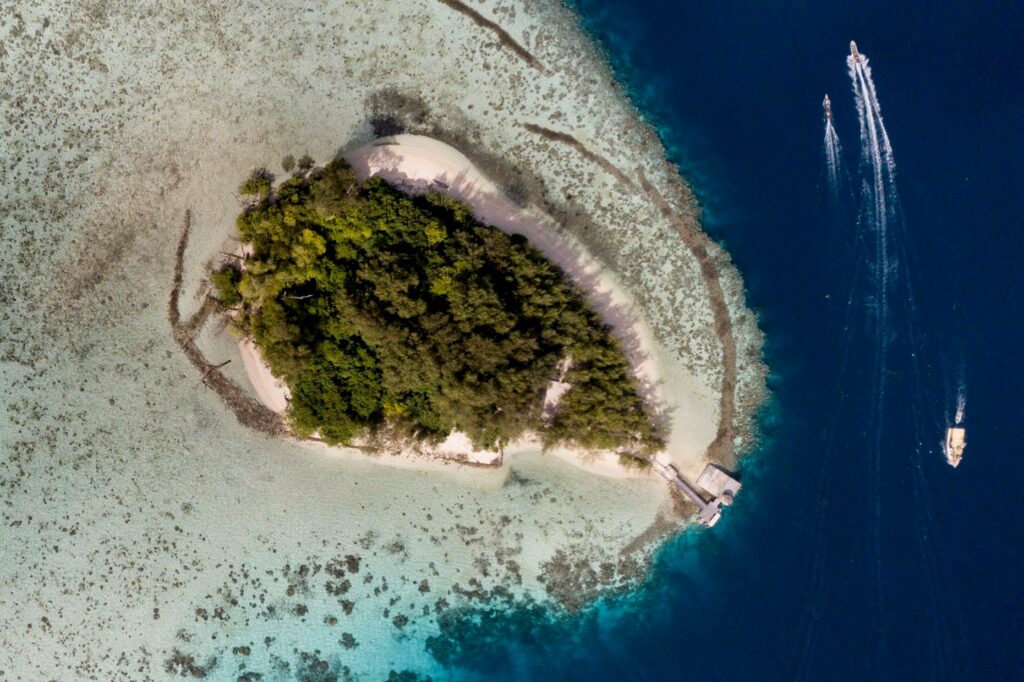
At first glance, the island looks much like many others we’ve seen out here. The hint that something is different is a small jetty for visitors, visible from afar. The island is tiny—about 180 meters long and just under 100 at its narrowest. There are two tended beaches, a small display of wartime artifacts, and a simple shelter. A local caretaker looks after it all. We’re the only visitors, with the whole place to ourselves, so we decide to linger a while.
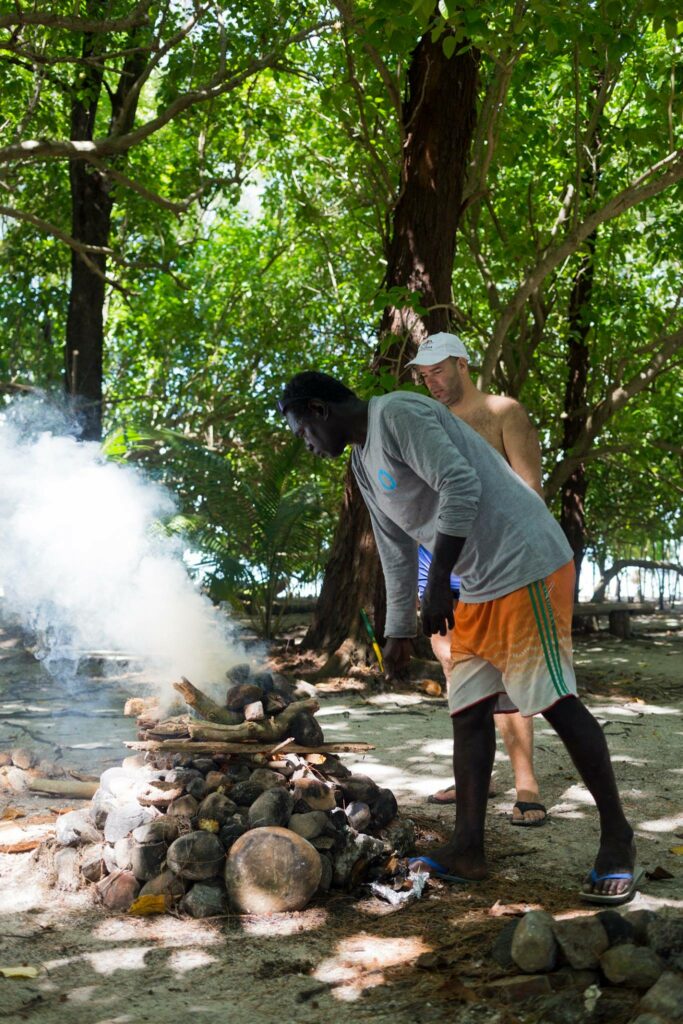
Together with the fisherman who brought us, we build a makeshift fire while Brano preps the fish. The fisherman shows us how locals cook it—more a slow steam-and-smoke under banana leaves than a quick roast. It takes longer, but the flavor is worth it. After a good lunch, we rest: I stretch out on the beach, while Brano strings up his hammock. It feels a little like paradise. The views of the open sea and distant islands are soothing. Before we leave, Brano sends up the drone and takes a few shots of this unusual place.
The coincidence behind it all
As we motor back to Gizo, another thought dawns on us. If that first restaurant hadn’t been closed, we might never have learned the story of PT-109. We might never have set out for Kennedy Island and discovered such an extraordinary place that had been right under our noses.
It’s these small twists of fate that make travel what it is—a chain of little detours that sometimes leads you to the most compelling stories.