

Traveling the Altiplano often takes you into areas where you can’t rely on infrastructure or quick help. Most of the time everything feels straightforward, but when things go sideways, it’s the basic items you have in the car that make the difference.
Table of Contents
Spare fuel
Most of the time, the fuel in your tank will be enough—until you end up in the remoter stretches of the Altiplano. Especially in southern Bolivia and northern Chile, it’s easy to find yourself in vast areas with no sizable settlements. It’s not just that there are no gas stations; often there’s no one who can sell you fuel from private stock either.
Among our articles you’ll also find more detail on fuel, drawn from our experience in Bolivia, which we visited right in the middle of a nationwide fuel shortage.
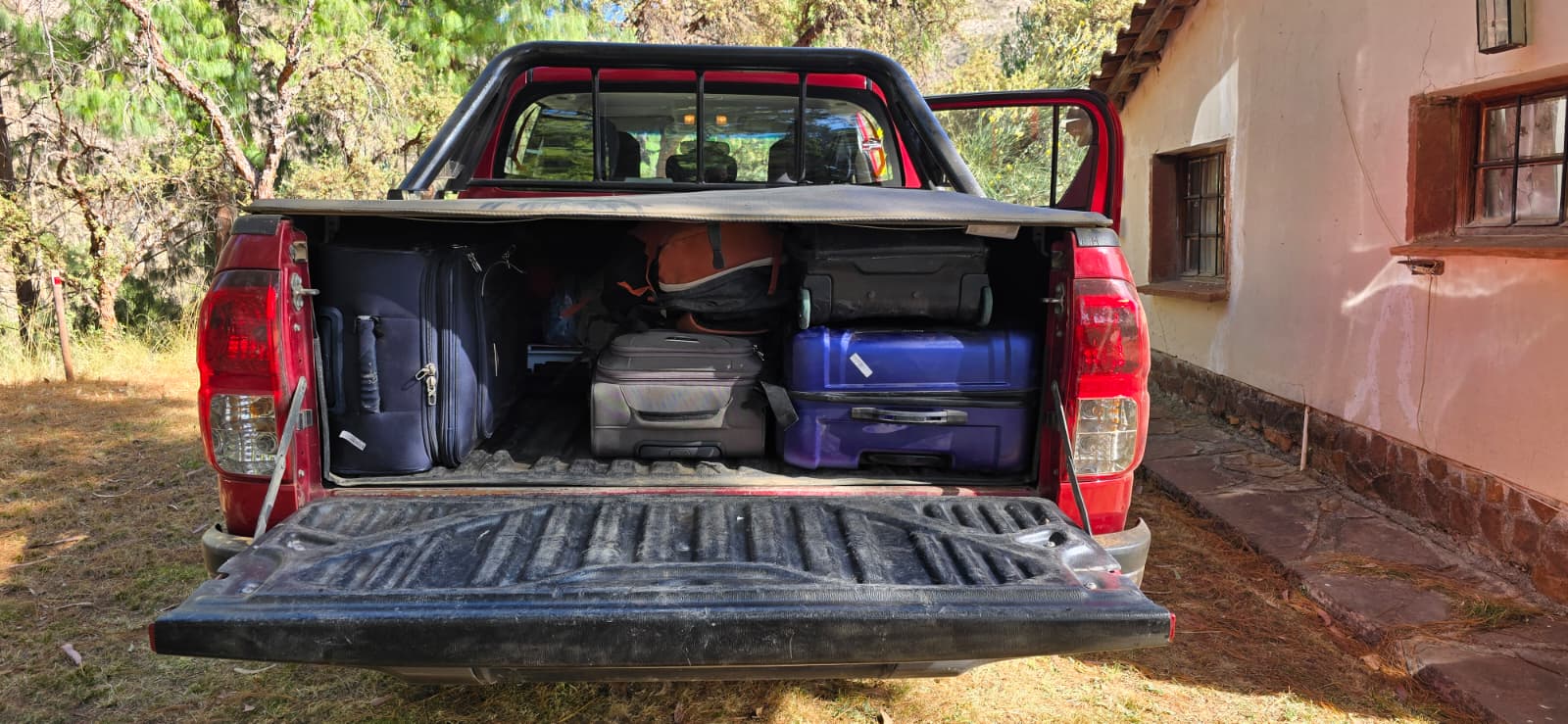
We carried three 20‑liter jerrycans of fuel while driving through Bolivia and topped them up whenever we could. Carrying reserve fuel buys you planning freedom and takes the stress out of unexpected detours.
Extra drinking water
Most of the time you’ll feel like you’re hauling water for nothing and your day’s supply will suffice. Its real value shows when things go wrong—car trouble, getting lost, or a health issue.
Our usual stock while traveling Bolivia was 6–12 liters of drinking water. That buffer gave us time to sort things out without panic or unnecessary risk.
Interested in this destination? Would you like to visit it with your dog? Check the entry requirements directly in BorderCooler®.
First-aid kit
Keep a first-aid kit within easy reach. At a minimum, pack supplies for minor injuries—cuts, scrapes, blisters. In a place where the nearest medical help can be hours away, even a small wound can complicate things fast.
Appropriate clothing
By this we don’t mean what’s comfy for the drive, but what keeps you safe in extremes. If you can’t find accommodation in time or have to spend a night in the car, the right clothing can be the difference between an inconvenience and a serious problem.
Warm layers, a hat, gloves, and a waterproof jacket should be a given. Nighttime temperatures on the Altiplano often drop below freezing, even after a relatively warm day.
Reliable offline navigation
The farther you venture, the more you’ll depend on accurate, up‑to‑date navigation. Offline maps are non‑negotiable. We’ve had the best results with Mapy.cz (Mapy.com), and, in some cases, Waze.
Ironically, Google Maps highlights plenty of sights in this region, yet the Altiplano’s road network is patchily mapped. Don’t rely on just one source.
Starlink and staying connected beyond GSM coverage
We traveled with the mobile version of Starlink, which kept us online almost all the time. That advantage was invaluable.
Always-on connectivity helps with navigation, but more importantly it lets you make the right calls based on up‑to‑date information. With our improvisational travel style, it meant we could book accommodation or guides at the last minute. In emergencies, any link to the outside world is invaluable, so we recommend Starlink or another setup that keeps you online beyond GSM coverage.
Dust, salt, and protecting your gear
Dust and salt are everywhere on the Altiplano. On long drives they find their way into luggage, electronics, and the vehicle’s undercarriage. Fine dust acts like an abrasive, and salt accelerates corrosion of metal parts.
Pack items in sealable boxes or plastic bags, and after driving in dusty or salty conditions, clean the car and your gear as soon as you can. This goes double for the undercarriage, where the effects of neglected maintenance may not show right away.
If you’re traveling with a dog
On the Altiplano, the same preparedness principles apply to your four‑legged travel companion. Carry backup water and emergency food for the dog too, especially when a drive runs longer than planned.
Evening and night temperatures often drop below freezing, so a dog coat can be very useful—especially for short‑haired breeds. Bring a small kit for treating minor injuries, especially for paws.
For roadside walks, a collar and leash are a given. In the dark or low visibility, a light‑up collar improves safety and makes it easier to keep track.
It also helps to pack dog booties—protective covers for paws. Surfaces on the Altiplano are often harsh—dry, sharp grasses, small stones, or salt crusts—which can be tough on a dog’s paws.
Conclusion: preparedness as part of the experience
The Altiplano is a region where preparedness isn’t overcaution—it’s respect for the environment. What you carry in the car often makes the difference between a relaxed trip and a stressful ordeal. Good kit gives you the freedom to improvise, change plans, and fully enjoy your journey.