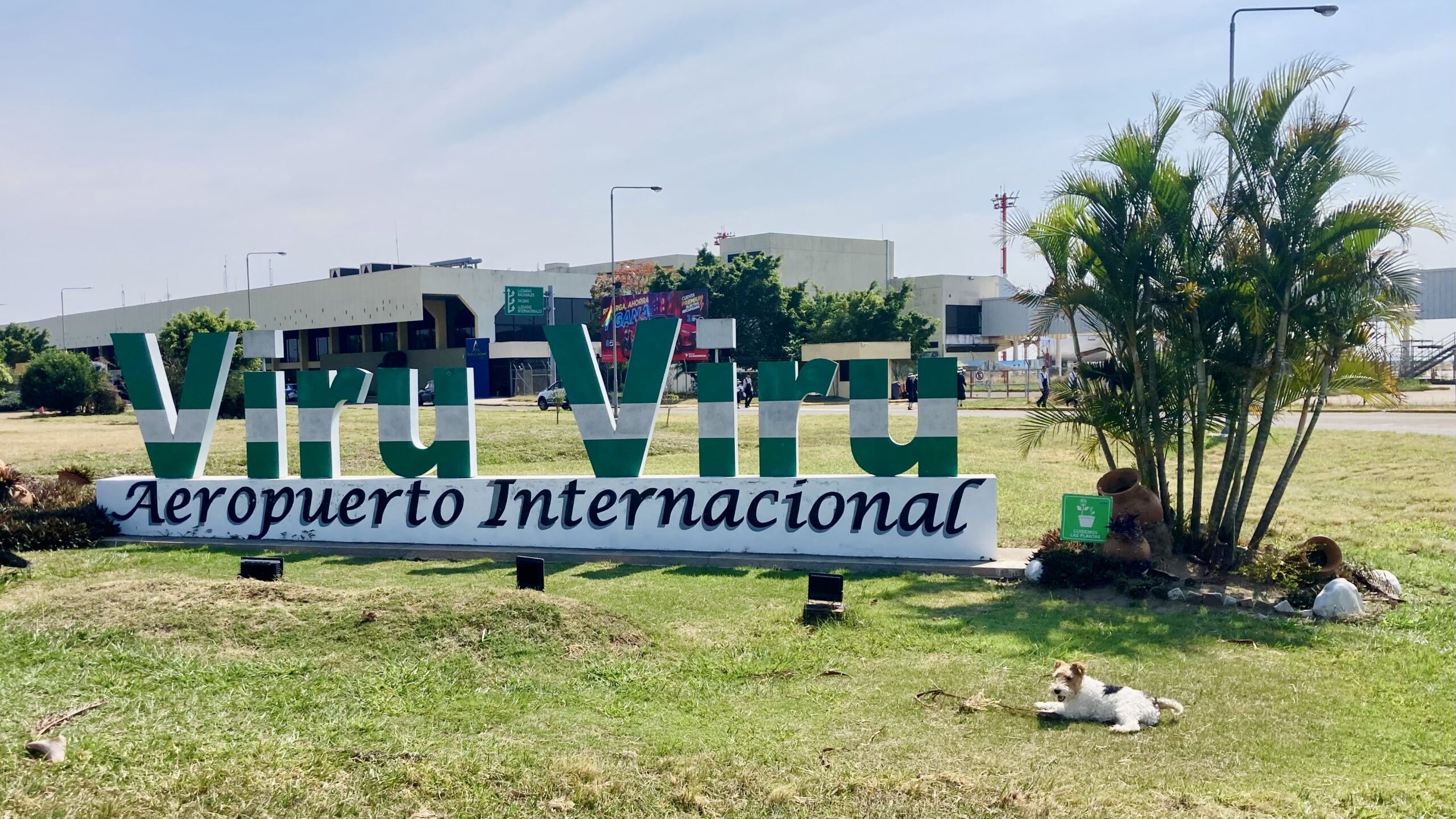


We flew into Viru Viru Airport near Santa Cruz de la Sierra from Asunción with our dog, Ibo. It was a direct flight of roughly two hours, so the journey itself was short and with no layovers.
Ibo traveled again in the cargo hold, in his dedicated crate. After landing, we went through a series of small, sometimes surprising steps—it helps to know about them in advance.
Online registration form and Wi‑Fi
On arrival, we had to fill out an online registration form. Fortunately, the airport has Wi‑Fi—slow, but it worked. Without it, things would have been trickier, so we recommend having mobile data or being ready to wait a bit.
Security screening even after landing
Unlike at many other airports, our baggage went through security screening again after arrival. Nothing major, but it’s good to be prepared for it.
Picking up the dog on the baggage carousel
One of the biggest surprises was that Ibo’s crate arrived on the same carousel as regular luggage. Until now we’d been used to collecting him at Lost and Found or another designated area. Seeing Ibo riding past between suitcases looked a bit comical, but we were also worried about his safety. In the end, he was fine and everything went smoothly.
Veterinary check—mostly a formality
Ibo was the only dog arriving on that flight that day. Even so, airport staff called in an employee to verify his veterinary paperwork. Ours were issued in Paraguay, so no translations were needed, as both countries are Spanish-speaking.
The officer simply reviewed the documents, scanned the QR code on the last page, and approved entry without examining the dog at all. Only after all the formalities were completed were we allowed to take Ibo out of the crate.
Practical tip: scissors in checked baggage
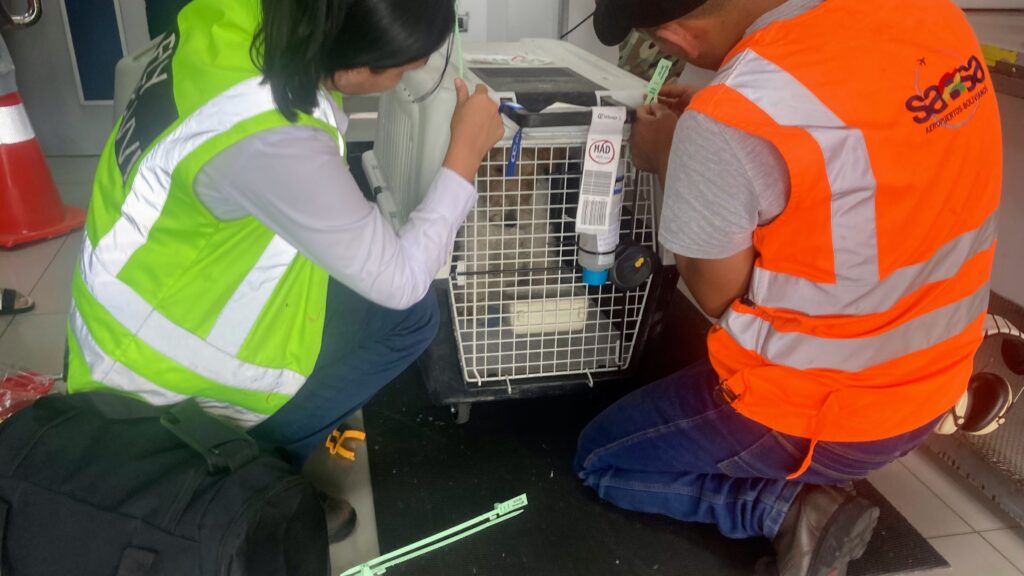
Pack scissors or another suitable cutting tool in your checked baggage. Crates are often secured with plastic zip ties before departure, and without a tool they’re very hard to remove. Of course, never put such an item in your carry-on.
Airport facilities
Viru Viru offers the usual services—car rentals, small restaurants, currency exchange, SIM card vendors, and we even found a small pet supplies shop.
We left the airport in a rental car, but local taxis are available too. Not all will accept dogs, though. Apps like Uber, or taxi services where you can arrange pet transport in advance, are a practical alternative.
Cash comes in handy
It’s not essential, but we recommend carrying at least a little local currency (BOB), or getting some at the airport. The rate may not be ideal, but you’ll be glad to have it if needed. We didn’t have any cash and hit a snag right as we were leaving the airport—there was a 10 BOB exit fee for cars. The attendant refused 1 USD, so we paid 2 USD and overpaid for no good reason.
Overall impression
We’d rate arrival and paperwork at Viru Viru as average but fairly pleasant. We landed in favorable weather, which made the whole experience nicer. It’s worth checking the forecast before you fly—heat, strong winds, or rain can sour your first impression of the country if you’re not ready for them.
Despite a few quirks, our entry into Bolivia with a dog was straightforward, and Ibo handled it better than we expected.
Interested in this destination? Would you like to visit it with your dog? Check the entry requirements directly in BorderCooler®.