
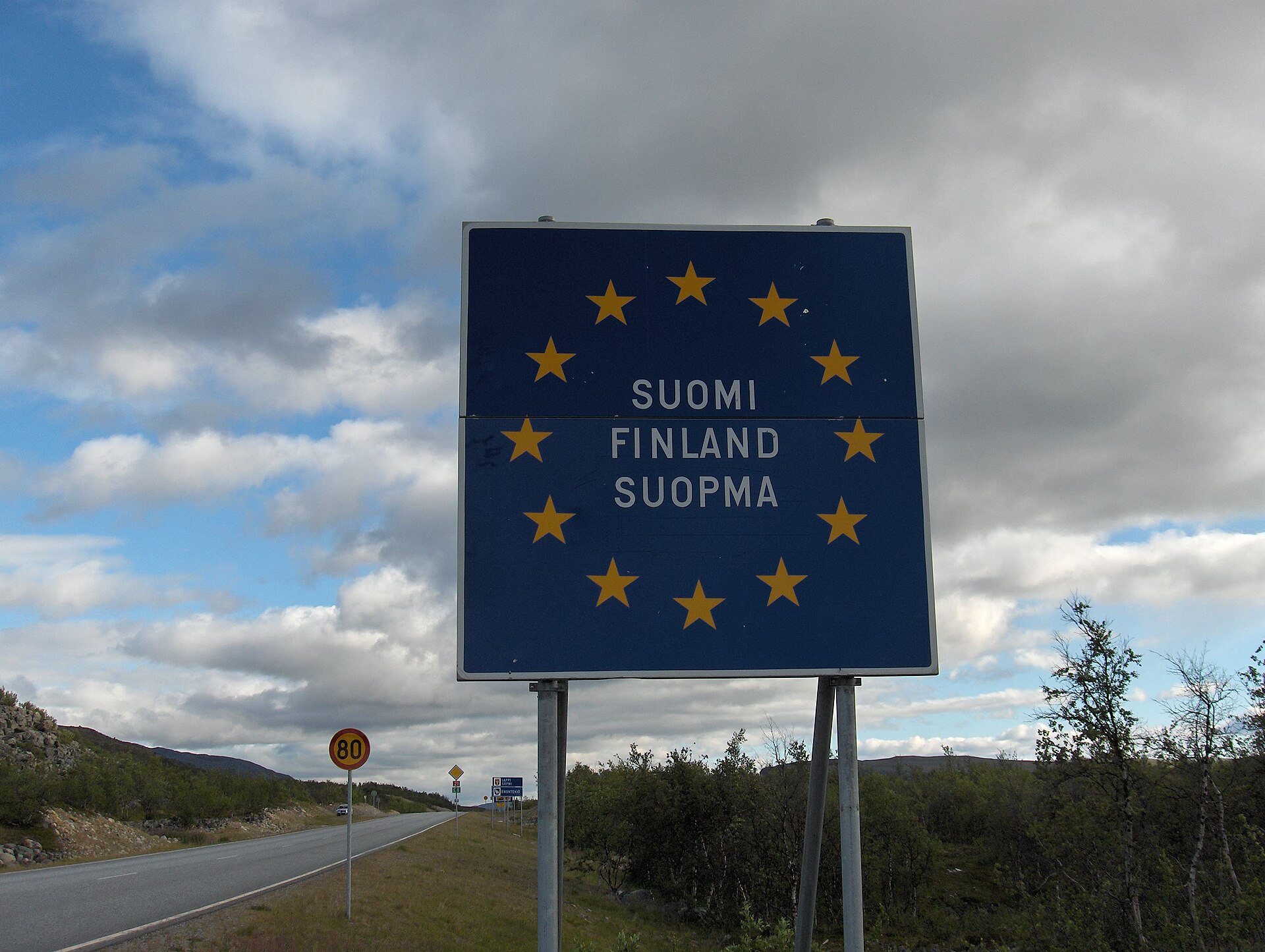


Finland is one of the easier countries to travel to with a dog if your paperwork is in order. That holds whether you’re coming from within the European Union or from a non‑EU country. For EU travel, the core rules are similar to most member states: your dog must be microchipped, have a valid rabies vaccination, and travel on an EU pet passport.
Finland does have one easy-to-miss extra requirement when you plan your trip. In most cases, dogs entering Finland must be treated for the tapeworm Echinococcus multilocularis. This deworming is the main difference compared with many other EU countries.
In this article, we take a closer look at:
- entry requirements for taking a dog to Finland from an EU country
- the mandatory echinococcus treatment
- entry requirements from non‑EU countries
- traveling with a dog to the Åland Islands
- practical tips before you go
- our first‑hand experience visiting Finland with a dog
Entry requirements for dogs arriving from an EU country
If you’re traveling to Finland from another EU country, your dog must have:
- a microchip
- a valid rabies vaccination
- a pet passport
- echinococcus treatment – required in most cases
The pet passport is issued by a veterinarian and includes your dog’s identification, owner details, and vaccination records. It’s the basic travel document for a dog moving between EU countries.
Your dog’s rabies vaccination must be valid, and the dog must be microchipped before vaccination. If this is the first rabies shot, there is usually a 21‑day waiting period before it becomes valid for travel.
For Finland, the pet passport and a valid rabies vaccination usually aren’t enough on their own. Without echinococcus treatment you can enter Finland only in limited cases – most notably if the dog arrives directly from Norway, Ireland or Malta, or is on a valid 28‑day rolling treatment regimen. For a typical trip from Slovakia or most EU countries, plan on deworming as a required step.
Mandatory echinococcus treatment for dogs
The key difference when traveling to Finland with a dog is the mandatory treatment against echinococcus. It applies to dogs, not to cats or ferrets.
The treatment must be administered by a veterinarian and recorded in the pet passport or the relevant veterinary document. Giving a tablet at home yourself is not sufficient. In general, the treatment must be given 24 to 120 hours before entering Finland – that is, 1 to 5 days before arrival. The medication must contain praziquantel or another active substance effective against this tapeworm.
When echinococcus treatment is not required
Echinococcus treatment is waived only in limited situations. The main exception covers dogs arriving in Finland directly from countries or territories with similar echinococcus control measures.
In practice, this generally means direct arrival from:
- Norway
- Ireland
- Malta
Within the EU, Northern Ireland is often mentioned as having a specific regime for pet movements. For everyday trip planning, the safest approach is to check your exact route against the current Finnish rules.
The crucial word is “directly.” If you’re driving or taking a ferry through several countries, don’t assume the exemption applies just because your journey started in one of the places listed above. If you’re arriving, for example, from Slovakia, Czechia, Austria, Germany, Poland, Sweden, Estonia or most other European countries, expect the treatment to be required.
The 28‑day rule for repeat travel
Finland also permits an alternative approach known as the 28‑day rule. It’s not a full exemption but a different way to meet the requirement for frequent or regular trips.
In practice, this means a series of regular echinococcus treatments carried out by a veterinarian and recorded in the pet passport. This setup is especially useful for people who frequently travel with their dog between Finland and another country.
For most travelers, the simplest approach is clear: visit a vet 1 to 5 days before entering Finland and have the echinococcus treatment administered and recorded.
Interested in this destination? Would you like to visit it with your dog? Check the entry requirements directly in BorderCooler®.
Entry requirements for dogs arriving from outside the EU
If you’re coming to Finland with a dog from a non‑EU country, the rules are more formal than for intra‑EU travel. They’re still very manageable if you start preparations early and check the requirements for your specific country of departure.
Your dog will generally need:
- an ISO‑compatible microchip
- a valid rabies vaccination
- a veterinary health certificate in the EU format
- a written declaration of non‑commercial movement
- echinococcus treatment – required for entry from most non‑EU countries; the main exception is a direct arrival from Norway
- and, where applicable, a rabies antibody titration (serology) test if the dog is arriving from a country for which the EU requires it
Whether the rabies antibody test is needed depends on the country of departure. For countries the EU considers lower‑risk for rabies, this test is usually not required. That list includes, for example, the United Kingdom, the United States and Canada.
Conversely, for countries not on the EU’s list you should expect to need the test. In practice, this can apply to trips from places such as Paraguay, Bolivia, India, Thailand, Kenya, Morocco, Türkiye or Russia. This isn’t a complete list, so always check your specific country before traveling.
For trips from higher‑risk rabies countries, preparation can take longer. Blood must be drawn by an authorized vet, the sample tested in an approved laboratory, and for some countries a waiting period applies after a satisfactory result before entering the EU. In short, arranging travel with a dog from outside the EU often can’t be done at the last minute.
It also matters where your dog first enters the European Union. If you fly from a non‑EU country to Frankfurt, Amsterdam or Paris and only then continue to Helsinki, your dog’s documents may be checked in that first EU country. Finland’s echinococcus rule still needs to be observed even if Finland isn’t your first EU entry point but is your final destination.
Traveling with a dog to the Åland Islands
The Åland Islands are an autonomous region of Finland located between Finland and Sweden. Administratively they belong to Finland, but they have their own character and self‑government.
From a pet‑travel perspective, treat them as Finnish territory. The same baseline veterinary rules apply when traveling to Åland as when entering mainland Finland.
Your dog should have:
- a microchip
- a valid rabies vaccination
- a pet passport or the relevant veterinary certificate
- echinococcus treatment, where required
If you’re taking a ferry to Åland, check your specific ferry company’s rules. Operators may have their own conditions for dogs on board, access to cabins, whether a pet‑friendly cabin must be booked, or restrictions in shared areas.
Document checks when traveling to Finland
Within the EU, it can feel like nobody checks a dog’s documents. In practice, that doesn’t mean you don’t need to have them.
On a trip to Finland, your dog’s documents can be checked by:
- airlines
- ferry companies
- customs or veterinary authorities
- staff at boarding
- the competent authorities when entering from a non‑EU country
It’s best to have everything ready in advance and to double‑check the dates in particular: the validity of the rabies vaccination, the date the deworming was given, and the correct entry in the pet passport or veterinary certificate.
Our experience traveling to Finland with a dog
We visited Finland with Ibo in summer 2024 during our Scandinavia road trip. We knew about the echinococcus requirement beforehand, so we had the treatment done in Slovakia before we set off. However, we didn’t reach Finland until more than ten days later, so that particular treatment wouldn’t have fallen within the 24 to 120‑hour window for a standard entry to Finland.
Our route had one crucial detail: we entered Finland directly from Norway. For a direct entry like this, echinococcus treatment is not required under Finnish rules. It’s not about where the dog “comes from” on paper, but where it actually and directly enters Finland from.
That doesn’t mean you can ignore the rules on such a route. If you travel from Slovakia or another EU country to Norway first and only then continue to Finland, you still need to meet Norway’s entry requirements separately. The fact that there may be an exemption for a direct entry from Norway to Finland doesn’t remove the need to prepare properly for entering Norway.
We mostly transited Finland rather than treating it as a full holiday. We visited Santa Claus Village in Rovaniemi, the city of Vaasa and the Kvarken Archipelago area near Vaasa, a UNESCO natural site. This is also where you’ll find the Replot Bridge, known as the longest bridge in Finland. We left Finland by ferry from Helsinki to Tallinn.
This experience showed us that when traveling Europe with a dog, it’s not enough to look only at the destination country – the exact route matters, too. For Finland, it can make a real difference whether you’re arriving from Slovakia, Sweden, Estonia or directly from Norway.
Practical tips before traveling to Finland
Before setting off for Finland with a dog, we recommend checking the following:
- that your dog’s microchip is working
- that the rabies vaccination is valid
- that the vaccination was recorded after the date of microchipping
- that you’re carrying the pet passport or the correct veterinary certificate
- that the echinococcus treatment was given within the correct time window if required
- that the treatment has been recorded by a vet in the documents
- that your carrier allows dogs under conditions you’re comfortable with
- whether you need a pet‑friendly cabin or other reservation for the dog when traveling by ferry
If you’re traveling from a non‑EU country, also check whether a rabies antibody test is required and through which designated point of entry you’ll be entering the EU.
Summary of dog travel rules for Finland
Traveling to Finland with a dog is straightforward with the right preparation. For EU arrivals, the essentials are a microchip, a valid rabies vaccination, a pet passport and, in most cases, echinococcus treatment.
For arrivals from outside the EU, add more formal paperwork – especially the veterinary certificate, a declaration of non‑commercial movement and, for some countries, a rabies antibody titration test.
The Åland Islands are an autonomous region of Finland, but for pet travel you should count on Finnish rules applying. The most important advice remains simple: check not only the destination country but also the exact route by which you’ll enter Finland.