
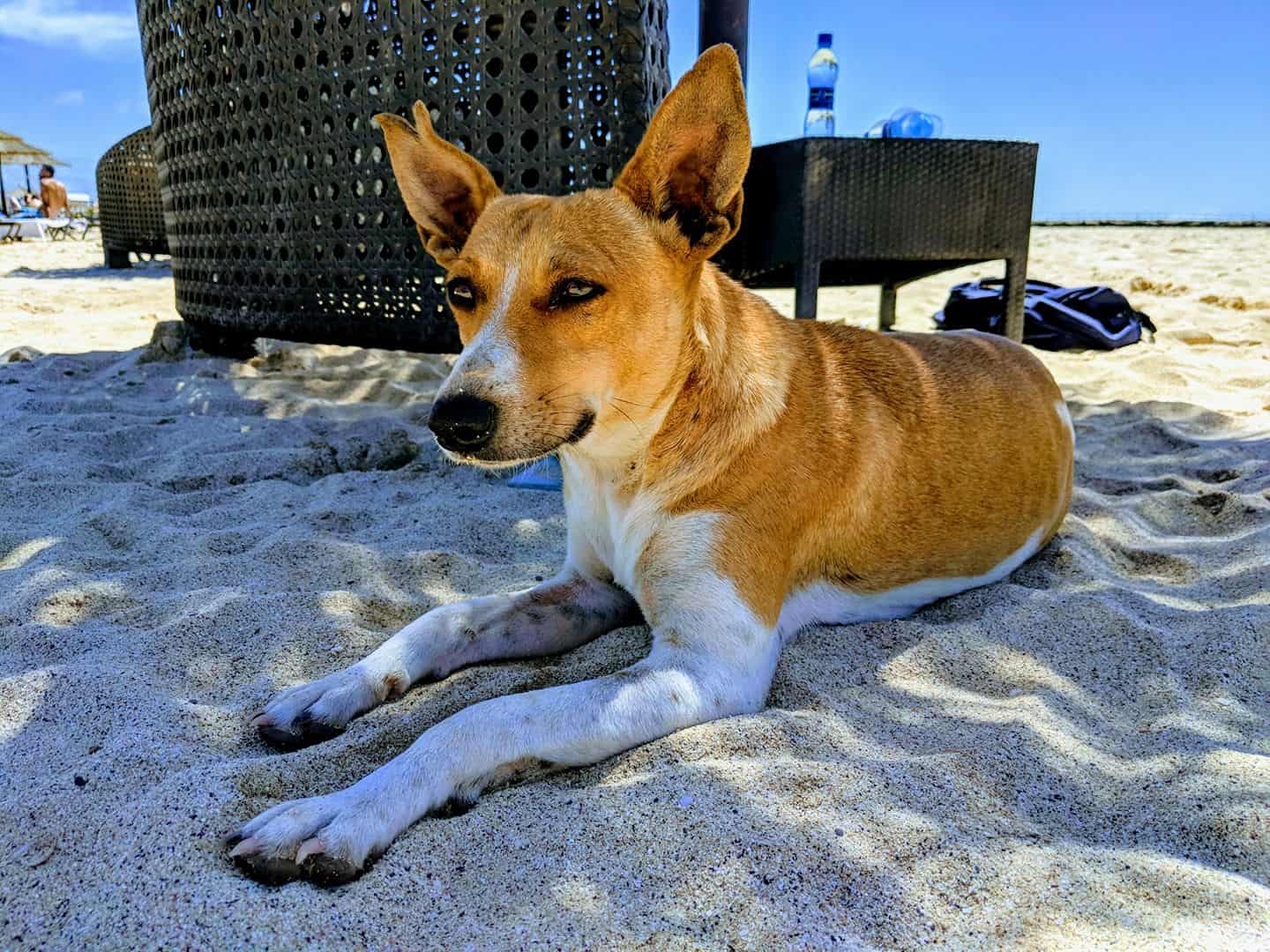


Cape Verde is an island country in the Atlantic, best known for the islands of Sal, Boa Vista, Santiago, São Vicente and Santo Antão. For travelers with a dog, the good news is that even though it’s an island state, quarantine is not usually required on entry—provided all health requirements are met.
Entry conditions vary by country of departure. Official sources set out clear rules particularly for travel from the EU and Brazil. For other countries we also include informal notes from people with real experience traveling to Cape Verde with a dog. Before you go, verify the current requirements directly with the Cape Verdean embassy or consulate in your country of departure.
Even more important than entry is the return home. The rules are set not by Cape Verde, but by the country you’re returning to.
This article covers a standard non-commercial trip with a dog traveling with its owner or an authorized person. If the dog is shipped as cargo, for sale, with a change of ownership, or as part of a larger number of animals, different rules may apply.
Table of Contents
Quick overview: what your dog needs for a trip to Cape Verde
In most cases, have ready:
- an ISO-compatible microchip,
- valid rabies vaccination,
- a veterinary health certificate,
- records of up-to-date vaccinations and deworming,
- meeting the airline’s requirements.
Cape Verde does not require quarantine for standard entry if your paperwork is in order. For the trip back home, the rules of your destination country apply—not Cape Verde.
General entry requirements for dogs entering Cape Verde
For Cape Verde, it’s important to distinguish between conditions we’ve directly verified and practical additions from unofficial sources.
For entry from most countries, the repeatedly confirmed requirements include:
- an ISO-compatible microchip,
- valid rabies vaccination,
- a veterinary health certificate,
- records of up-to-date vaccinations and deworming.
Based on practical, unofficial reports from travelers who’ve taken this route, the following are also mentioned:
- having the certificate endorsed by the competent authority of the country of departure,
- issuing the certificate typically 2 to 5 days before departure,
- additional local formalities depending on the mode of transport or specific route.
Interested in this destination? Would you like to visit it with your dog? Check the entry requirements directly in BorderCooler®.
Entering Cape Verde with a dog from the EU
For travel from the EU, official sources state the following requirements:
- a microchip compatible with ISO 11784/11785,
- an EU Pet Passport,
- a travel or health certificate confirming rabies vaccination,
- records of up-to-date vaccinations and deworming.
An EU Pet Passport is important on this route, but it’s not enough on its own—you also need a health certificate confirming the dog’s current health status.
A titer test is not required for entry to Cape Verde. It is, however, important for returning to the EU—see the section on returning.
Entering Cape Verde with a dog from Brazil
At the time of writing, Cabo Verde Airlines operates a direct flight from Recife, Brazil, to Cape Verde. Brazil has historical and cultural ties with Cape Verde, reflected in the fact that official sources for Brazilian travelers list their own entry conditions.
For travel from Brazil, Cape Verde’s tourism portal lists:
- valid rabies vaccination administered at least 30 days before entry,
- vaccinations against distemper, parvovirus, leptospirosis and infectious hepatitis,
- internal and external parasite treatment with dates recorded,
- a vaccination booklet and a health certificate issued by the official veterinary authority in Brazil.
Brazilian travelers must send their documents to the Cape Verdean embassy or consulate in Rio de Janeiro or São Paulo to obtain an official certificate.
Veterinary health certificate for travel to Cape Verde
The veterinary health certificate is the key document for any route to Cape Verde. It confirms the dog is clinically healthy and meets the health requirements of the country of departure.
Based on travelers’ practical experience, the certificate should be issued shortly before departure, typically 2 to 5 days prior to the flight.
Deworming and other vaccinations
Deworming and current vaccinations are listed as part of the documentation. For trips from Brazil, deworming and additional vaccinations are explicit requirements. For travelers from other countries, deworming is a sensible practical step—carry a record of it with you.
Flying to Cape Verde with a dog
For most travelers, Cape Verde is reached by air. Airline rules must be handled separately from veterinary requirements.
Before booking, check:
- whether the airline carries dogs on your route,
- whether the dog can travel in the cabin or only in the hold,
- what the carrier/crate size and weight limits are,
- what the rules are for transfers.
For in-cabin travel, Cabo Verde Airlines states an 8 kg limit including the carrier, with carrier dimensions of 55 × 40 × 20 cm. Above that limit, the dog travels in the hold. These conditions can change—always verify directly with the airline.
Cabo Verde Airlines has a list of banned breeds: Pitbull Terrier, American Staffordshire Terrier, Mastiff, American Pit Bull, Staffordshire Bull Terrier, Bull Terrier, American Bulldog, Dogo Argentino, Fila Brasileiro, Kangal, Caucasian Shepherd Dog and Neapolitan Mastiff.
Returning home from Cape Verde
When returning a dog from Cape Verde, the rules are set not by Cape Verde but by the country you’re going back to. Check in advance which documents your dog will need to re-enter your home country.
Returning with a dog from Cape Verde to the EU
If a dog returns from Cape Verde to the EU, it’s an entry into the Union from a non-EU country. Although Cape Verde is among countries free of canine rabies, a titer test is still mandatory for return to the EU. The EU does not waive the titer test based on the health status of the country visited, but on its own list of countries with a reliable veterinary system. Unfortunately, Cape Verde is not on that list.
For return from Cape Verde to the EU, a dog needs:
- a microchip,
- valid rabies vaccination,
- a rabies antibody serology (titer) test—a blood test that checks antibody levels after vaccination—performed in an EU-approved laboratory,
- an EU Pet Passport or a veterinary health certificate for entry to the EU,
- entry via an approved point of entry for travelers with pets.
If the dog normally lives in the EU, arrange the titer test before leaving the EU and have the result recorded in the EU Pet Passport. Provided the vaccination does not expire during your trip, the three-month waiting period after the blood draw does not apply on return.
Returning with a dog from Cape Verde to the USA
Cape Verde is not on the CDC’s high-risk list for canine rabies, which simplifies the return to the USA administratively. On return, the dog needs the CDC Dog Import Form, must be microchipped, and be at least 6 months old. Always check the current requirements on the CDC website before you travel.
Practical rules for staying in Cape Verde with a dog
Cape Verde can be a pleasant destination with a dog, but factor in the island character, intense heat, and the differing infrastructure between islands.
Always confirm accommodation directly. The “pet-friendly” filter alone isn’t enough. Check your dog’s size, any fees, and the rules for shared areas. You’ll find most pet-friendly stays on Sal and Boa Vista.
During your stay, think about plenty of water, shade, and sun protection. Plan walks in the morning or evening when the heat is less intense. Watch out for hot surfaces.
Vets can be found on Fogo, Boa Vista, Sal, Santiago, Santo Antão and São Vicente. If you’re heading to a smaller island, check availability of veterinary care in advance.
For inter-island travel, additional local formalities may apply in practice, such as a local health certificate from a Cape Verdean vet or the competent authority. If you plan to visit several islands with a dog, verify the requirements before any domestic transfer.
When to start preparing
With the right paperwork, entry to Cape Verde is fairly straightforward. Preparing for the return home is much more important.
Basic checklist:
- check the microchip and vaccination validity,
- arrange the veterinary health certificate shortly before travel,
- verify airline conditions, including any breed restrictions,
- for inter-island travel, check whether a local health certificate will be needed,
- if the dog is returning to the EU—titer test before leaving the EU,
- if the dog is returning to the USA—check CDC requirements before travel.
Summary
Traveling to Cape Verde with a dog is manageable with well-prepared paperwork, and quarantine is not normally required. Put most of your attention on the return journey. A titer test is not required for entry to Cape Verde, but it can be crucial for re-entry to some countries. If you’re planning a longer stay or hopping between islands, expect that some practical steps may need to be handled locally on the spot.
Frequently asked questions about traveling to Cape Verde with a dog
Does a dog need to quarantine when traveling to Cape Verde?
Cape Verde does not require quarantine for standard entry, provided all health requirements are met.
Does a dog need a titer test to travel to Cape Verde?
A titer test is not listed as a condition for entry to Cape Verde. It is mandatory for return to the EU—arrange it before leaving the EU.
Is an EU Pet Passport enough for travel from the EU to Cape Verde?
An EU Pet Passport is an important document, but it’s not sufficient on its own. You also need a health certificate confirming the dog’s current health status.
What are the conditions for returning a dog from Cape Verde to the USA?
Cape Verde is not on the CDC’s high-risk list, which makes the return simpler. Confirm the return requirements on the CDC website before you go.
Can all breeds travel with Cabo Verde Airlines?
No. Cabo Verde Airlines maintains a list of banned breeds. Check whether the restrictions apply to your dog before booking.