
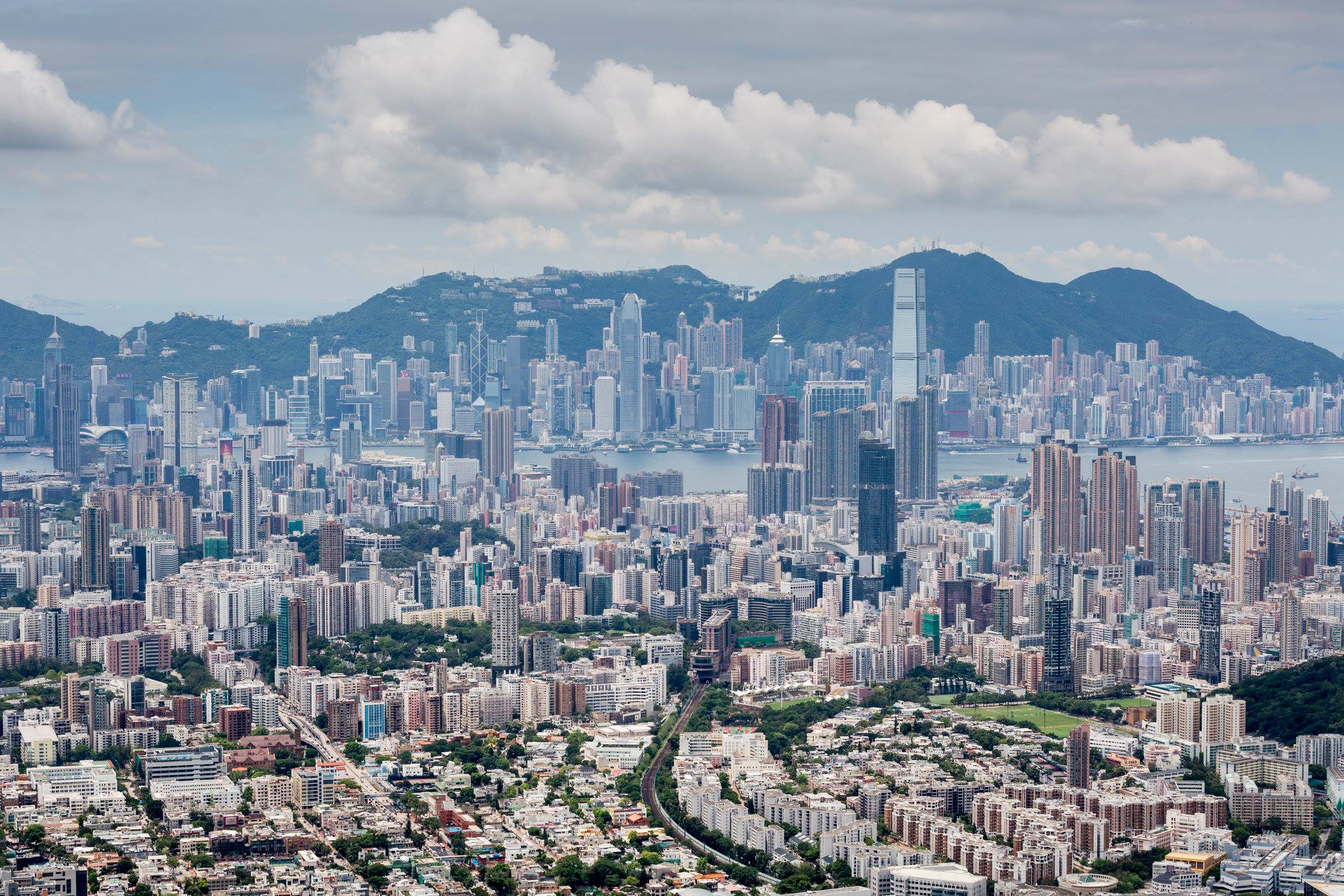


Most people picture Hong Kong as an endless sea of skyscrapers, heavy traffic and streets that never slow down. Few realise that just a few bus stops from the centre, you can set off on a proper mountain hike with views that will stop you in your tracks.
Lion Rock is one of the city’s most iconic peaks. During my summer stay in Hong Kong, it became the goal of one of my hikes.
Ascent from Lion Rock Park
I start from the Lion Rock Park area. It’s clear from the outset this won’t be a gentle stroll. Steep stairs and a steeply rising trail carry me higher and higher.
After the initial climb I reach the ridge, just shy of Kowloon Pass. From here the trail continues to the summit, with roughly 150 metres of elevation still to go.
The route first tops out on a minor summit called Lion Head. Here the trail breaks out of dense forest and the first views of the city open up. The contrast between the green ridge and the dense cityscape below is striking.
From a nearby saddle I carry on to Lion Rock.
Lion Rock summit

The true summit sits just off the main trail. A few others are up here too, but the atmosphere is calm.
Up top there’s a sign reading Lion Rock with the elevation. The views are worth every step. Much of the city lies right at your feet. Skyscrapers, dense neighbourhoods, hills in the distance — it all comes together in one dynamic panorama.
The weather is on my side. It stays hot and humid the whole way — classic Hong Kong summer — but higher up there’s a slight drop in temperature and a welcome breeze. Most importantly, the views aren’t shrouded in smog. I clearly got lucky.
Descent: longer than the climb
Getting up is relatively simple and straightforward; the way down feels endless.
First, I drop to Garter Pass. The trail dives back into the forest and there are no more city views on this stretch.
My route continues to the Sze Tsz Au pass, where I leave the ridge. Then it’s a path, and finally endless stairs back to the city, all the way to Fat Chong Temple.
Hong Kong’s stairs can be relentless. After a summer climb in heat and humidity, the descent really punishes the knees.
Practical information
I used public transport both to the trailhead and back — buses in my case. Connections are reliable, and one of Hong Kong’s perks is being able to reach nature without a car.
The route is physically demanding mainly because of the steep gradients and the sheer number of stairs, but technically it’s straightforward. In the summer months, expect high humidity and heat.
Lion Rock proves Hong Kong isn’t just concrete and skyscrapers. Turn your back on the city, climb a few hundred vertical metres, and suddenly you’re above one of the most densely populated places on earth.