


Not all the stress of flying with a dog comes down to tickets, the crate, or vet paperwork. Sometimes trouble shows up at the worst possible moment—literally a few hours before departure, when you feel everything important is sorted and you think all that’s left is a quiet last night before the trip.
That’s exactly what happened to us the day before our flight from Madrid to Asunción, Paraguay. On our drive across the country we spent the last night in the small village of Cetina, just under 200 kilometers from Madrid’s airport. In the evening we noticed Ibo shaking his head hard, scratching his right ear, and acting restless. We had no idea yet whether it was simple irritation, an infection, or something that could jeopardize the entire flight.
By morning it was clear we weren’t going anywhere near the airport without seeing a vet. What followed was a jittery drive toward Madrid, searching for a suitable clinic along the route and making the kind of decisions that are tough to face just hours before takeoff.
The evening before departure: an ear issue
After checking in at the guesthouse in Cetina and a short walk, we noticed Ibo was shaking his head constantly and scratching his right ear. It wasn’t just a “he’ll stop itching in a minute” thing—it clearly bothered him a lot more. When we tried to look in his ear, he reacted irritably, which isn’t like him.
Cetina is a tiny village with no real infrastructure—there probably wasn’t a vet there, and we didn’t even try to look. We were exhausted from the drive and soon fell asleep. It wasn’t a peaceful night, though—because of his ear, Ibo couldn’t settle in one spot, and it was obvious the problem bothered him throughout the night. We started looking for a clinic only in the morning, on the way to the airport.
Morning: packing, checkout, and quick decisions
In the morning we packed everything up, walked Ibo, settled the bill, and set off toward Madrid. There were quite a few clinics along the A2 motorway, but we eventually chose the SANIVET Veterinary Clinic in Guadalajara.
What clinched it for us was the combination of excellent reviews and easy access from the A2. We needed a solution that wouldn’t mean a big detour or more stress. We weren’t aiming for the perfect clinic in Spain—we just needed someone who could see us quickly, handle it sensibly, and, ideally, in English.
Interested in this destination? Would you like to visit it with your dog? Check the entry requirements directly in BorderCooler®.
A vet near Madrid: the SANIVET clinic in Guadalajara
We managed to park almost right in front of the clinic, which we found easily thanks to the satnav and clear street signage. When we walked into the waiting room, there were maybe two other clients with their pets ahead of us. One of the staff came over, but when she realized our Spanish was about toddler-level, she called the doctor himself, who spoke English.
We briefly explained what was going on. True to his terrier nature, Ibo greeted the doctor enthusiastically. It turned out the doctor once had a fox terrier too, so the feeling was mutual. That harmony ended the moment he touched Ibo’s ear—he growled, just as he had with us the night before.
At that point it was clear the problem was real, not just a fleeting irritation.
A suspected foreign body in the ear
The doctor quickly shared his hunch. He said Ibo would likely need to be put under to find out what exactly was in the ear. From the start, he suspected a foreign object lodged in the ear canal.
I’ll admit, I hesitated. Putting a dog under anesthesia a few hours before a long flight to South America didn’t sound like a good idea—especially since we hadn’t ruled out other possible causes of Ibo’s irritation.
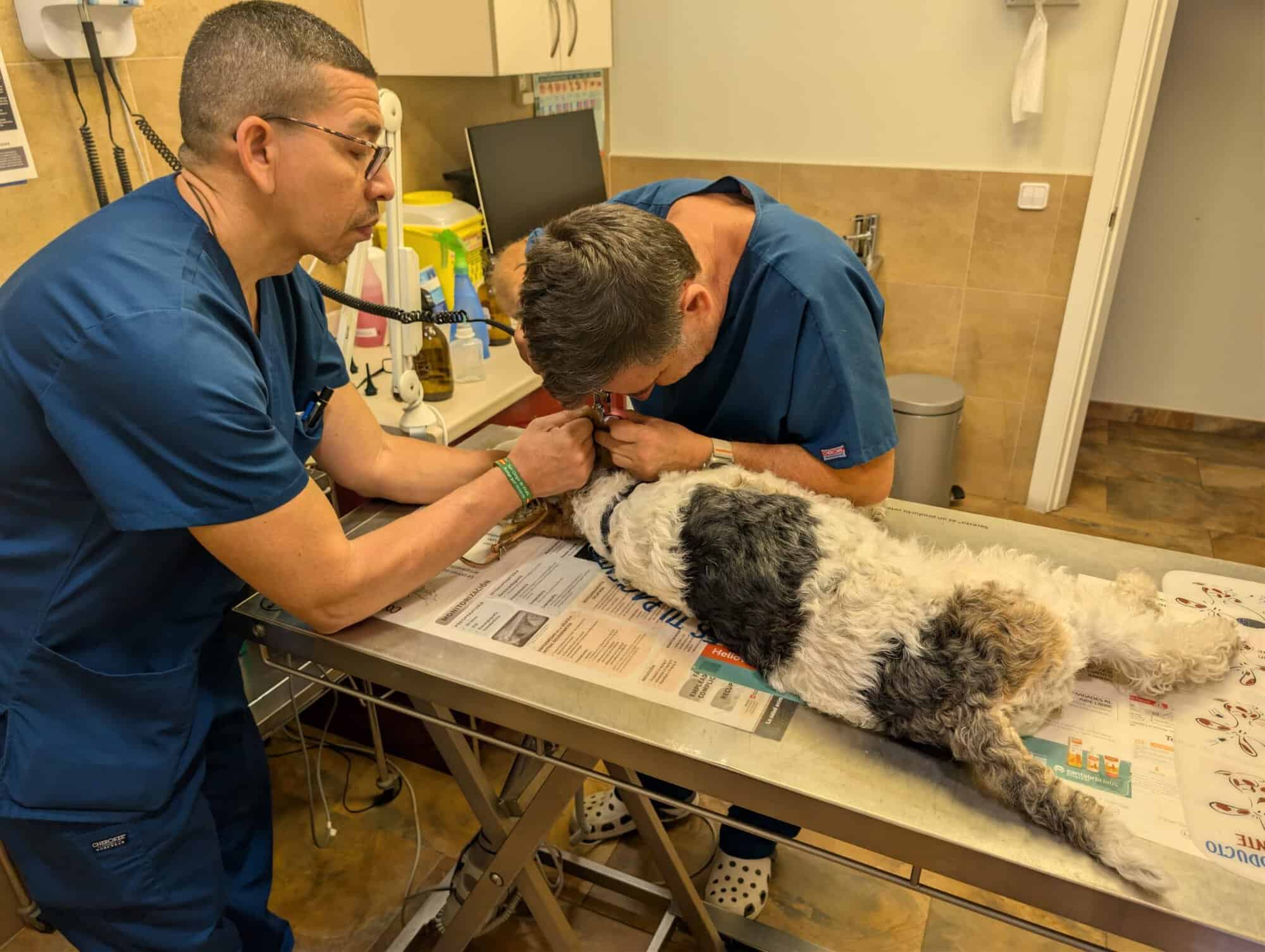
We agreed the doctor would first try to examine the ear without anesthesia. Unfortunately, that didn’t reveal a clear cause. The only option left was to look deeper into the ear canal, and that simply couldn’t be done without anesthesia.
For this kind of exam, the dog has to be completely still—not only to avoid a needless struggle with an irritated animal, but also because even small movements during an inspection of the deeper ear canal or the eardrum can cause damage.
Anesthesia a few hours before a long-haul flight
So we agreed to go ahead with anesthesia. In response to our questions, the doctor reassured us that the medication used shouldn’t have a negative impact on the flight.
That didn’t make it an easy call. When you fly with a dog, you try to keep the final hours before departure as calm as possible—no extra interventions, no stress, no uncertainty. Suddenly we were doing the exact opposite.
An unexpected surprise
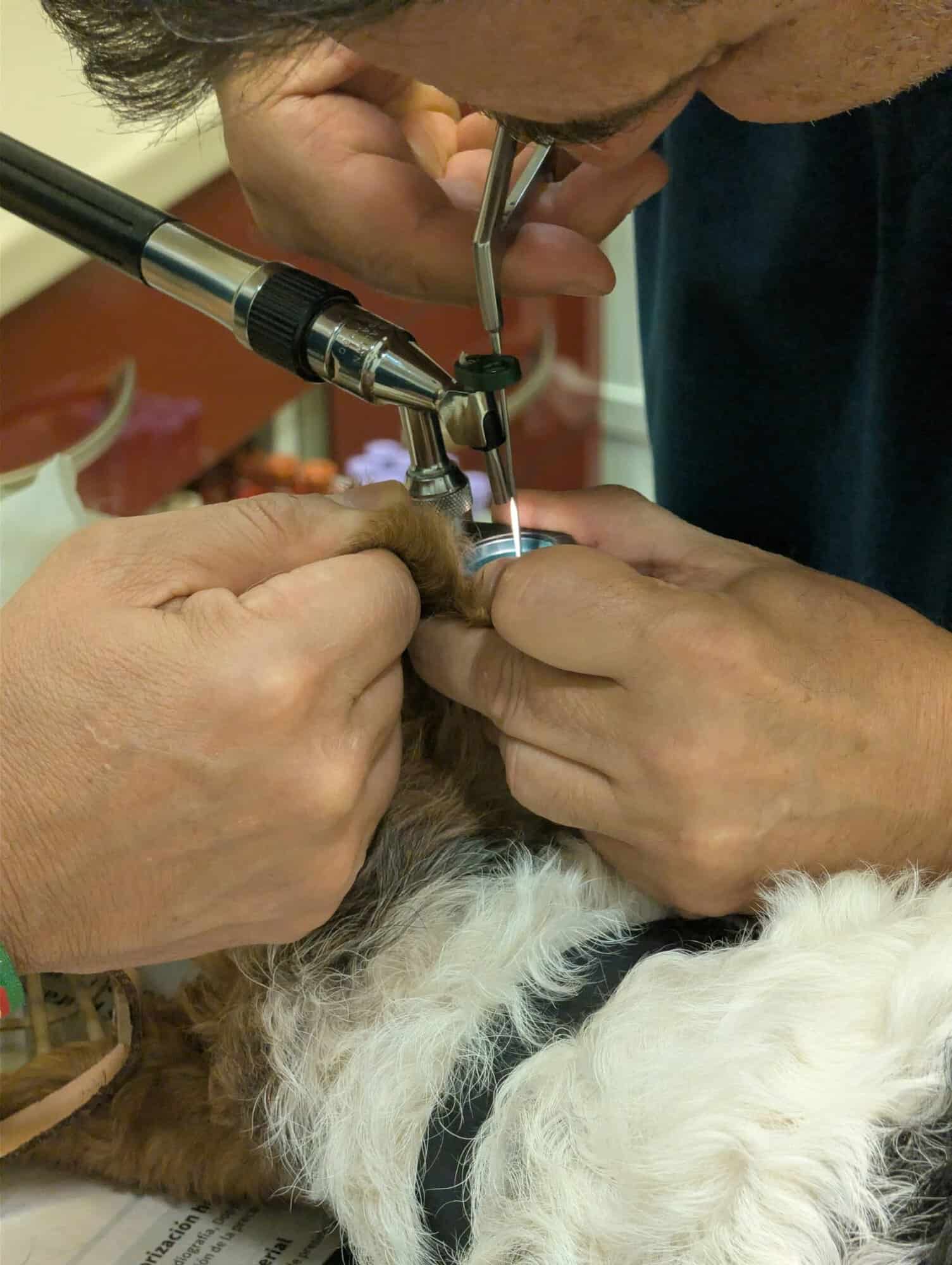
Once the anesthesia was given, Ibo went down fairly quickly and, in under five minutes, was in a deep sleep. The doctor began examining the deeper parts of the ear canal.
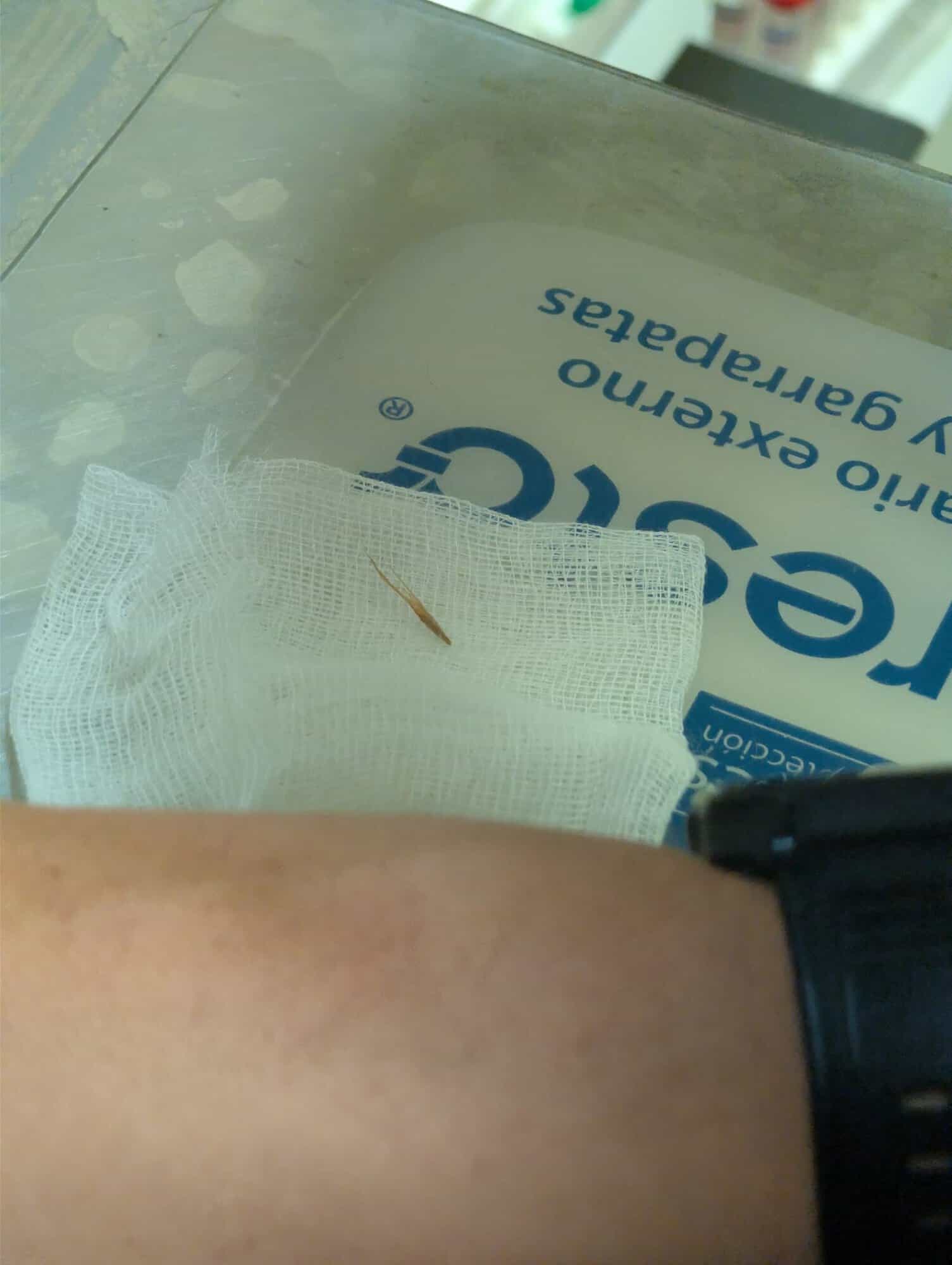
At first it seemed like there was nothing unusual to find. Then, a few minutes later, he pulled the first grass awn out of Ibo’s ear. And within a minute, a second one.
We were surprised, and also a little relieved. The procedure had clearly been worth it, and the problem had a concrete, fixable cause. It was obvious Ibo would finally get some relief.
Waking up from anesthesia and heading for the airport
After the successful procedure, all that remained was to wake Ibo up. The nurse gave him an intramuscular injection, and the doctor expected he’d come around within five minutes.
When Ibo still wasn’t waking after ten minutes, we got a bit nervous. Another injection followed, but that didn’t do the trick either. In the end, the five-minute wake-up turned into roughly thirty—but by the time we left, we did manage to get Ibo back on all fours.
On to Madrid, this time with calmer nerves
We said our thanks, paid 147 euros for the procedure, and set off for Madrid’s airport feeling a little more at ease.
Ibo was clearly still feeling the effects of the anesthesia for a few more hours, and even when he was being loaded onto the plane he wasn’t quite himself. Despite that, his transport went smoothly in the end.
And in that moment, that was what mattered most.
What we’re taking away from this
Flying with a dog is logistically demanding and always a bit stressful. That’s why it pays to avoid any extra complications—and if a health issue does appear, it’s wise to deal with it as early as possible. The closer you get to departure time, the less room there is for recovery.
In situations like this, finding the right doctor is crucial. We were lucky—the doctor at the SANIVET Veterinary Clinic in Guadalajara was a true professional, explained everything clearly in English, and handled the whole situation with a calm we probably needed even more that day than Ibo did.