
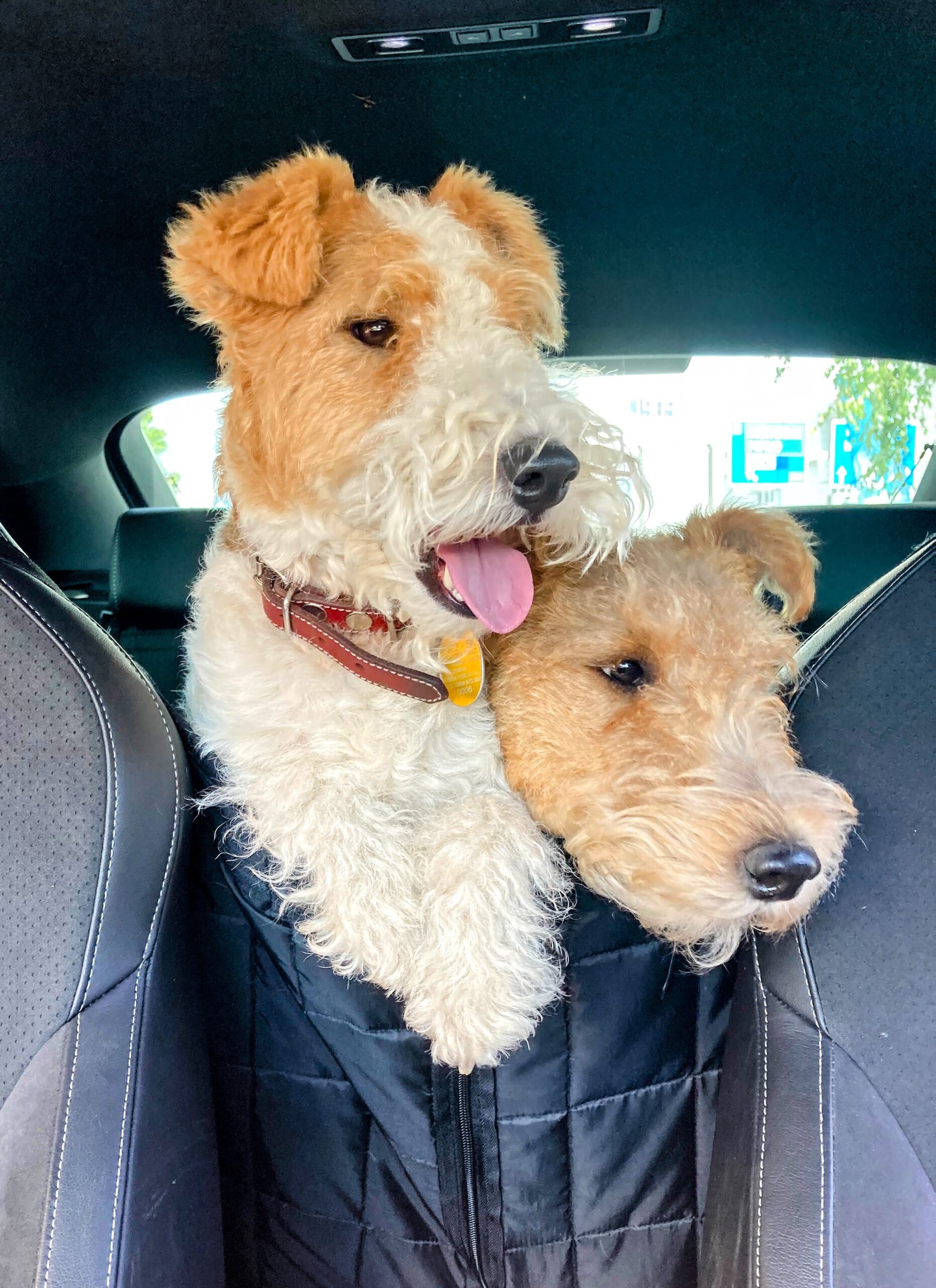


These days, traveling by car with our dog is second nature. It wasn’t like that at the start. As with most things dog-related, what mattered most was patience, a gradual introduction, and adapting to the needs of the individual dog. Ibo now handles long drives without trouble, but it took plenty of short trips, trial and error, and slowly figuring out what worked best for him—and for us.
Getting used to the car, step by step
We began cautiously. Short city drives, outings to a nearby forest, or trips to places where we’d go for a walk were ideal for helping Ibo associate the car with something positive. Gradually we stretched the drives and now even multi-hour journeys are no problem.
The key was not to rush it. First it was just getting in the car and sitting for a bit, then a short spin, and only later the longer routes. As a result, he doesn’t see car travel as stressful, but as a natural part of our routine together.
How we handle safety on the road
Dog safety in the car is something you can’t ignore. We’ll admit we sometimes slip up: on very short hops across town we’ve driven without any safety measures, and it never feels right. That feeling alone is a clear sign it isn’t a smart approach.
On longer journeys, securing the dog is non-negotiable for us.
Soft dog car seat
Most often we use a soft dog car seat on the rear seats. It’s practical, protects the car’s interior, and creates a clearly defined space where Ibo feels comfortable. The seat straps to the seats and includes a point to clip his harness.
This setup has proved ideal on road trips and long drives, where Ibo mostly lies calmly or watches the world go by.
Its big advantages are how light and compact it is. It’s also easy to maintain—every so often we just take it out and wash it in a regular machine. What we like most is the ability to keep contact with the dog while driving. With Ibo as a back-seat passenger, we can keep an eye on him and react quickly if anything comes up.
There are similar solutions designed for the cargo area of estate/wagon cars. Many models are modular and can be adjusted—reduced to half-width or divided into two sections—so two dogs can travel without having to compete for space.
Travel crate
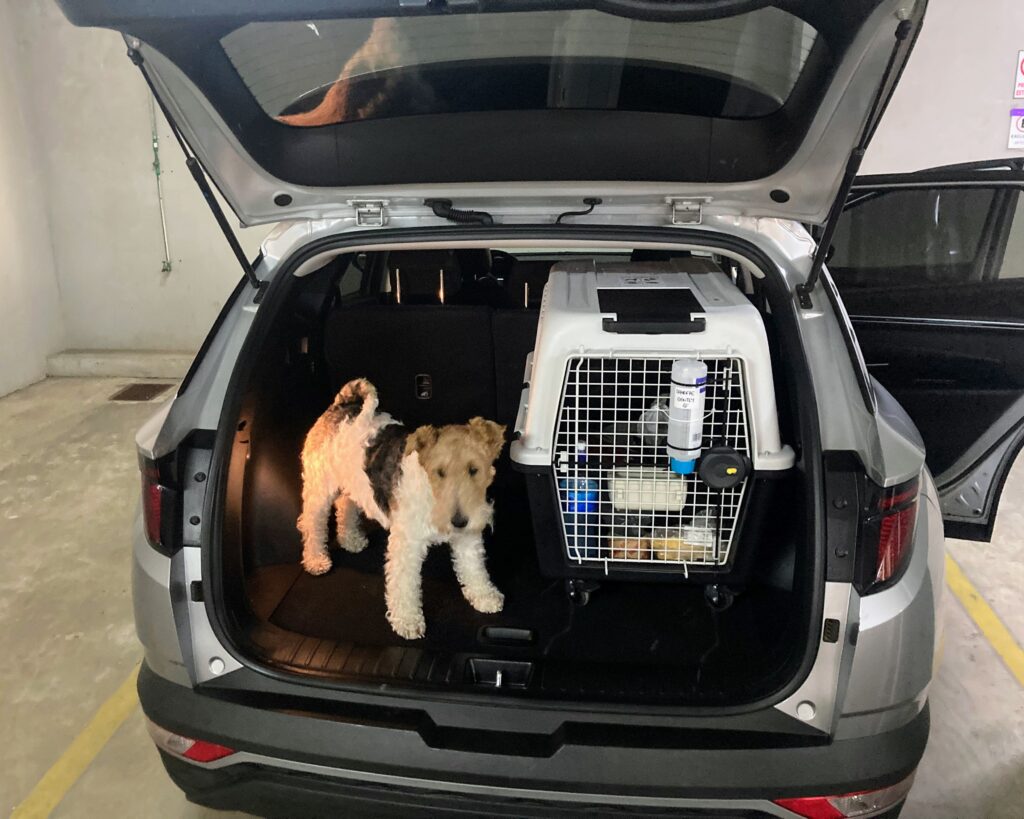
We used a travel crate a lot when we were getting Ibo used to it. The reason wasn’t only car travel, but also preparing for flying, where a crate is essential for him.
Thanks to that, he doesn’t see the crate in a negative light and treats it as his safe space. We use it less in the car now, but in certain situations—such as very long drives—it still has its place.
The crate’s undeniable advantage is safety. In the car it gives the dog his own ‘fortress’, which is invaluable in the event of an accident. But that’s also its drawback—it’s large and heavy, and on longer trips it often felt like a burden. You need to account for it for the entire holiday.
Are you planning a trip abroad with your dog? Check the entry requirements for various countries directly in BorderCooler®.
What we pack
For longer journeys we always have a basic kit ready for Ibo—things we wouldn’t set off without.
The essentials:
- plenty of water and his travel bowls,
- food or treats,
- a collar, harness and leash for breaks,
- a light-up collar,
- a mat (ideally absorbent) or a blanket,
- poop bags, and wet wipes if needed.
To keep him from getting bored, we also put his favourite toy in his car seat. Small details like that can make a long drive much calmer.
Motion sickness
We also went through a phase when Ibo didn’t handle car rides especially well. Nausea, drooling, or restlessness aren’t unusual in dogs, especially when they’re young.
A few simple rules helped us: don’t feed right before setting off, drive smoothly, and take regular breaks. With experience, the problems faded and we barely deal with motion sickness now.
If the problems persist, it’s worth speaking to a vet.
A dog left unattended in a car — a common and dangerous mistake
We think it’s important to call out a fairly common mistake we see not only on the road but also in car parks: leaving a dog in a car without supervision.
Even if it seems like just a quick stop, there are several risks. Without their owner present, dogs can become anxious and stressed, which can mean whining, attempts to get out of the car seat, or unpredictable behaviour.
Uncontrolled temperature changes are another major risk. In summer heat—and even on cold days in direct sun—the interior can heat up or cool down very quickly. At the extremes, high or low, the situation can be fatal.
There’s also the chance a dog left alone might move from the car seat into other parts of the car, where they could be injured or damage the vehicle.
If it’s at all possible, we don’t leave a dog in the car without supervision. And if it truly can’t be avoided, it should be absolutely exceptional and for a very short time.
Final thoughts
Traveling with a dog in the car is now a natural part of our life. It’s not always perfect and we sometimes make compromises, but experience has taught us that a dog’s safety and comfort should always come first.
If a dog gets used to the car gradually, has its own space, and feels comfortable, travel stops being stressful and turns into shared time you can both enjoy.