

Our first time in Paraguay was also our first trip to South America. On that journey in the spring of 2020, we visited Ecuador and, briefly, Panama as well. The main reason we chose Paraguay wasn’t classic sightseeing; it was to secure my residency in the country.
I handled the whole process through a well-known company, Liberation Travel (https://liberation.travel/), which specializes in helping foreigners obtain residency in Paraguay and other countries.
Honestly, we knew very little about the country. Paraguay was one of those places most people simply overlook—and we were no exception.
That changed shortly before departure. A quick dive into maps, articles, and blogs gave us at least a rough idea of where we were headed. The Liberation Travel team filled in more details, but we still flew to Paraguay with a big question mark and very modest expectations.
Arrival in Asunción and a quick start
We landed absurdly early after a convoluted flight from Quito, with a change in Panama City. We were exhausted, but the schedule was packed from the start. We only had a few days in Paraguay and, small as the country is, our plans were ambitious.
If you’re curious about the airport in Asunción, we cover it in a separate article.
We ordered a ride—just a regular Uber—and reached our place in the center with no fuss. The fare was strikingly low. After checking in, we crashed for a short nap. Around eight in the morning, after a hearty breakfast, Clara, Liberation Travel’s representative in Paraguay, met me in the hotel lobby. While Iva caught up on sleep at the hotel, I headed out with Clara to get everything done.
Residency in one morning
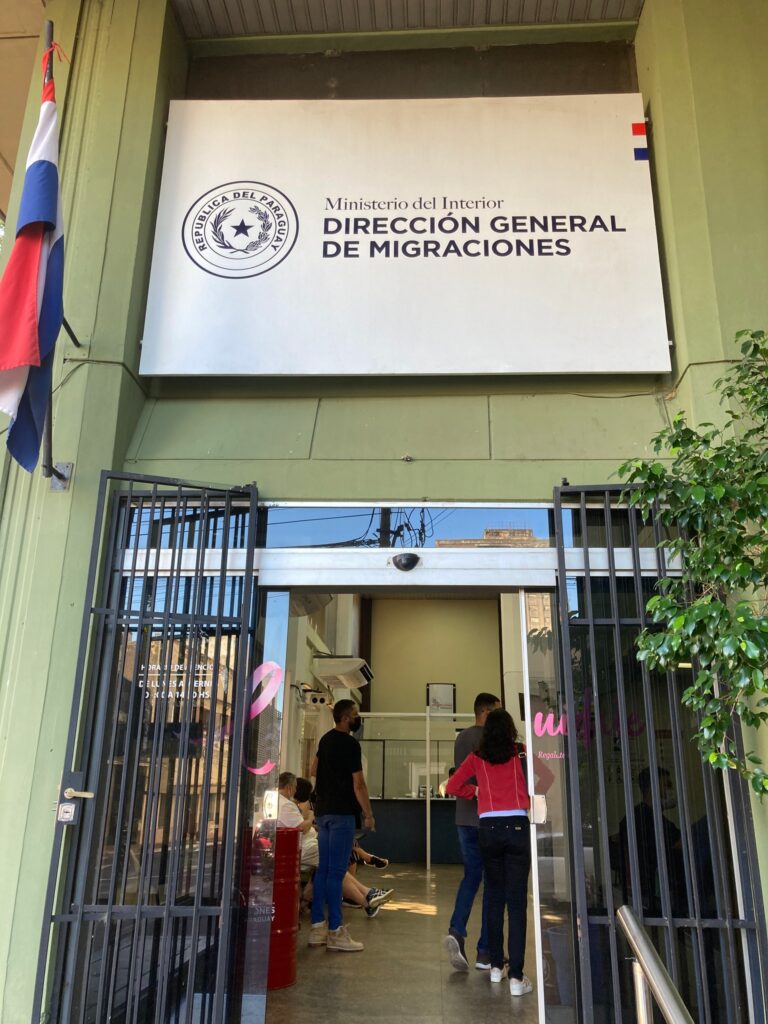
The schedule proved surprisingly efficient. Immigration, a notary, a bank, the police, back to immigration—and we were done. No stress, no pointless waiting. Clara handled most of it for me; without knowing the system and with the language barrier, it couldn’t really have worked any other way.
Before I knew it, Clara announced we’d wrapped up the essentials. It was lunchtime, and I was still marveling at how fast it had all come together. The bonus: a few extra hours for Paraguay we hadn’t expected.
First culinary impressions
The rest of the day unfolded under a cloud of jet lag, but we still went out to sample the local cuisine. On Clara’s recommendation we picked a nearby restaurant. Given the warm weather and our fatigue, we hopped in another taxi—and once again laughed at how little the ride cost.
What was meant to be a late lunch turned into hours at the table. Our lack of the local language made ordering a bit of a puzzle, but the waiter was unfailingly kind and almost saintly in his patience. We ended up with more dishes than planned, and no regrets—the flavors were worth it.
Wiped out, we taxied back to the hotel and went straight to bed. Full of food and wine and worn out from the journey, we didn’t manage anything else that day.
First impressions of the city
The next day we slowed down and explored Asunción. We stayed in Las Lomas, close to several malls yet in a relatively quiet area, and within easy reach of one of the city’s prettiest quarters—Villa Mora.
Asunción blends that familiar South American buzz and a touch of chaos with strong Spanish influence. The architecture, especially in the center, feels distinctly European, though modern buildings aren’t yet as widespread as in major European capitals.
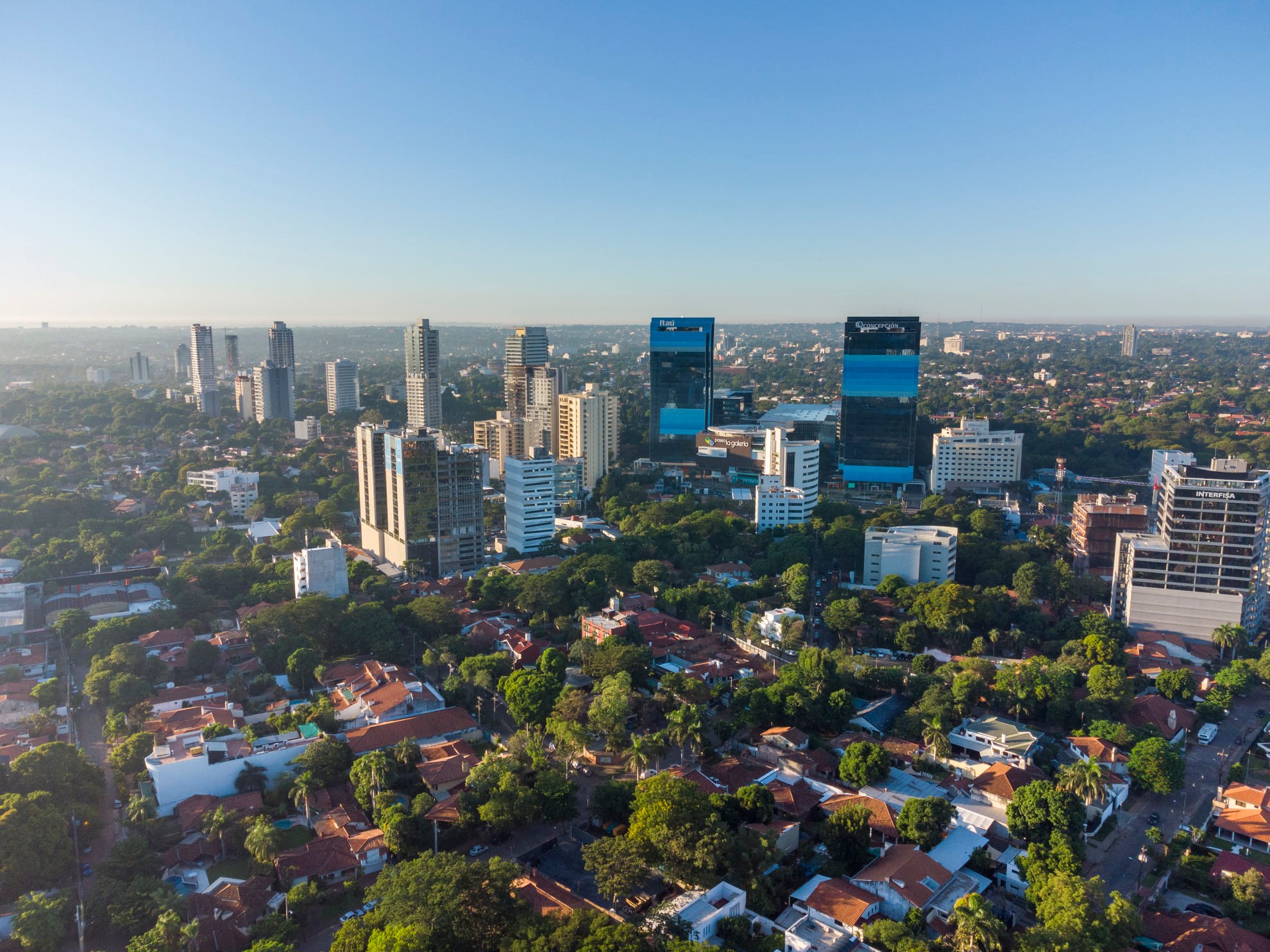
What surprised us most was how green the surrounding neighborhoods are. Villa Mora feels calm yet leafy, with trees everywhere. Parks, large and small, add to the picture. The mix of residential homes and greenery gave the city a character we hadn’t encountered before.
You see it best from above. A quick drone flight revealed just how green Asunción really is. Here and there a taller modern building pops up, but overall the city feels very natural.
As a city, it has everything you might need. You’ll find places to eat of every kind—from cheap street food to stylish cafés and high-end restaurants. Everyday services are very good, too.
We dipped into a few malls, coworking spaces, and grocery stores—everything’s here, including plenty of car rentals, pharmacies, and even veterinary clinics.
Time to hit the road
We’re not big-city types, so on the third day we left Asunción, picked up a rental and set out to see the country. Clara tipped us off that while rental cars officially can’t leave Paraguay, there’s an exception for crossing into Brazil to visit the Iguazú Falls. We decided to give it a try.
It’s worth noting that from Asunción’s location near the Argentine border, many parts of Paraguay are quite a drive. That includes the frontier with Brazil, beyond which the famous falls lie.
Heading for Ciudad del Este
We drove toward Ciudad del Este, right on the Brazilian border. To make the most of the day, we detoured to hike Cerro Tres Kandú, the highest point in this otherwise very flat country. We weren’t exactly prepared, but we made it. You’ll find the full account of the hike in a separate article.
The climb took longer than expected, so we reached Ciudad del Este only by late afternoon—just as truckers went on strike.
We hit a highway blocked by trucks; with no idea what was going on, we slipped into the empty oncoming lane and kept going. A few kilometers later we drove straight into a crowd armed with sticks and signs.
It was a little intimidating, but I kept calm, rolled down the window and, with a smile, repeated: “Tourists. Please, can we go? Thank you!” To my surprise it worked, and the protesters waved us through. A few cars behind us clearly liked the tactic and followed.
We finally reached Ciudad del Este late at night and saw nothing but the hotel. Only in the morning, as we continued toward Brazil, did we glimpse a few streets—and had to admit the city felt rather dirty and chaotic. It was a marked contrast with Asunción.
Into Brazil for the Iguazú Falls
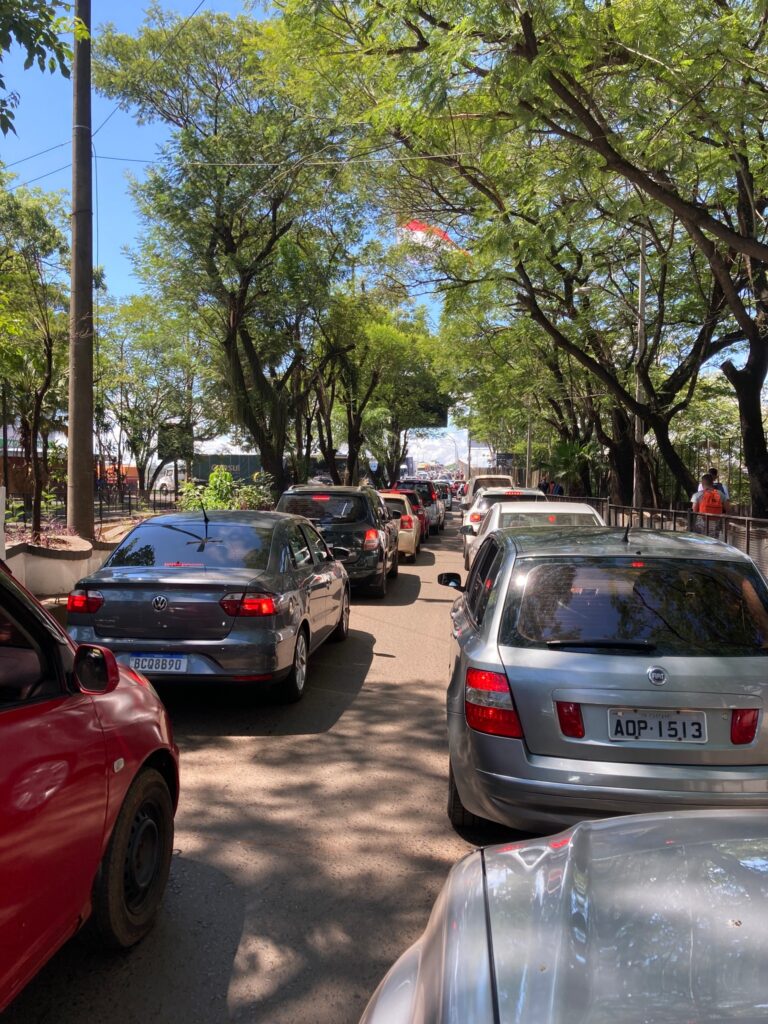
At the time, Ciudad del Este and Brazil were linked by a single bridge—Puente Internacional de la Amistad, also known as the International Friendship Bridge. We couldn’t avoid the usual morning traffic, but after about an hour of waiting we crossed to the Brazilian side into Foz do Iguaçu, the gateway to the Iguazú Falls, about 20 minutes’ drive farther on. Two things surprised us: nobody asked for documents at the border, and the Brazilian side looked unbelievably clean and organized. At moments, compared with Paraguay, it felt like a little Switzerland.
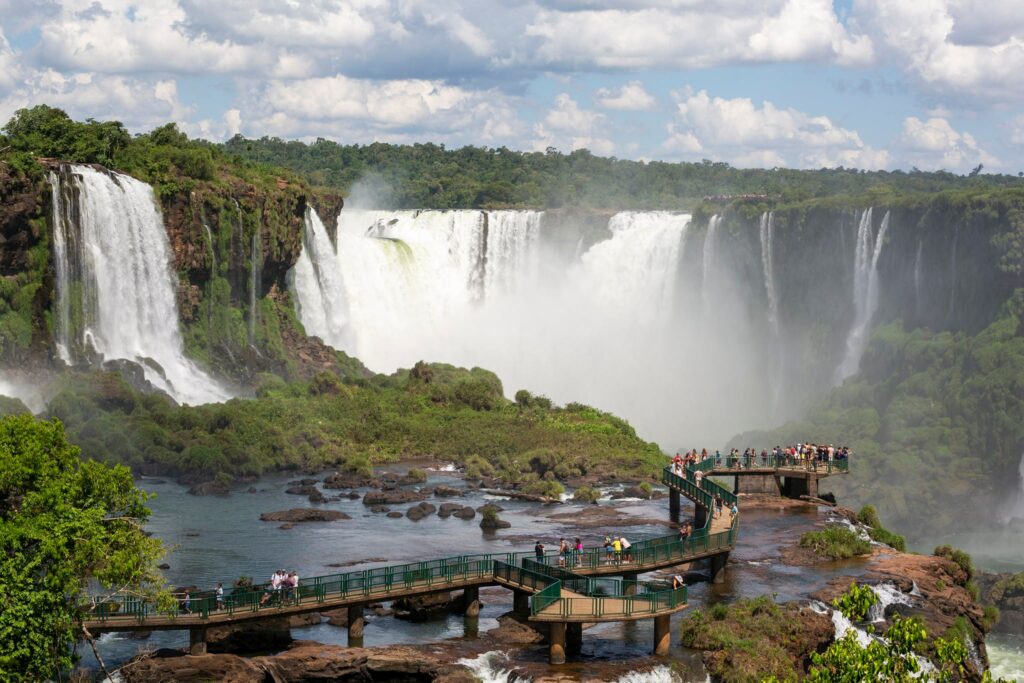
Visiting the falls is just as well organized—from parking to how visitors move through the park. Seeing Iguazú was powerful. We were there in the dry season, yet you still see a number of cascades, large and small, with astonishing force. We spent about two hours and then retraced our route back to Ciudad del Este. With daylight to spare, we set our next target: Encarnación in southern Paraguay. Protests flared up along the road again, more than once. The first time our 4×4 let us slip around; the second time we weren’t so lucky and simply had to wait it out.
Encarnación
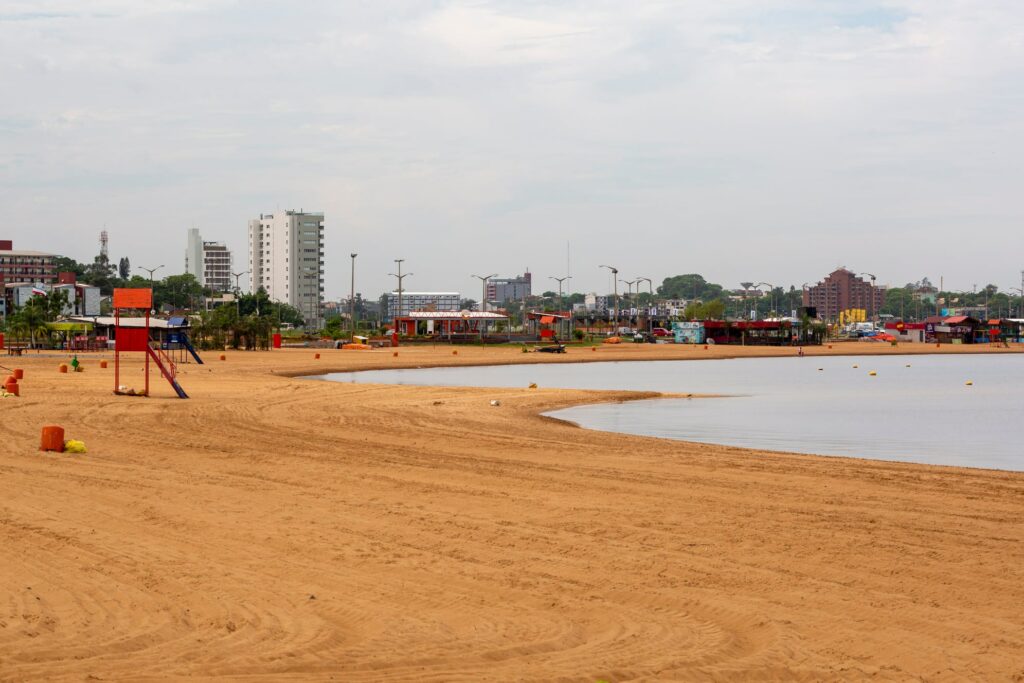
We only stayed one night in Encarnación, but we still found time for excellent street food and a great beer on the riverside promenade along the Paraná. The promenade felt like the city’s highlight. Honestly, the place didn’t win us over at the time; it took a year or two to grow on us. On a recent return we saw it differently and really enjoyed it—and so did our dog Ibo.
Salto Cristal Waterfall
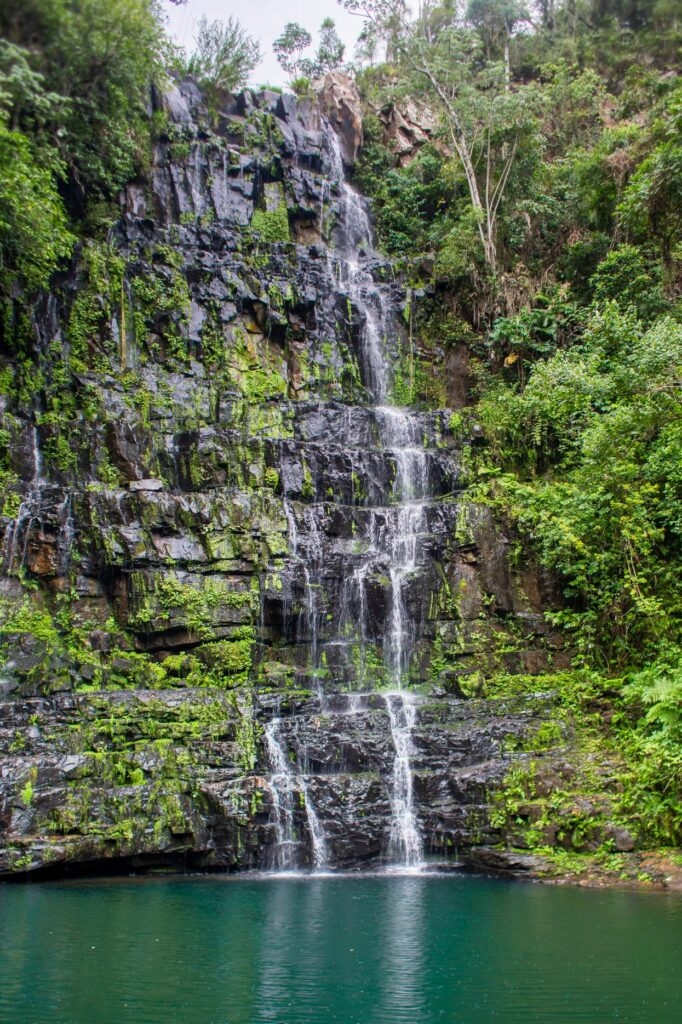
With our departure approaching, we left Encarnación for the airport in Asunción, breaking the drive with a stop at Salto Cristal. It’s no Iguazú, of course, but it’s a pretty spot and relatively easy to reach. Rain caught us there, yet I still swam beneath the falls. The weather cleared, turning the break into a relaxed pause before the flight. From there it was back to the airport to return the car and board our plane to Panama City.
Final thoughts
We came to Paraguay with scant information, few expectations, and only a short window of time. All the more reason the country surprised us. In just a few days we sorted out residency, explored Asunción, sampled the food scene, road-tripped across the country, climbed its highest peak and even made it to the legendary Iguazú Falls.
We left full of experiences, feeling we’d seen and done far more than a short visit should allow. Paraguay stopped being a blank spot on the map and became a place we’ve grown attached to. And, as it turned out, it wouldn’t be our last time there.