

Our climb to Paraguay’s highest peak doesn’t begin in the mountains, but on the road. Following the maps, we head for the trailhead—first the highway out of the capital, Asunción; then main roads, side roads, and finally a rocky dirt track. Luckily, we’d rented a 4×4 pickup in Asunción. Without it, that last stretch would likely have stopped us; instead, we carry on until a heavy metal gate stops us for good.
Nothing comes free
At the gate we run into an unexpected snag. The local guard asks for proof that we’ve paid the national park entrance fee. It quickly dawns on us that we’ve overlooked something. We struggle to understand each other—both language-wise and otherwise. We try to pay on the spot, but that clearly isn’t possible.
We have no mobile data out here, so even an online translator can’t help. The conversation stalls and for a moment it looks like we won’t be hiking at all. Then the guard has an idea—he calls a colleague who speaks English.
We learn the fee has to be paid online in advance. Since that isn’t possible right now, negotiations begin. After a short back-and-forth and an explanation of our situation, we reach a compromise—we can continue, but we must settle the fee after we return. In the end, Paraguayan improvisation and kindness win out.
Through the jungle to the summit
Beyond the gate, it’s a different world. We pass a local camp and step onto the trail. A narrow path snakes through dense subtropical vegetation; the air is humid and alive with jungle sounds. The climb is easy at first, but as we gain height the first more technical sections appear. The terrain is steep in places, and above all, slippery.
The humidity does its thing and within minutes we’re drenched. You’d probably sweat here even standing still. Where the slope is extreme, fixed ropes are in place; they help a lot on the way up and later on the descent.
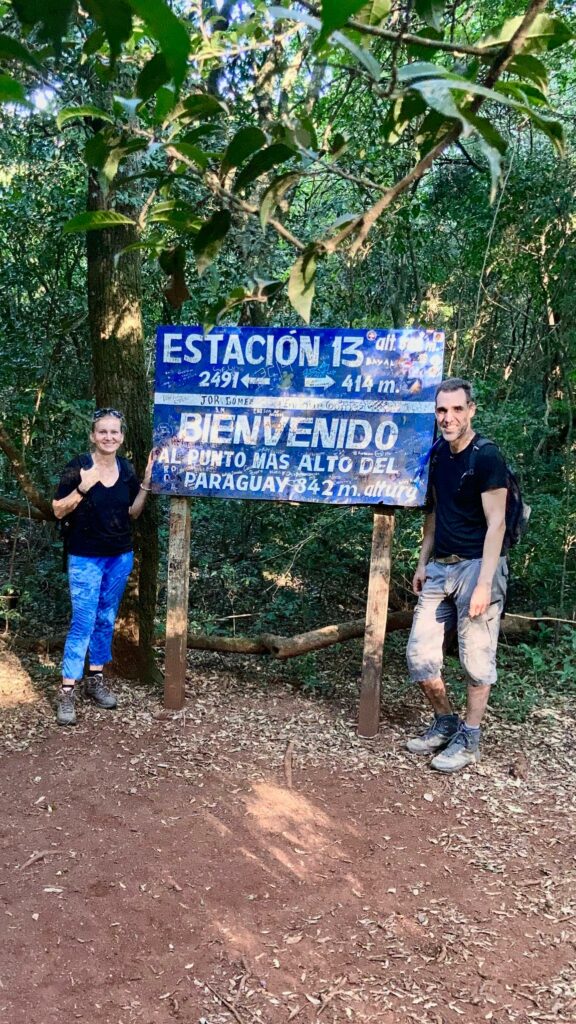
Just when it feels like the trail is pushing into real extremes, the ground suddenly evens out and the route begins to meander more or less level through the vegetation. After a few meters we find a sign marking the summit. Cerro Tres Kandú tops out at only 842 meters above sea level, but it still made us work for it.
It’s hard to tell you’re on the very top, though. Dense vegetation offers virtually no views. For vistas, the map suggests following the path another 200 – 300 meters. We do just that and arrive at an open clearing a short walk from the summit.
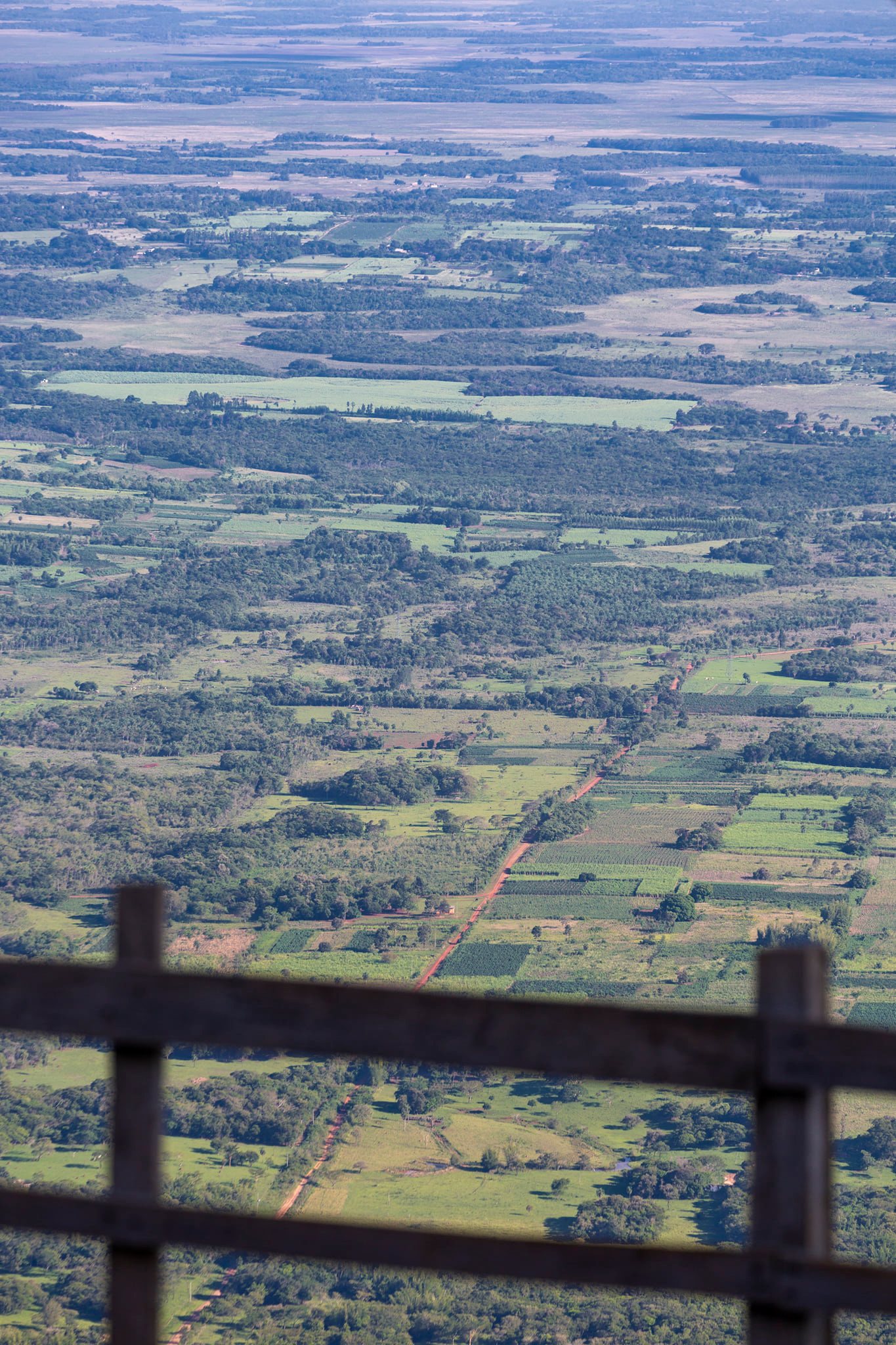
From here the landscape suddenly opens—an almost endless plain spread out below. It’s a paradoxical, yet memorable sight. There’s a handsome, spacious wooden lookout, benches, and the remains of a structure—probably a transmitter.
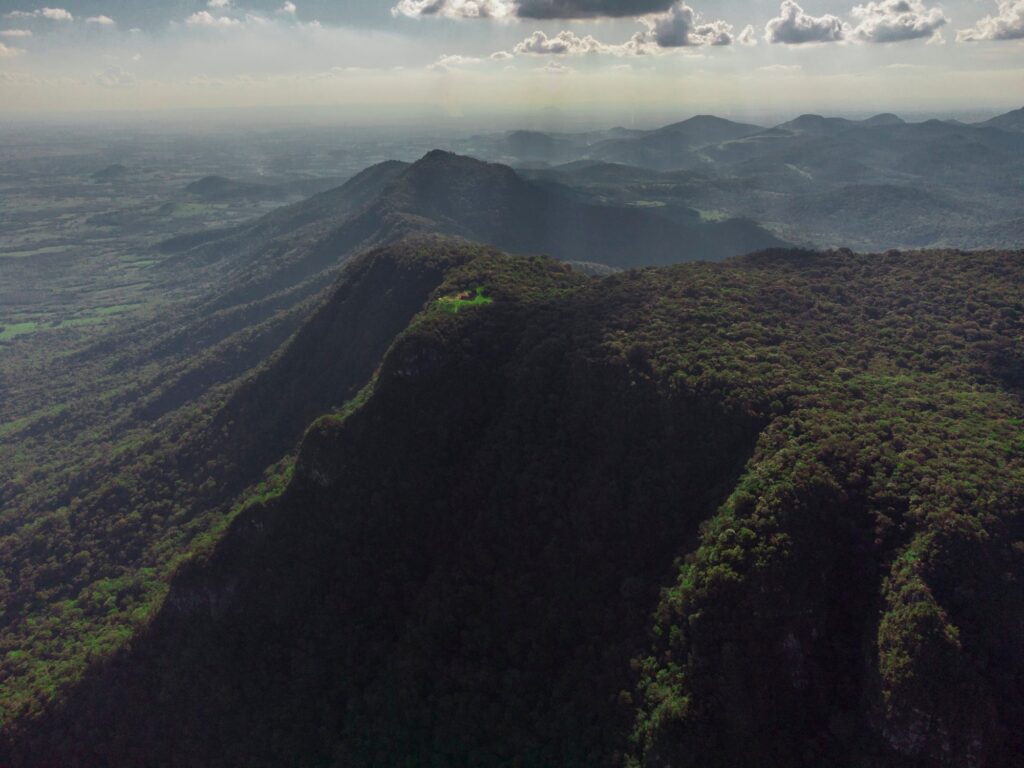
We linger for a while; I send up the drone, but time is pressing. A few more photos, and we retrace our steps back to the car.
Final thoughts
The hike up Cerro Tres Kandú may not be a classic mountain trek, but as a travel experience—and a symbolic “conquest” of Paraguay’s highest point—it’s absolutely worth it. And it isn’t entirely free, either.
Practical tips
- Park entrance fee: Pay online in advance. Based on available information, it should be possible to pay in cash, but we couldn’t manage it on site.
- 4×4 is a big advantage, especially after rain. In dry weather you can probably reach the parking area in a regular car.
- Expect high humidity, heat, and lots of insects, which can be pretty annoying in places.
- Sturdy footwear, plenty of water, and insect repellent are absolute musts.
Cerro Tres Kandú – at a glance
- Elevation: 842 m a.s.l. (Paraguay’s highest point)
- Elevation gain: approximately 565 meters
- Distance: approx. 5 km (out and back)
- Difficulty: moderate hike; steep and slippery in places
- Terrain: forest and jungle trails, sections with fixed ropes