
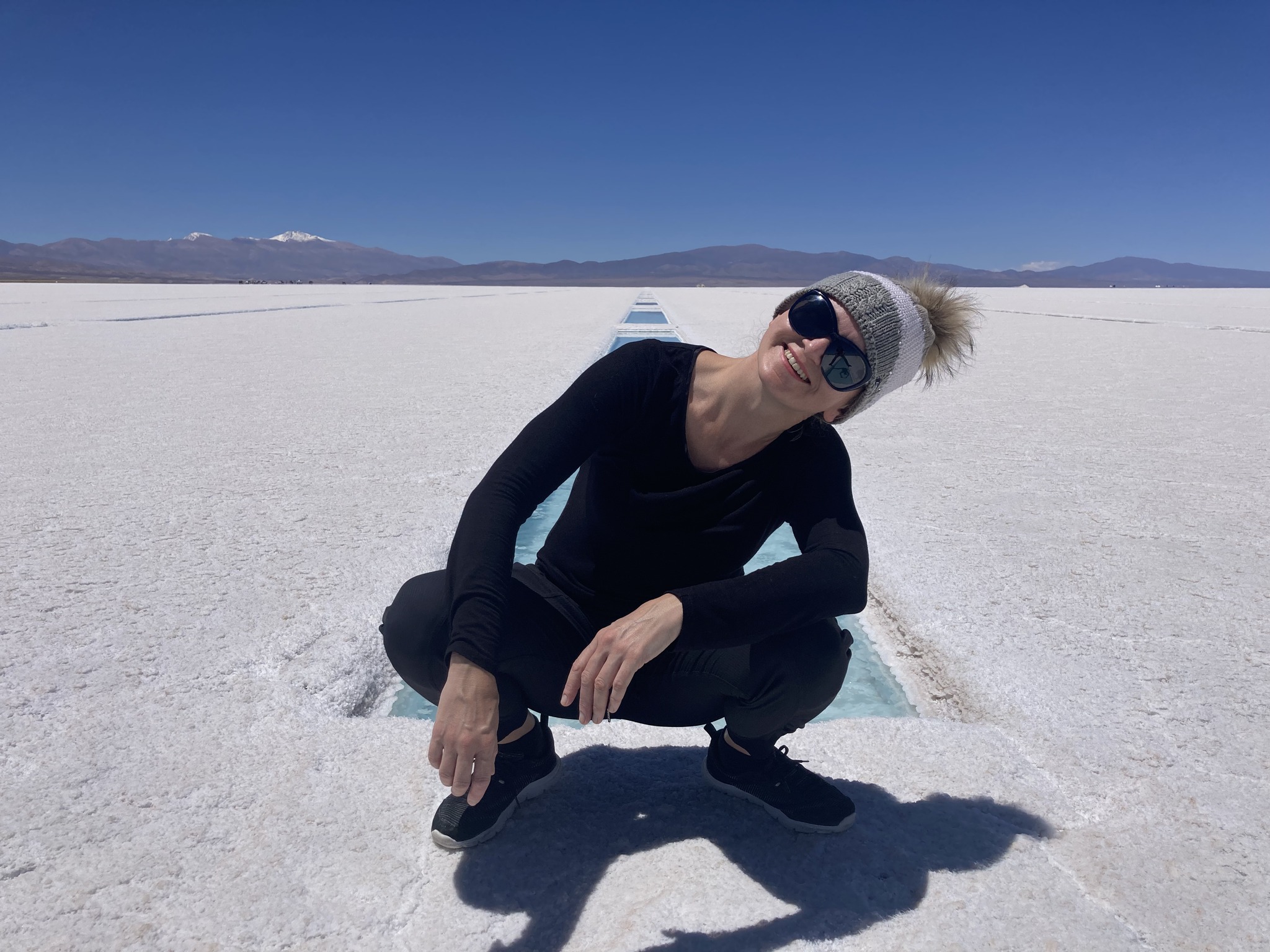


On our first visit to Argentina in 2022, we drove from the small town of San Antonio de los Cobres toward the Chilean border. The Andean crossing over the Paso de Jama lay ahead, with San Pedro de Atacama as our goal. One of the stops along the way was the Salinas Grandes in the province of Jujuy.
Where are the Salinas Grandes located
Salinas Grandes lie in northern Argentina, on the border of the provinces of Jujuy and Salta, at roughly 3 400 meters above sea level. This extensive salt flat covers around 212 km² and ranks among the largest in Argentina.
The road from San Antonio de los Cobres
Soon after leaving San Antonio de los Cobres, as our route began to skirt the edge of the flats, we started to grasp the sheer scale of the place. The salt flat unfolded ahead of us, growing larger and emptier with every kilometer.
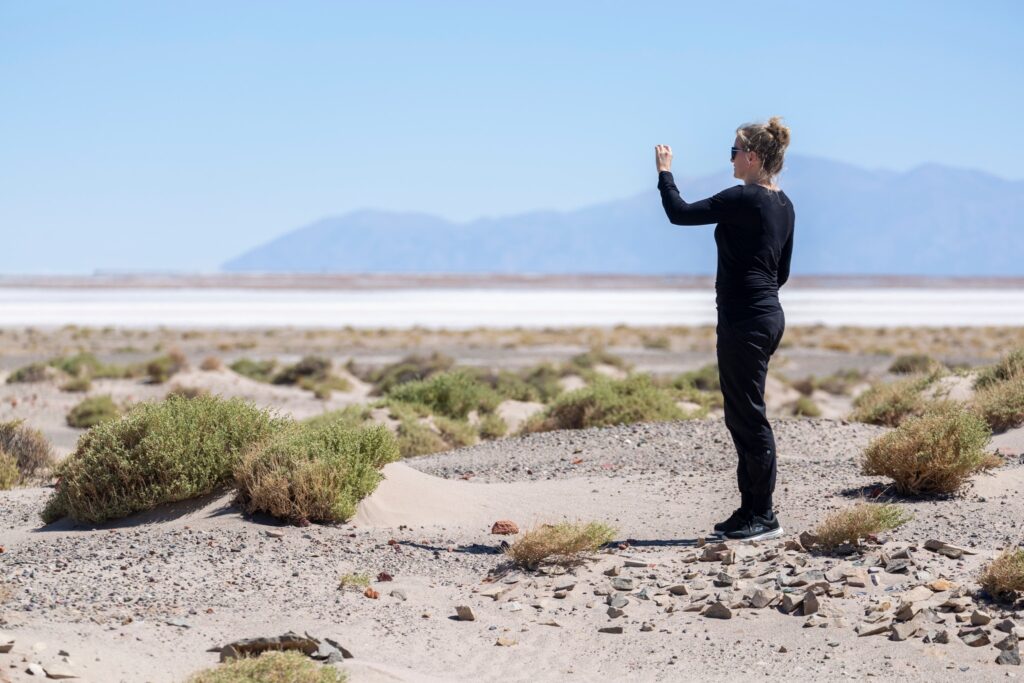
Although the Salinas Grandes aren’t among the largest salt flats in the world, in person they feel almost endless. Far in the distance, snow-capped volcanic peaks appeared. It was a scene that grabbed me right away.
First time on a salt flat
We reached the attraction via a back road and only at the end did we join Route 52, which cuts across the Salinas Grandes. From afar we could already see a parking area packed with tourists, buses, and stalls. A few minutes later we pulled in, parked right on the edge of the flats, and set off to explore.
It wasn’t a quiet spot—far from it. There were plenty of souvenir stalls big and small, an information office, and various activities for visitors. One option was to hire a Spanish-speaking guide who took us straight out onto the surface of the salt flat.
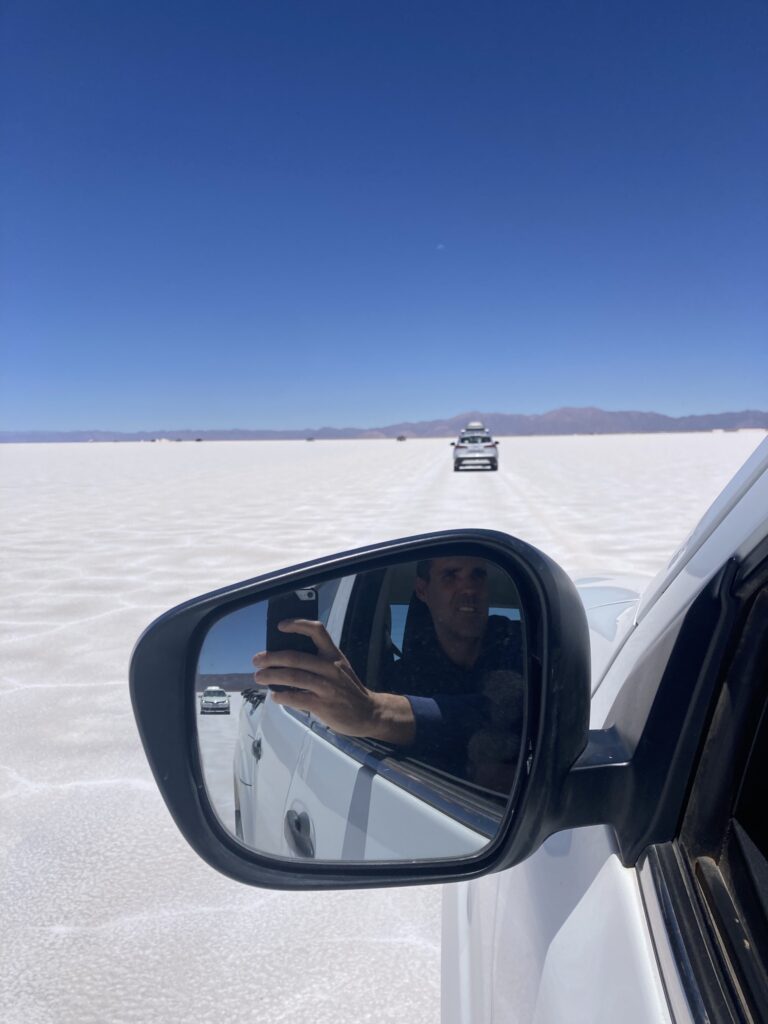
It was all the more memorable because we were allowed to drive our own car onto the flats. Moments after we entered, we understood the force of the sun here. The sky was cloudless, and the hard light bouncing off the white salt practically burned our eyes. Don’t even try this without sunglasses and high‑SPF sunscreen.
After a few minutes of driving we stopped while our guide gave her talk. It was a pity we couldn’t understand a word, though we tried to catch the gist. In truth, the scenery around us was the real draw. We were in a section where man-made pools cut into the salt and filled with water dotted the flat. The water shone a delicate light blue, looking at first glance more like pools in a plush resort than part of a rugged high-altitude landscape.
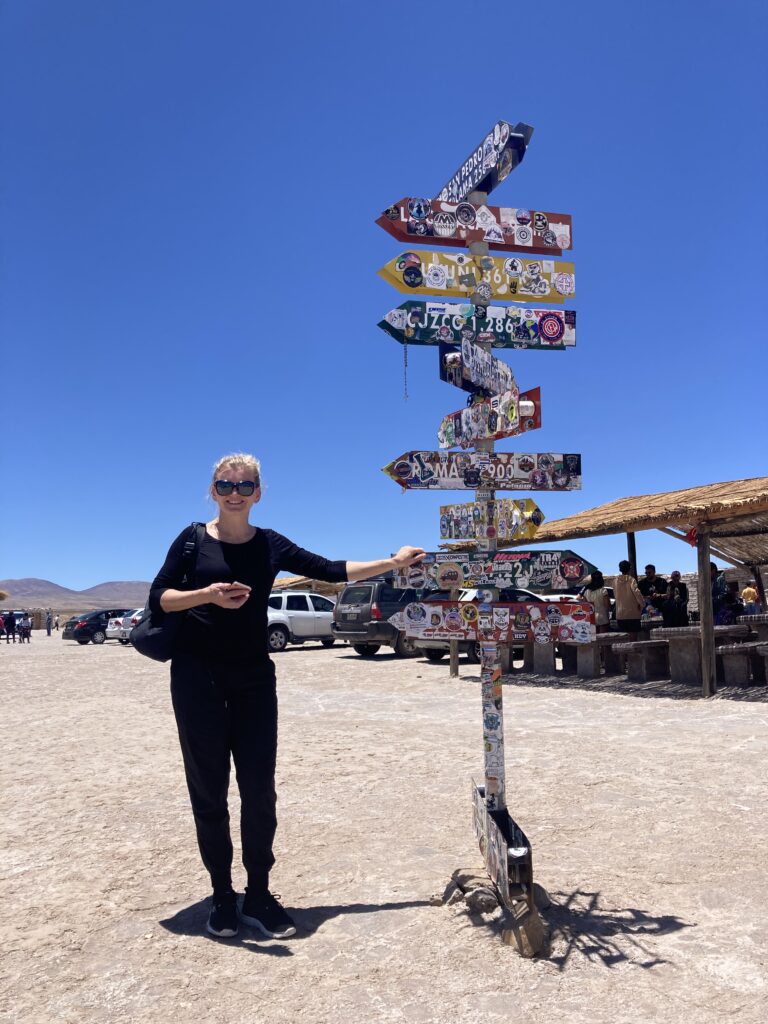
We spent about an hour out on the flats and, like most visitors, got our share of unique shots. The endless white expanse is even more striking from above—so of course I sent the drone up for a flight. We eventually returned to the parking lot and lingered a bit longer shopping for souvenirs. With a long road to Chile still ahead, we finally said goodbye to this place and continued west.
Salinas Grandes as part of a journey across the Andes
This stop wasn’t a destination in itself, but part of a long crossing of the Andes. Perhaps that’s why it left such a strong impression. For us, it was our very first encounter with a salt flat. We’d traveled a fair bit and seen plenty, yet this felt new even to us. The white surface of the Salinas Grandes, hard and cracked, was simply something we hadn’t experienced before. If you’re ever passing by, it’s well worth a short stop.