
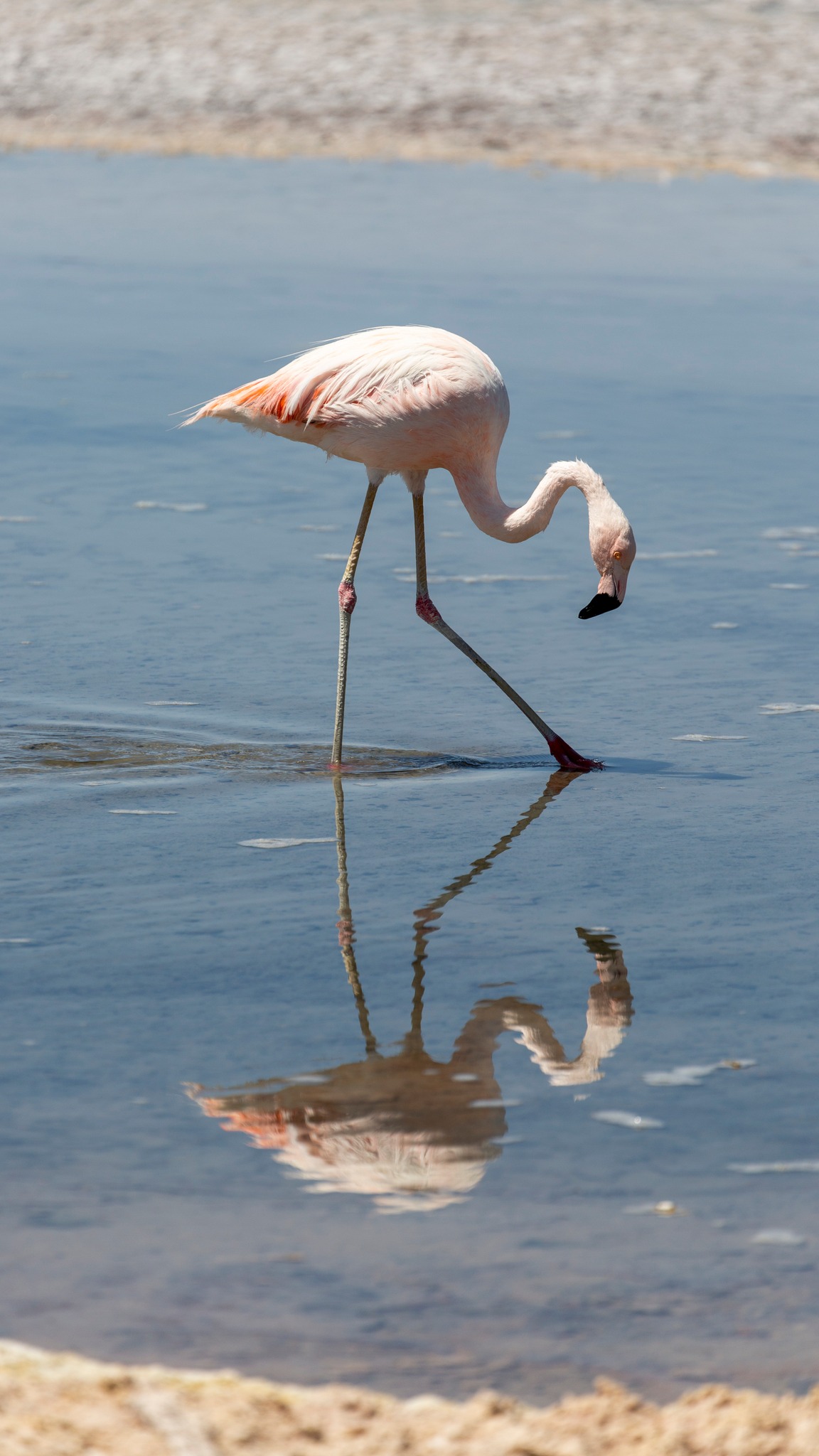


We only had two nights in San Pedro de Atacama, so we didn’t have much time for longer outings. We opted for places nearby, and first up was Laguna Chaxa. To be honest, I was skeptical at first—expecting an overpriced attraction packed with tourists. Thankfully, the reality was very different.
Laguna Chaxa
Laguna Chaxa is one of the sectors within the Reserva Nacional Los Flamencos—a national reserve that protects unique lagoons and birdlife on the Salar de Atacama. It’s an officially managed site with a short walking loop, viewpoints, and clearly marked paths designed to keep this fragile ecosystem as undisturbed as possible.
A pleasant surprise right from the start
We reached the site via a dusty, unpaved track that cuts across the Salar de Atacama. At the entrance we found a ticketed entrance, information boards, and a local guide. Despite my worries, there were no crowds—quite the opposite.
We were practically alone, and the whole place felt calm and authentic. We did the first part of the loop with the guide, who talked us through the lagoon’s formation, the flamingos, and the importance of this area to the wider Salar de Atacama. The briefing was entirely in Spanish, yet we left pleasantly surprised by how much we actually understood.
The context was easier to grasp thanks to the information panels full of drawings and illustrations placed along the trail. The guide clearly put a piece of himself into the talk—it wasn’t a memorized monologue but the words of someone who genuinely cares about this place. That made the visit feel far more personal than a typical “tick-the-box” tour, and we learned a lot not only about the flamingos but also about how the Salar de Atacama itself works.
The second part of the loop: silence, salt, and pools
The second half of our visit was a short, self-guided walk around the pools. This is where it really sinks in where you are. The whole time you’re walking on salt—across a surface that at first glance looks utterly lifeless.
It’s obvious you’re in an extreme environment. There’s essentially no soil—just rock and a crust of salt. Nothing grows here: no greenery, no trees. And yet the place is full of life.
The lagoon is made up of several shallow pools of salty, mineral-rich water. Those minerals create ideal conditions for tiny organisms that form the base of the local food chain.
Why are flamingos pink?
Laguna Chaxa is home to flamingos that you can watch right in their natural habitat. In the lagoon’s salty water they feed on tiny creatures nicknamed “sea monkeys” (a type of small crustacean). These contain carotenoids—the same pigments that make carrots orange.
And it’s those pigments that give flamingos their signature pink color. So yes—now you know why flamingos are pink.
Photographing flamingos: patience is key
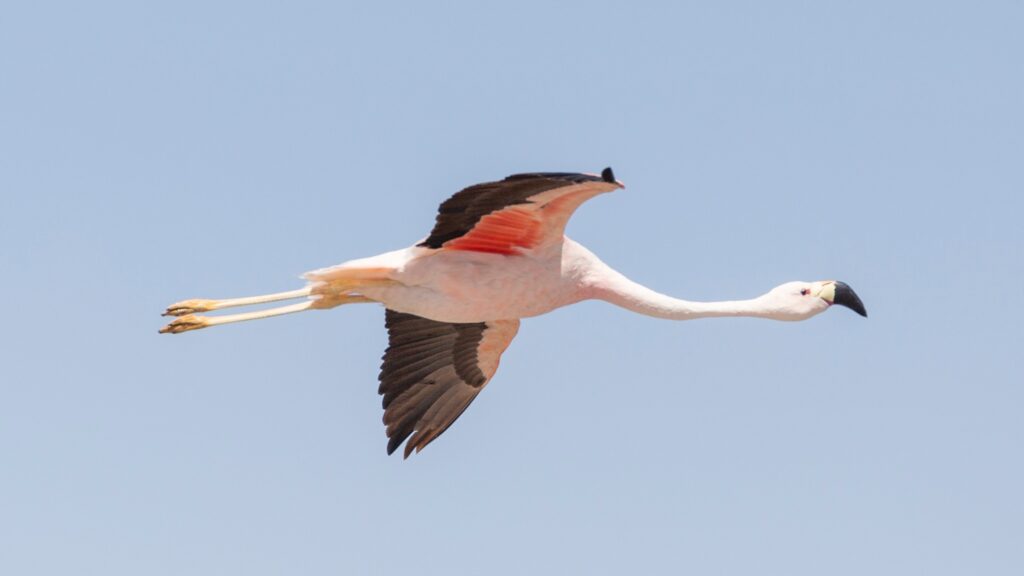
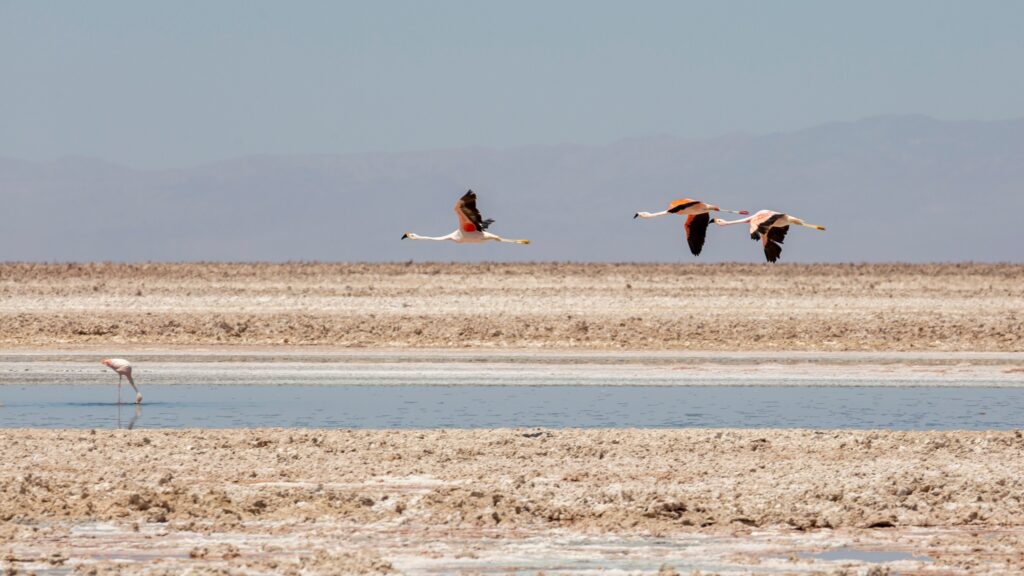
Flamingos are generally shy birds. From the shore you usually won’t get closer than about 100 meters. Around Laguna Chaxa, though, I noticed they’re a bit more accustomed to people, and in ideal conditions you can get a little closer.
Still, keep your expectations in check—you won’t be taking a flamingo selfie here. During our visit they seemed less skittish than usual, which let me capture a few really nice shots.
Laguna Chaxa from a bird’s-eye view
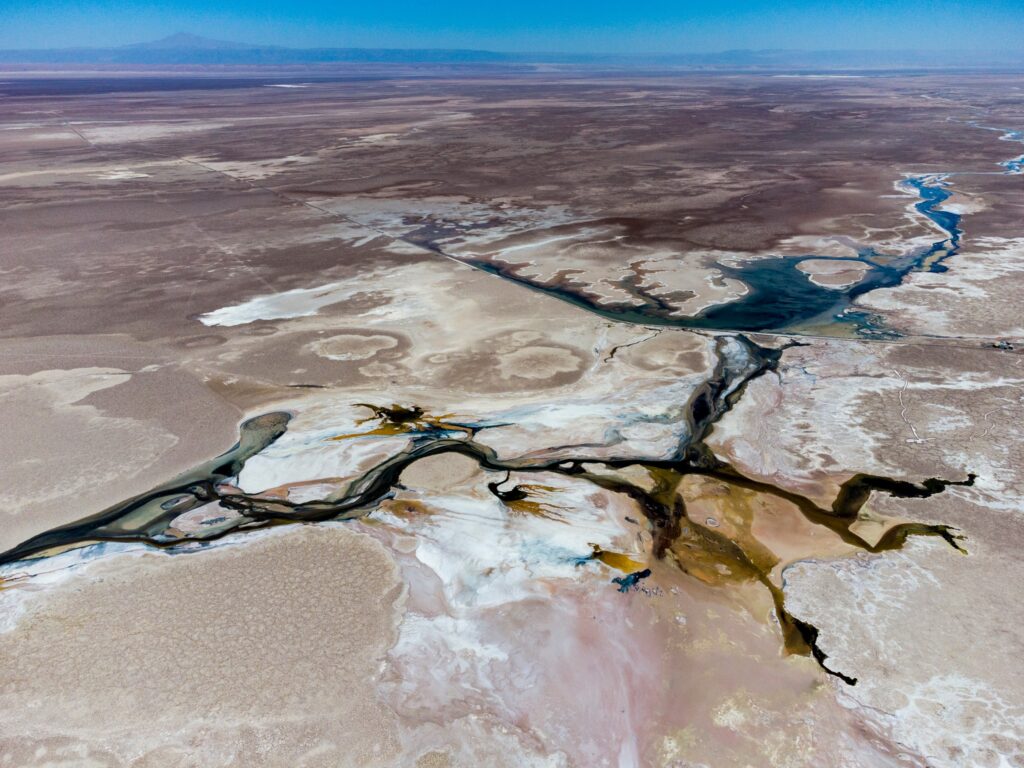
From above, the place’s uniqueness really stands out. Seen by drone, Laguna Chaxa and its surroundings burst with incredible colors—from white salt through ochre and pink hues to dark mineral channels of water that snake across the salar.
From up high you clearly see the contrast between the “dead” landscape and the delicate traces of life you might miss from the ground.
Is Laguna Chaxa worth visiting?
Absolutely. For me, Laguna Chaxa wasn’t a tourist trap but a quiet, visually striking stop that complements a visit to San Pedro de Atacama. A fair price, a quality briefing, and the chance to see flamingos in their natural habitat make this an ideal short stop: it doesn’t take long, yet it delivers a strong experience and a unique look at life in one of the planet’s most extreme environments.
Practical information for visiting Laguna Chaxa
- Duration: around 1 hour (guided intro + self-guided loop)
- Distance from San Pedro de Atacama: about 60 km
- Access: paved road followed by a dusty, unpaved track across the Salar de Atacama (passable in a regular car)
- Facilities: toilets, small souvenir shop
- Parking: spacious parking lot right by the entrance
- Visit logistics: paid entry, introductory briefing with a Spanish-speaking guide