


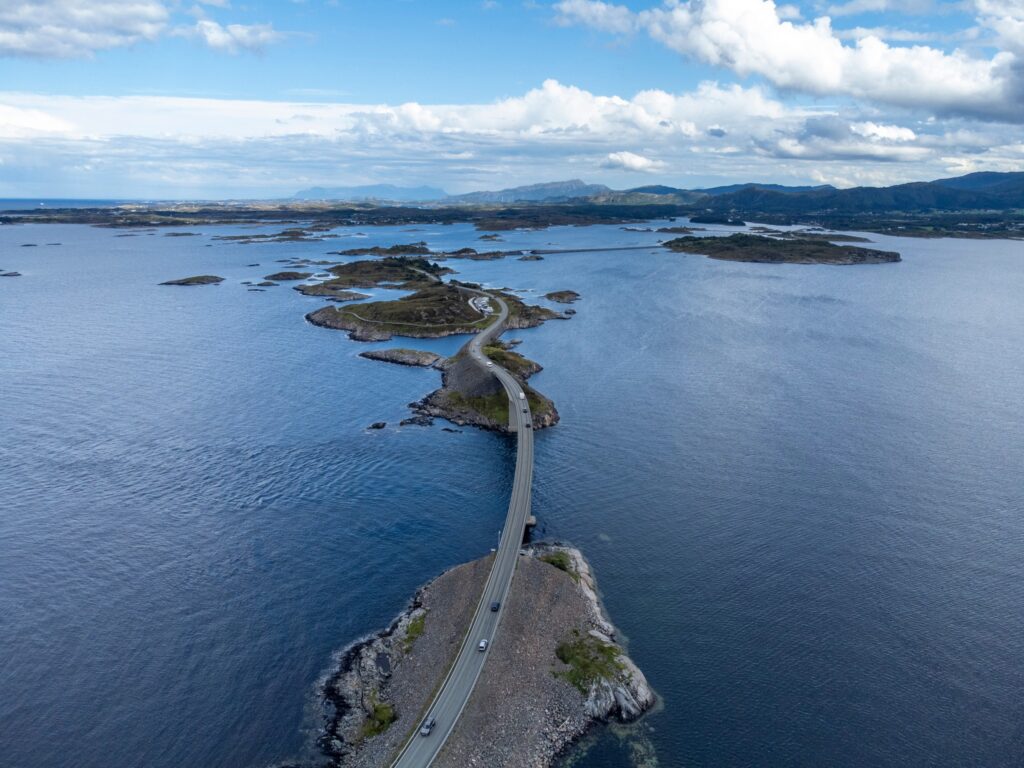
We’re heading to another well-known stop on our road trip: the Atlantic Ocean Road, or Atlanterhavsvegen in Norwegian. It’s a short yet iconic stretch of road on Norway’s west coast that links a string of tiny islands and skerries in the open sea by way of bridges, smaller spans and man-made channels.
The moment you arrive, it’s clear why this road appears in so many photos and on so many lists of the world’s most beautiful drives. Everything is compressed into a small space—sea, wind, rock, and the engineering that made a road possible where it once would have seemed pure madness.
The bridges that made it famous
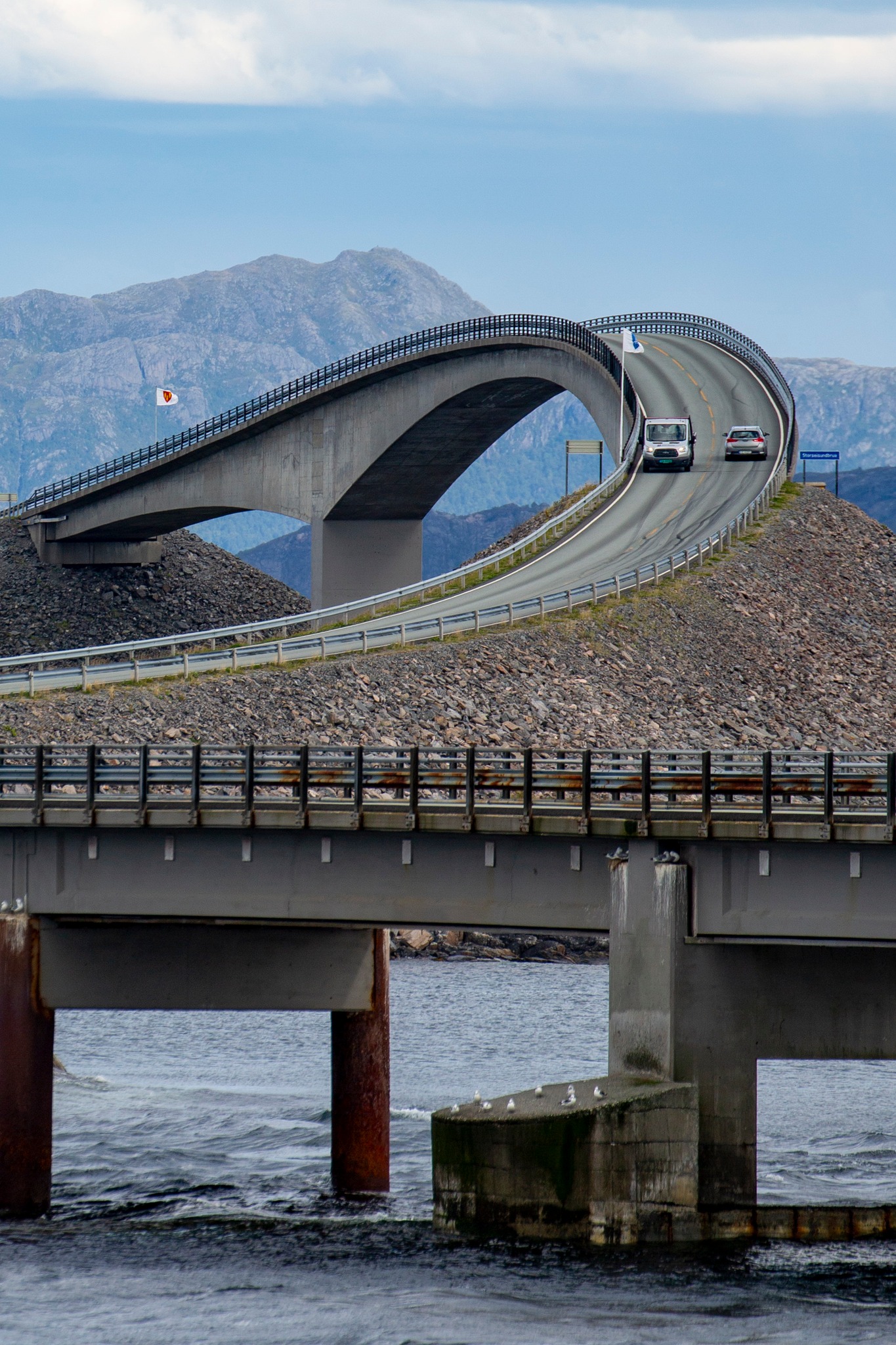
The undisputed star of the route is the Storseisundbrua bridge. It’s the highest on the Atlantic Road and its most iconic centerpiece. With its pronounced arch, which from some angles looks almost like a leap into thin air, it offers sweeping views of the ocean and is among the most photographed spots in the area.
The bridge itself has become the symbol of the Atlantic Road. Images of Storseisundbrua lashed by rough seas have done a lot to build the road’s reputation as a dramatic, even extreme place.
Expectations vs. reality
For all its fame, the Atlantic Ocean Road left us with mixed feelings. We wouldn’t call it a disappointment, but it does feel a little overrated. As you drive across Norway you inevitably encounter similar—sometimes even more interesting—bridges, tunnels and feats of road engineering.
The difference here is that you get several of them packed into one short stretch. The Atlantic Road works more as a concentrated snapshot of something fairly common in Norway: the way roads, the sea and rugged nature coexist.
Stops and parking
One big plus is the number of small and large parking areas and pull-offs right by the road. They let you stop safely, wander down to the water or take those classic shots without putting yourself or other traffic at risk.
If you really want to enjoy the Atlantic Road, don’t rush it. Stop a few times and just watch the sea. It’s away from the wheel, outside the act of driving, that the road shows a quieter, less dramatic—but more authentic—side.
A short stop on a long journey
For us, the Atlantic Road wasn’t a destination in itself but a short, interesting stop on a long journey through Norway. It’s undeniably photogenic and iconic, yet it sits comfortably within a broader landscape where such technical and natural contrasts are not exceptions but almost the rule.
One practical note to end on: set practically in the open sea, the Atlantic Road is exposed to fickle weather. Check the forecast before you go—wind, rain or storms can change the experience completely.