
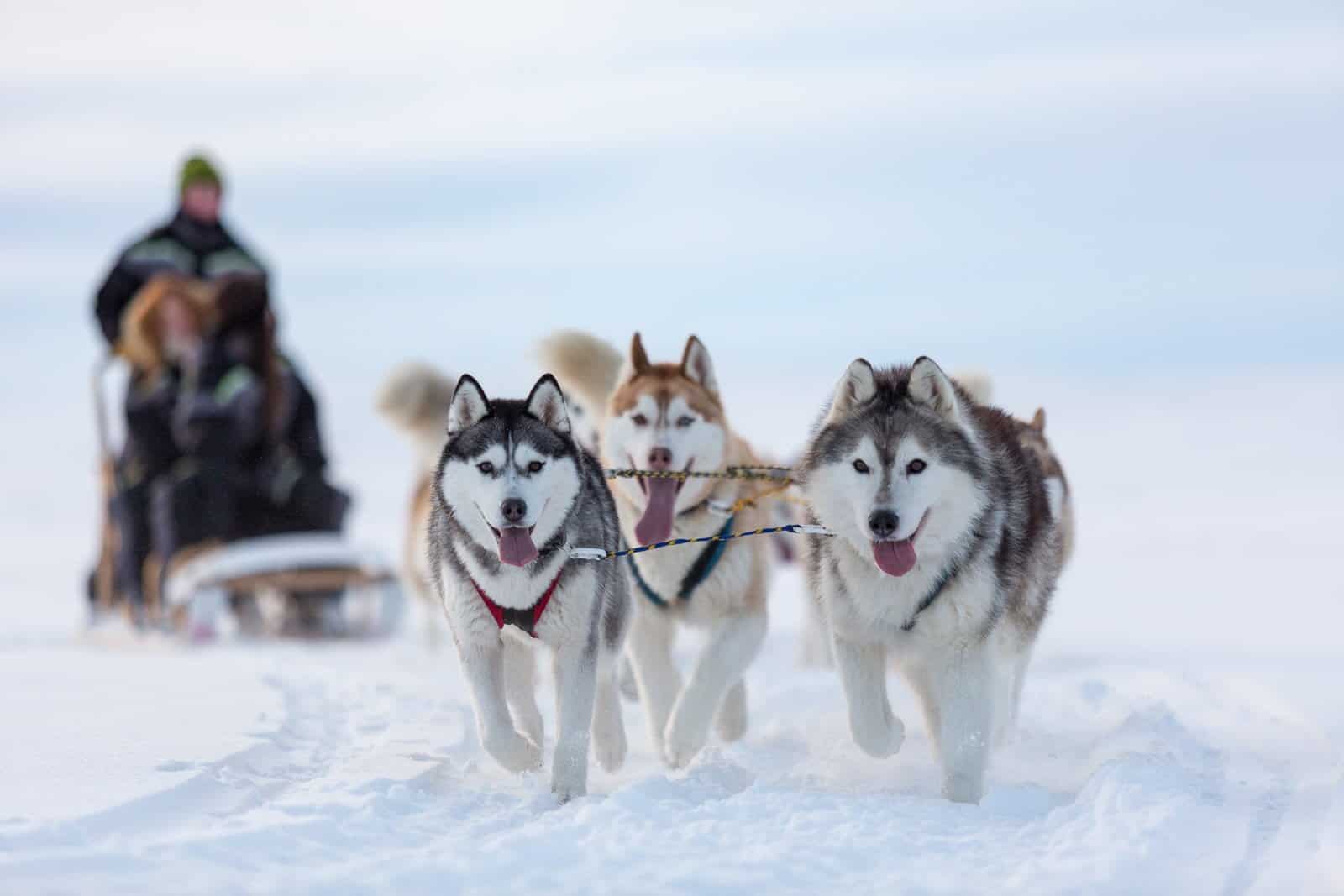


Iceland draws travelers with its volcanic terrain, waterfalls, geothermal areas and long drives across one of Europe’s most dramatic natural backdrops. But taking a dog isn’t like crossing into another EU or Schengen country. Iceland has its own island veterinary regime and is among the strictest in the region for dog imports.
For a standard non-commercial trip with a dog, you’ll need an import permit from MAST, to meet the health requirements tied to your country’s category, and to complete a mandatory 14-day quarantine after arrival. What matters most is whether your country of departure is on the approved export list and which category MAST assigns it.
Also plan for the return journey—your destination country may have very different rules than Iceland itself.
This article covers a typical non-commercial trip with a dog traveling with its owner or an authorized person. If the dog is shipped as cargo, for sale, with a change of ownership or as part of a larger number of animals, different rules may apply.
Table of Contents
Quick overview: what your dog needs for Iceland
Have the following ready for entry to Iceland:
- an import permit from MAST,
- a reservation at an approved quarantine station,
- a microchip,
- a valid rabies vaccination,
- a rabies antibody titer test performed at least 30 days after vaccination,
- a veterinary health certificate matching your country category (form D1 for category 1, D2 for category 2),
- and the certificate sent to MAST for approval 5 to 10 days before arrival.
Category 2 has tighter timelines—the titer test must be done no earlier than 90 days before import, and the dog must have been in an approved country for at least 6 months.
Iceland’s veterinary authority
The rules for importing dogs to Iceland are set by MAST – The Icelandic Food and Veterinary Authority. MAST publishes the official import conditions, the list of approved export countries, country categories, application forms and quarantine guidelines.
Before importing, you must apply for an import permit and reserve a place at an approved quarantine station. Dogs and cats may enter only via Keflavík Airport, the sole approved entry point for companion animals.
Are you planning a trip abroad with your dog? Check the entry requirements for various countries directly in BorderCooler®.
Approved export countries and MAST categories
Iceland does not allow dog imports from every country. MAST recognizes two categories of approved export countries:
Category 1 covers rabies-free countries. These include Australia, Austria, Belgium, Bulgaria, Croatia, Cyprus, the Czech Republic, Denmark, Estonia, the Faroe Islands, Finland, France, Germany, Greece, Ireland, Italy, Japan, Latvia, Liechtenstein, Lithuania, Luxembourg, Malta, the Netherlands, Norway, Portugal, Singapore, Slovenia, Spain, Sweden, Switzerland, the United Arab Emirates and the United Kingdom.
Category 2 covers countries where rabies occurs but is well controlled. These include Bosnia and Herzegovina, Canada, Greenland, Hungary, Poland, Romania, Serbia, Slovakia, Taiwan, Turkey and the USA.
If a country is on neither list, importing a dog to Iceland by the standard route is not possible. MAST may exceptionally approve a country under special conditions. The lists are reviewed twice a year.
Entry requirements for bringing a dog to Iceland
The basics are the same for both categories: an import permit, a quarantine reservation, a microchip, valid rabies vaccination, a titer test, and a health certificate sent to MAST on time. The differences lie in timing and how strict the requirements are.
For category 1, the titer test can be done any time at least 30 days after a valid vaccination, and once you have the result, the dog may travel with no further waiting period. Minimum age on arrival is 5 months.
Category 2 is stricter. The titer test must be done no earlier than 90 days before import, the dog must have been in an approved category 2 country for at least 6 months, and the minimum age on arrival is 7 months.
For both categories, the certificate must be on the MAST form (D1 for category 1, D2 for category 2), signed by an authorized veterinarian and sent to MAST for approval 5 to 10 days before import.
Microchip
A microchip is a core requirement for importing a dog into Iceland. It must be implanted before the rabies vaccination, and the chip number must be recorded correctly in all documents, including the import permit application.
Rabies vaccination
A rabies vaccination is mandatory for all dogs, regardless of category. It must be administered after microchipping and be valid at the time of import.
For category 1, the standard applies—the titer test is performed at least 30 days after vaccination.
For category 2, pay close attention to timing—the titer test must not be done earlier than 90 days before arrival.
Rabies antibody titer test
The rabies antibody titer test is mandatory for imports to Iceland from both country categories. It’s a blood test that verifies antibody levels after vaccination.
For category 1, it must be performed at least 30 days after a valid vaccination. No additional waiting period is required once the result is available.
For category 2, it must be performed at least 30 days after a valid vaccination and also no earlier than 90 days before import.
Veterinary health certificate for travel to Iceland
The veterinary health certificate is a key document for Iceland. It must be issued on a MAST form—D1 for category 1, D2 for category 2. All procedures must be carried out by an authorized veterinarian in the exporting country.
Send the signed certificate to MAST for approval 5 to 10 days before import. If documents arrive later than 5 days before arrival, the import may be refused.
Quarantine after arrival in Iceland
Quarantine is a mandatory part of every dog import to Iceland—not an exceptional measure when paperwork is missing.
MAST states that all dogs must complete at least 14 days in one of two approved quarantine stations. Dogs are admitted on fixed intake dates roughly every three weeks, so plan your flight together with the quarantine slot. Arrivals are permitted between 6:00 and 17:00 on the quarantine stations’ designated intake days.
Import permit fees start at ISK 39 633 (as of 2025) and are separate from quarantine, veterinary and airline costs.
Exemptions from quarantine apply only to certain assistance dogs under specific conditions.
Banned breeds
Some dog breeds are not allowed to enter Iceland. Banned breeds include the American Pit Bull Terrier, Staffordshire Bull Terrier, Tosa, Dogo Argentino and Fila Brasileiro. Wolf hybrids are also prohibited. Dogs showing aggressive behavior may be refused as well.
Arrival in Iceland with a dog
MAST states that Keflavík Airport is the only approved entry point for dogs and cats. A dog cannot enter via Reykjavík’s domestic airport or Akureyri. Bringing a dog by ferry from Denmark is not possible under standard import rules.
Before flying, check:
- whether the carrier transports dogs on your route,
- whether the dog can travel in the cabin or only in the hold,
- what the crate requirements are,
- whether your arrival aligns with the quarantine intake date,
- and whether the carrier accepts all veterinary documents required by MAST.
Returning home from Iceland
When returning from Iceland, the rules of the destination country apply—not Iceland’s.
Returning from Iceland to the EU
If a dog is returning from Iceland to an EU country, MAST advises contacting an authorized veterinarian to issue the exit certificate, which MAST will then confirm. Standard EU entry rules apply: a microchip implanted before vaccination, a valid rabies vaccination and a waiting period of at least 21 days after vaccination.
Iceland is approved by the EU—the titer test is not required when returning to the EU from Iceland.
Returning from Iceland to another country
If the dog is returning to a non‑EU country, check that country’s rules. Some states may require an export certificate, an import permit or additional veterinary procedures.
If you’re unsure about the requirements for your specific route, the BorderCooler® tool will prepare a tailored checklist.
Practical rules for staying in Iceland with a dog
For many travelers, Iceland means wild landscapes, long drives and serious weather. The practical side of your stay depends on whether you’re planning a longer road trip or basing yourself in one area.
Always confirm accommodation directly. A simple “pet friendly” filter on a booking site isn’t enough. Check your dog’s size, room and common‑area rules, and any fees.
Plan for weather, wind, cold, and long distances between stops. Veterinary care is easier to access in larger towns and along main routes. For a longer road trip, it’s worth noting down at least one veterinary clinic near where you’ll be staying.
When to start preparing
Iceland is not a last‑minute destination for dogs. The import permit, quarantine reservation, test dates and certificate approval all depend on each other.
Before you start, check:
- whether your departure country is on the approved export list and which category it falls into,
- the correct order and timing for vaccination and the titer test,
- when to send the certificate to MAST,
- whether you’ve secured a quarantine place and if the date matches your flight,
- and what your dog will need for the journey home.
Summary
Traveling to Iceland with a dog is among the strictest processes in Europe. A microchip, vaccination and pet passport aren’t enough—you’ll also need an import permit, the correct country category, a titer test, the right certificate and a mandatory 14‑day quarantine.
Note that the titer test is mandatory for both country categories—a key difference from most other European destinations.
Frequently asked questions about traveling to Iceland with a dog
Can I take a dog to Iceland without quarantine?
No. MAST states that all dogs must complete at least 14 days of quarantine in an approved facility. Exceptions apply only to certain assistance dogs.
Is a titer test mandatory for travel to Iceland?
Yes, for both categories. For category 1 it must be performed at least 30 days after vaccination. For category 2 it must be performed at least 30 days after vaccination and no earlier than 90 days before import.
Can I come to Iceland with a dog by ferry?
No. Keflavík Airport is the only approved entry point for dogs and cats.
Does a dog need an import permit to travel to Iceland?
Yes. You must apply to MAST for an import permit before traveling and also secure a place at a quarantine station.
Can I import a dog to Iceland from any country?
No. Import is only possible from approved export countries on the MAST list. If a country is not on the list, standard import is not possible.
Which breeds are banned in Iceland?
American Pit Bull Terrier, Staffordshire Bull Terrier, Tosa, Dogo Argentino, Fila Brasileiro and wolf hybrids.