


Sicily is hard to fit into a single trip. There’s sea, volcanoes, Greek temples, baroque towns, fishing villages, long coastal roads, and places where the pace slows on its own. This 13‑day Sicily road trip is a loop starting and ending in Catania.
Along the way we’ll cover the island’s southeast, the coast by Scala dei Turchi, Agrigento, the northwest around Scopello and the Zingaro reserve, and we’ll finish beneath Etna. We won’t try to see absolutely everything. This plan is about enjoying Sicily at a good pace: sea, towns, sights, dinners, views, and a few drives that are part of the experience in their own right.
The itinerary is ideal for travelers who want to rent a car and not rely on a single base. Sicily is large, and distances between regions can be significant. A car gives us the freedom to stop at small beaches, sleep away from the busiest towns, and adjust the plan to the weather and our mood.
Route at a glance
- Day 1: fly into Catania and transfer to Fontane Bianche
- Day 2: relax by the sea
- Day 3: drive via Noto to the Capo Rossello area
- Day 4: explore the coast around Capo Rossello
- Day 5: Scala dei Turchi in the morning, Le Pergole in the afternoon, seafood dinner
- Day 6: Valle dei Templi in the morning, Agrigento at dusk
- Day 7: transfer to Scopello near Zingaro
- Day 8: day trip to San Vito Lo Capo
- Day 9: Riserva Naturale dello Zingaro
- Day 10: drive beneath Etna with a stop in Segesta
- Day 11: trip to Etna
- Day 12: Paternò and a last dinner
- Day 13: fly out of Catania
Day 1: arrive in Catania and transfer to Fontane Bianche
Catania is a practical gateway to eastern Sicily. After landing, we’ll pick up the car at the airport and drive southeast to the Fontane Bianche area. The journey takes about an hour, depending on traffic and the exact location of our accommodation.
Fontane Bianche is a small seaside town south of Syracuse. It’s not a destination for blockbuster sights, but it works very well as a first stop after arrival. There’s sea, sandy stretches, rocky coves, simple restaurants, and a holiday feel without the need for a big plan.
We’ll keep day one for acclimatizing and easing into the island’s rhythm. Check in, stroll down to the water, and have a simple dinner. Fontane Bianche will be our base for the next two nights.
Day 2: Fontane Bianche and Spiaggia del Gelsomineto
We’ll take it easy on day two. After travel and the first drive there’s no need to rush to the sights. In the morning we’ll head to Spiaggia del Gelsomineto, a smaller beach in a natural setting with clear water and a calmer vibe than the busiest town beaches. Morning is ideal for a swim: the water is still, there are fewer people, and the heat hasn’t peaked yet.
Leave the afternoon free—walk the coast, grab a gelato, relax, and enjoy a quiet dinner by the sea.
Day 3: drive via Noto to the Capo Rossello area
On day three we’ll set off early and aim southwest. We’ll stop in Noto along the way—the route naturally passes through, and the stop enriches the drive rather than complicating it.
Noto is one of Sicily’s finest baroque towns. After the devastating 1693 earthquake it was rebuilt in late baroque style and is now part of the UNESCO-listed Val di Noto. Morning is more pleasant than the hot midday hours—the streets and church steps aren’t crowded yet, and the light on the stone is softer.
We’ll enter through Porta Reale onto Corso Vittorio Emanuele, stop by the Cattedrale di San Nicolò, Palazzo Ducezio, and one of the churches. Leave time for a coffee or gelato. Two to three hours is enough for an unhurried look around the center.
After Noto we continue west to the Capo Rossello area near Realmonte. The direct drive from Fontane Bianche via Noto to Capo Rossello takes about two and a half hours, not counting the stop; with a relaxed morning in Noto we plan to arrive at our accommodation in the afternoon. We’ll spend the next three nights at Capo Rossello.
Day 4: the coast around Capo Rossello
We’ll spend day four exploring the coastline around Capo Rossello. This area feels different from the southeast: fewer baroque backdrops, more open coast, white cliffs, viewpoints, and small beaches.
Morning is good for a walk along the cliffs or a swim before the heat builds. Save the afternoon for the water, shade, and rest. There aren’t major tourist attractions here, and that’s the point—we can slow down and let Sicily sink in without a schedule.
In the evening we’ll find a local restaurant. The south coast is a great place for simple plates of fresh fish with local wine.
Day 5: Scala dei Turchi in the morning, Le Pergole in the afternoon
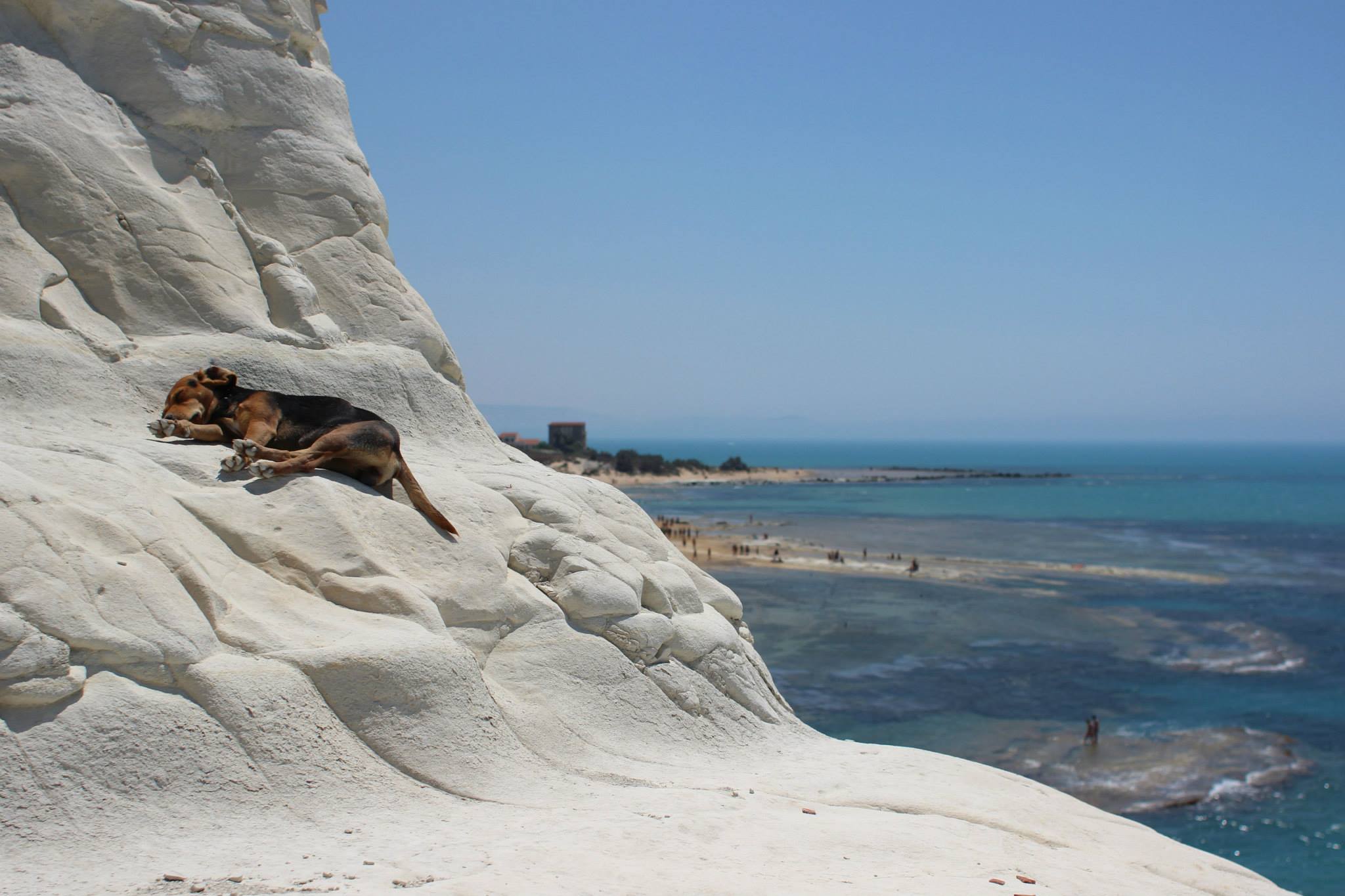
On day five we’ll visit Scala dei Turchi, one of southern Sicily’s most photogenic spots. This white cliff by the sea has soft, undulating shapes and, in the right light, looks almost unreal.
Come early—for two reasons. The morning light is softer and better both for photos and for simply looking. And in season the place fills quickly. Arriving before nine makes for a very different experience than showing up at midday. In summer there are access restrictions on parts of the cliff, so check the current rules before you go.
As the heat builds after Scala dei Turchi, we’ll move to Le Pergole beach. It’s less iconic and all the more relaxed—good for a swim, lunch, and an unhurried afternoon by the sea.
We’ll end the day at a simple seafood place. This is the kind of day that shows why Sicily rewards a slower pace.
Day 6: Valle dei Templi in the morning, Agrigento at dusk
We’ll pair the area’s headline historic site with an atmospheric evening in town. Visit Valle dei Templi in the morning, then head into Agrigento’s historic center at dusk.
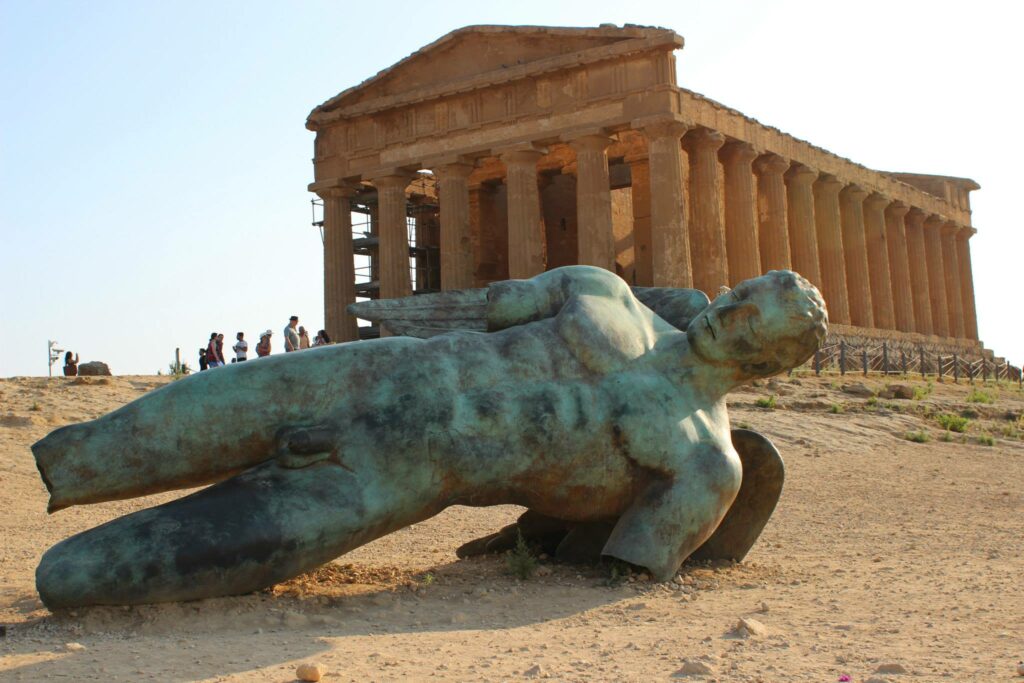
Valle dei Templi is one of the main reasons to stop near Agrigento: a vast archaeological ridge above the city and one of the most important Greek sites outside today’s Greece.
Arriving right at opening time matters—the site is exposed, with little shade, and summer midday can be punishing. Morning is a different experience: manageable temperatures, warm light on the temples, and fewer people. Bring water, a hat, and comfortable shoes.
The star is the Tempio della Concordia, one of the best-preserved Greek temples in Sicily. We’ll also see the Tempio di Giunone, Tempio di Eracle, the remains of the Tempio di Giove Olimpico, and other parts of the site. Allow at least three hours.
Toward evening we’ll head into Agrigento’s old town. It’s well worth a wander and dinner—narrow lanes, stairways, small squares, and views. We’ll stroll up to the cathedral and pick a place to eat. We’ll spend one night in Agrigento before the next leg.
Day 7: transfer to Scopello near Zingaro
On day seven we’ll cross from the south coast to Sicily’s northwest, to the small village of Scopello by the Riserva Naturale dello Zingaro. The drive takes about two and a half hours.
Scopello is a small fishing village right by the reserve’s southern entrance. It’s a very different place from San Vito Lo Capo—quieter, smaller, with a more authentic feel. That location makes it an ideal base for exploring Zingaro.
After arriving we’ll check in and keep plans light. We’ll wander the village, take a look at the old Tonnara di Scopello, and enjoy a quiet evening. Scopello will be our base for the next three nights.
Day 8: day trip to San Vito Lo Capo
On day eight we’ll head to San Vito Lo Capo, about 15 minutes by car from Scopello. San Vito Lo Capo is known for its long sandy beach, turquoise water, and the view of Monte Monaco.
We’ll spend the morning on the beach before the heat peaks. Around midday we’ll grab lunch or a gelato in town—San Vito Lo Capo is also a good place to try couscous, typical of this corner of Sicily and a reminder of the island’s historic links with North Africa. In the afternoon we’ll return to Scopello.
If we’re up for a little activity, we can take a short walk toward Monte Monaco or explore nearby stretches of coast.
Day 9: Riserva Naturale dello Zingaro
On day nine we’ll enter Riserva Naturale dello Zingaro right from Scopello—the southern gate is practically on the doorstep. That’s one of the big advantages of staying here.
There’s no coastal road through the reserve—no cars and no typical beach infrastructure. Instead you get footpaths, cliffs, coves, clear water, and Mediterranean scrub.
Set out early—before nine. The paths heat up quickly in summer and there isn’t much shade. Take plenty of water, sturdy footwear, sun protection, and swim gear. Entry isn’t permitted in flip-flops or beach sandals.
The reward is a string of small coves with crystal water—Cala dell’Uzzo, Cala Marinella, and others—with a completely different feel to organized beaches. Back in Scopello in the afternoon, we’ll slow the pace—the last evening in this part of the island is for taking it easy.
Day 10: drive beneath Etna with a stop in Segesta
Day ten brings a longer transfer back east, under Etna, to the Santa Maria di Licodia area. The direct drive is about two and a half hours, but the route passes Segesta—and that’s well worth a stop.
Segesta boasts one of Sicily’s best-preserved Greek temples, set in rolling hills with little development around. Early in the day, before the worst heat, the setting is wonderfully calm. The temple and the nearby theater with its sweeping views make a perfect break on a long drive.
After Segesta we continue east on the motorway toward Catania and turn off for Santa Maria di Licodia. With breaks, allow about four hours in total. After checking in, we’ll save Etna for the next day. Santa Maria di Licodia is our final base—we’ll spend three nights here.
Day 11: Etna
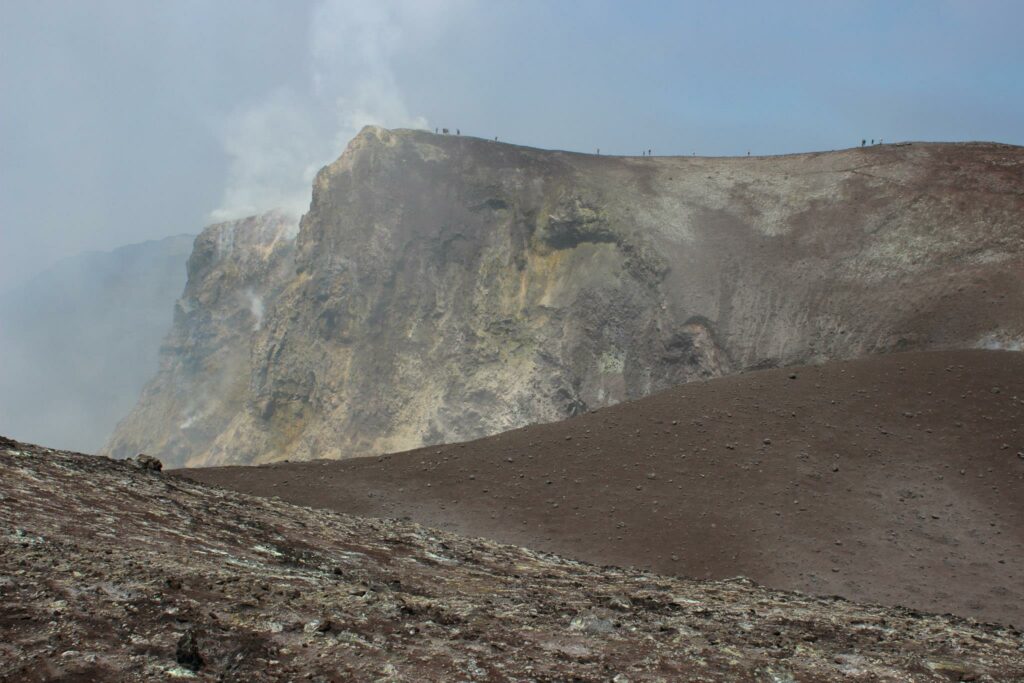
We’ll devote day eleven to Etna. Morning is the best time for the volcano—skies are often clearer, clouds sit lower, and summit temperatures are more manageable. Later in the day Etna often wraps itself in cloud.
The simplest option is to drive up to Rifugio Sapienza and walk around the lower craters. More active travelers can continue higher by cable car, 4×4 buses, or with a guide. It can be much colder on Etna than by the sea—even if it’s 35 degrees on the coast, a cold wind can be blowing up top. Pack an extra layer.
In the evening we’ll return to our accommodation and have a quiet dinner nearby.
Day 12: Paternò and a last dinner
On day twelve we slow down. After two tougher days—a long transfer and a volcano visit—we’ll leave space for a gentler finish.
A good choice is Paternò, about 20 minutes by car from Santa Maria di Licodia. It’s not one of Sicily’s headline destinations, and that can make it a pleasant way to end the trip. The town sits at Etna’s foot and has a Norman castle from the 11th century, historic lanes, churches, and views over the surrounding countryside.
Keep the program simple: a morning wander before the heat, visit the castle or the historic center, grab a coffee, and take it easy. In the evening we’ll toast the trip with a last Sicilian dinner—no rush, no big plan.
Day 13: departure from Catania
We’ll use the last morning according to our flight time. From Santa Maria di Licodia or Paternò it’s about a 30‑minute drive to Catania airport, but leave a buffer for traffic, refueling, and returning the car.
If we’re flying later, we can stop in Catania for a quick stroll or coffee. If our flight is in the morning, it’s best not to risk it—head straight to the airport.
How to adapt the itinerary
This plan works best as a 13‑day road trip. It can be shortened depending on how much time we have.
If we have only 11 days, skip Day 4 (Capo Rossello’s coast) and cut the Scopello stay to two nights. The itinerary will be busier, but still very doable.
We’d cut Valle dei Templi, Zingaro, and Etna the least—these are the signature highlights of the route. Noto and Segesta are built into transfer days, so skipping them doesn’t shorten the day much—it only removes the break.
Practical tips for a Sicily road trip
The best months for this itinerary are May, June, or September. The sea is warm enough, but the heat isn’t stuck at 38 degrees. Zingaro, Valle dei Templi, and Etna are all far more pleasant in these months than in July and August, when certain routes in full sun are genuinely tough. July and August are possible, but expect bigger crowds, higher prices, and early starts that aren’t a suggestion but a necessity.
A car is worth it in Sicily, but expect narrow roads, spirited driving, and parking that can be tricky in historic centers. When choosing accommodation, check the parking situation as well as the location.
Summer can be very hot. For places like Valle dei Templi, Zingaro, or Scala dei Turchi, it’s better to start early. For Etna, bring a warmer layer—the conditions can change quickly.
Don’t plan transfers too optimistically. On the map Sicily can look smaller than it feels behind the wheel. Fewer stops with more time in each place beats chasing the whole island at a rush.
Summary
This Sicilian itinerary links the sea, baroque towns, ancient sites, nature reserves, and Mount Etna. We start in Catania, continue through Fontane Bianche with a stop in Noto and the south coast to Scala dei Turchi, then cross via Valle dei Templi and Agrigento to little Scopello by Zingaro, and end the journey under Etna.
It’s a route for travelers who don’t want to stay in one place. In this itinerary Sicily isn’t just a beach break but a varied road trip across the island. If we leave enough time for both driving and downtime, the reward is a richly varied journey that shows several sides of Sicily.