


Trip date: Late July 2025
Introduction
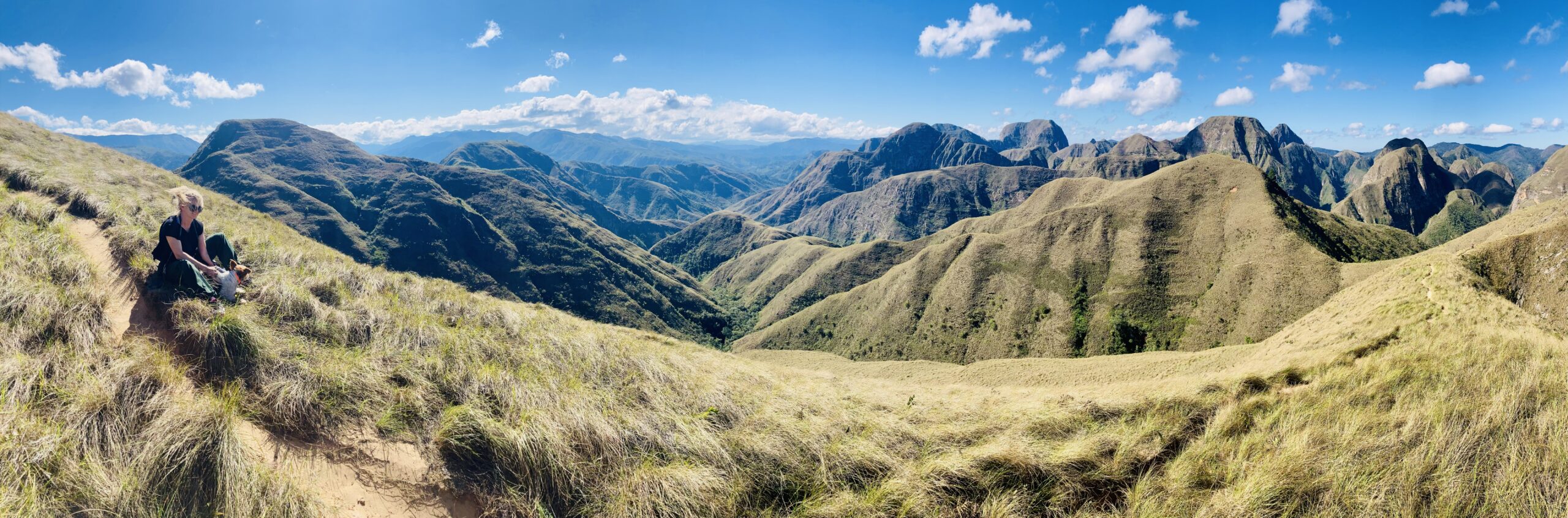
Codo de los Andes is an impressive trekking destination in Bolivia’s Eastern Andes. Its name means “the elbow of the Andes”—a nod to the sharp bend in the range that frames sweeping panoramas. We chose this trek for its easy access from the main route and its relatively moderate difficulty. The photos we’d seen promised big views.
Getting there
We worked the trek into our drive from Santa Cruz toward Samaipata. After passing the village of Cuevas (about 1.5 km beyond it), there’s a left turn onto an unpaved road called Camino RN7-Palermo.
This dusty track climbs for about 5.5 km to a saddle with a parking area, where the trail starts. There are water crossings and steeper sections along the way, so a 4×4 is recommended.
There are toilets and very basic lodging by the parking area. Entry is ticketed.
On the trail
The Codo de los Andes trek is considered moderate to challenging, especially if you hike the full route, including the section toward the Cuevas waterfalls. Short on time, we only covered the opening stretch to the first viewpoints.
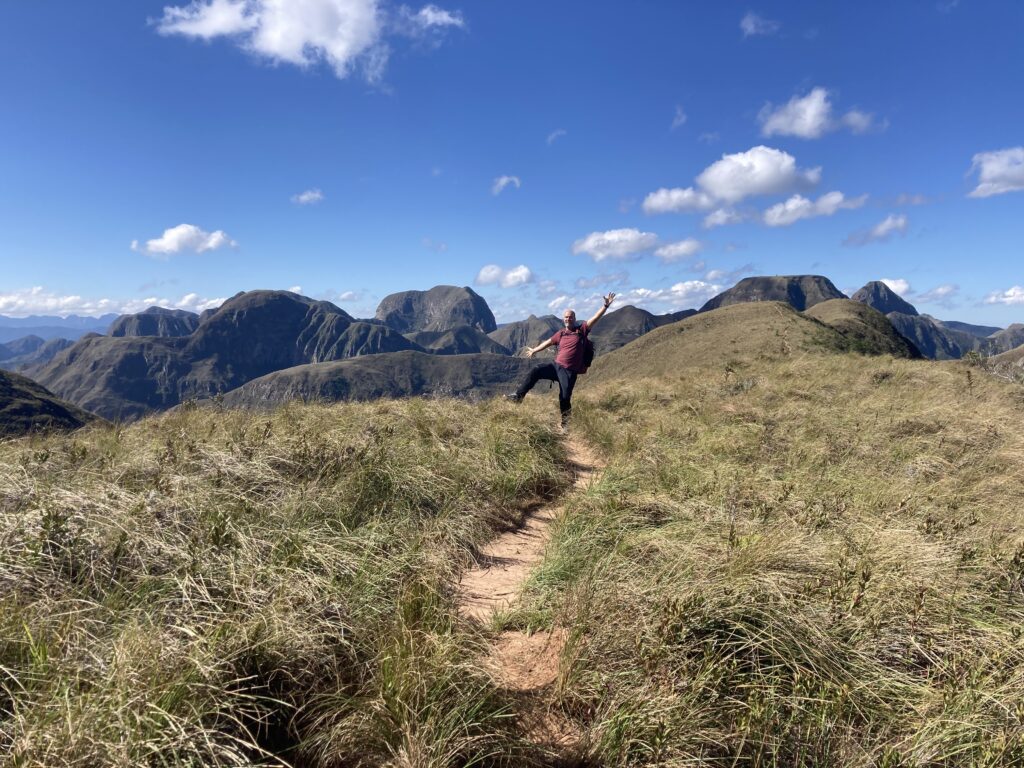
The path was fairly easy to follow but essentially unmarked, so it’s best to use an offline map (e.g., maps.me or Mapy.cz). The terrain also suited Ibo well. Even where it steepened, he handled it without fuss.
Within a few minutes of climbing, the landscape opened up—green hills, valleys, and horizons that seemed to run forever. Throughout our walk we met only one guided group (with a dog, too). Overall, it felt very peaceful, with hardly any visitors.
The wind
The weather caught us off guard. Although temperatures were pleasant and the skies were essentially clear, a strong—at times extreme—wind took the edge off the day. The viewpoints are perfect for drone shots, but the gusts were so fierce we didn’t even attempt a launch.
Final thoughts
Codo de los Andes is a beautiful, dramatic trek with impressive views, a quiet atmosphere, and a chance to see the Eastern Andes at their best. Even though we only managed part of the route, it was a memorable outing—especially for nature lovers and photographers, this area is a real treat.