
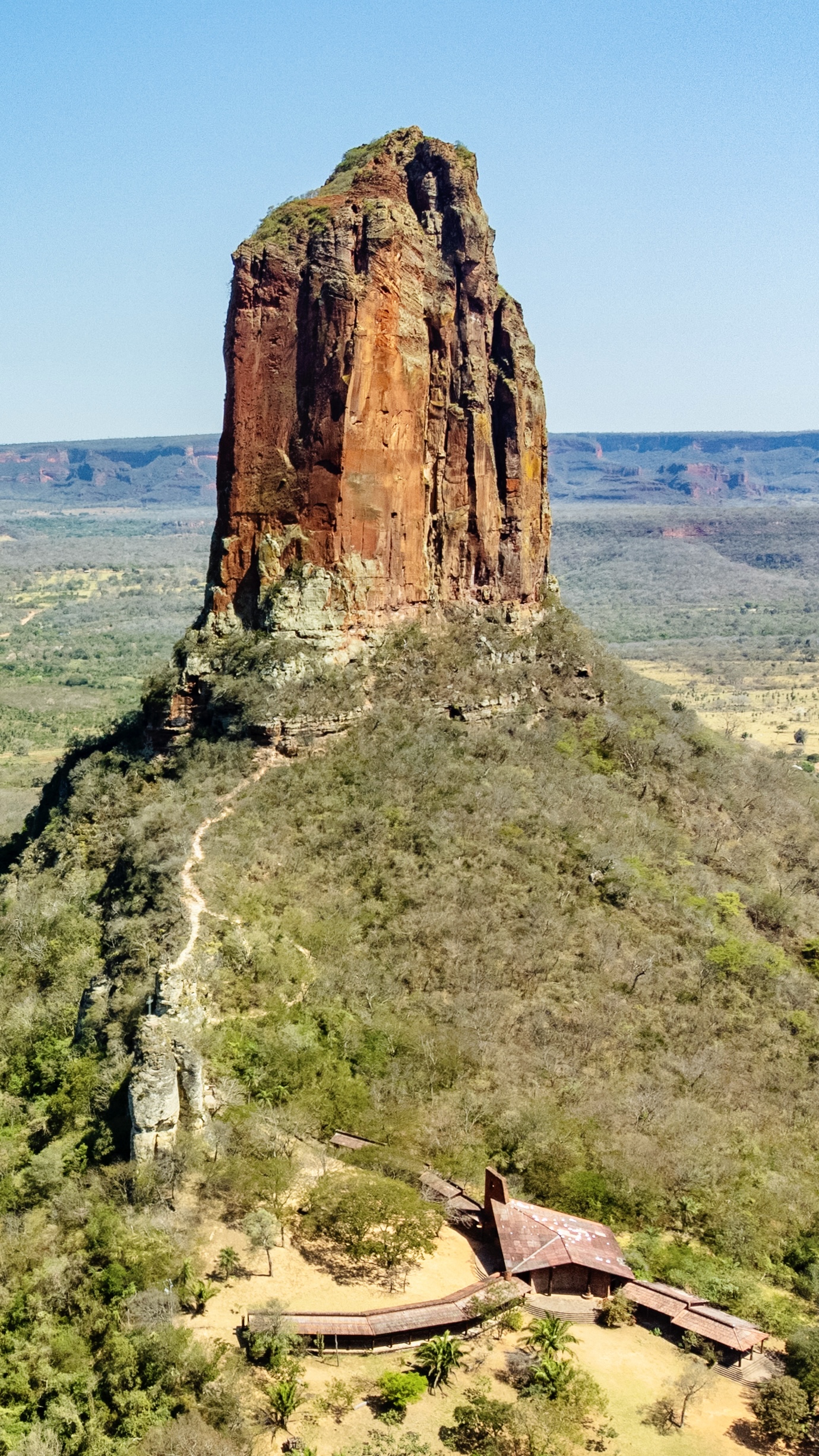


Bolivia isn’t just the Altiplano, its high plateaus, and snow-capped Andean peaks. In the east, the land softens into the warmer, greener, far flatter region known as the Chiquitania. Here, just outside the small town of Roboré in the Santa Cruz Department, stands the Torre de Chochís—a striking sandstone monolith about 553 meters high that rises from the plain like a giant tooth.
A stop in the village of Chochís
On the way to Roboré I stop in the little village of Chochís. From afar it’s obvious this brief detour is all about the Torre de Chochís, also known as the Torre de David. The near-vertical red sandstone pillar stands in stark contrast to the otherwise gently undulating—at times completely flat—landscape around it.
You can drive to a small parking area right beneath the rock. A local road leads here from the village of Chochís, and there’s a token 6 BOB access fee. The whole visit feels pleasantly low-key and simple to manage.
Santuario Mariano de la Torre
At the base of the formation sits the Santuario Mariano de la Torre, one of the region’s key pilgrimage sites. The sanctuary is dedicated to the Assumption of the Virgin Mary and was built as a testament to the community’s faith. Its creation is tied to tragic events in the late 1970s, when the area was hit by destructive landslides and floods.
Architecturally, the sanctuary stands out for its use of wood, stone elements, and rich symbolism drawn from local flora and fauna alongside Christian motifs. The grounds feel calm and dignified, and their position directly beneath the massive rock wall heightens the site’s spiritual atmosphere.
As I’m here with Ibo, I only peek in from the outside. Entry with a dog isn’t explicitly forbidden, but I don’t want to disturb the spirit of the place.
Interested in this destination? Would you like to visit it with your dog? Check the entry requirements directly in BorderCooler®.
A short walk to the ‘rock tooth’
From the parking area a gentle path heads toward the Torre de Chochís itself. As I climb, views open out over the Chiquitania, including the railway line that runs all the way to the Brazilian border.
For Ibo, the walk is a welcome change of pace. The higher I get, the more varied the trail becomes—something he clearly enjoys. As usual, there’s also a good roll in the dust, which I take as part of the package on outings like this. I’m planning a stop at nearby waterfalls, where he can rinse off.
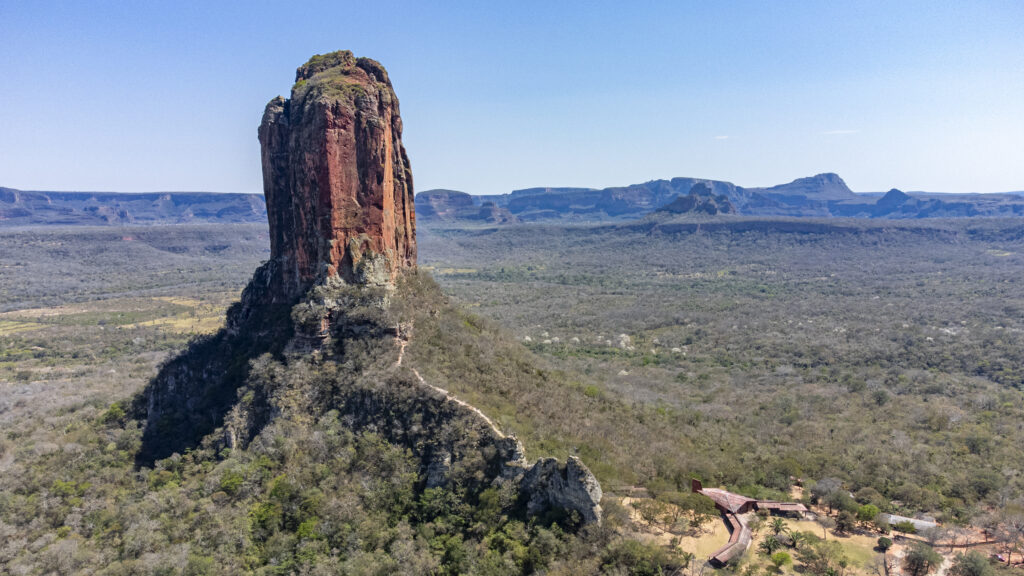
On the map the path seems to run right to the foot of the tower, but on the ground it clearly keeps traversing and likely loops around the whole massif. I didn’t do the full circuit in the end—the trail was getting pretty overgrown—so from below I just admire the bolted climbing routes. The rock is peppered with bolts.
Practical notes for visiting with a dog
Visiting the Torre de Chochís with a dog was no problem at all. The route is short, easy, and fine for a simple walk. Do keep in mind it’s a popular spot, and during the day there can be more people around—in which case it might not be ideal for a dog.
I spent a little over an hour here, which was plenty. Torre de Chochís is exactly the kind of stop that nicely breaks up a drive while delivering a strong visual and cultural payoff—even when you’re traveling with a dog.