
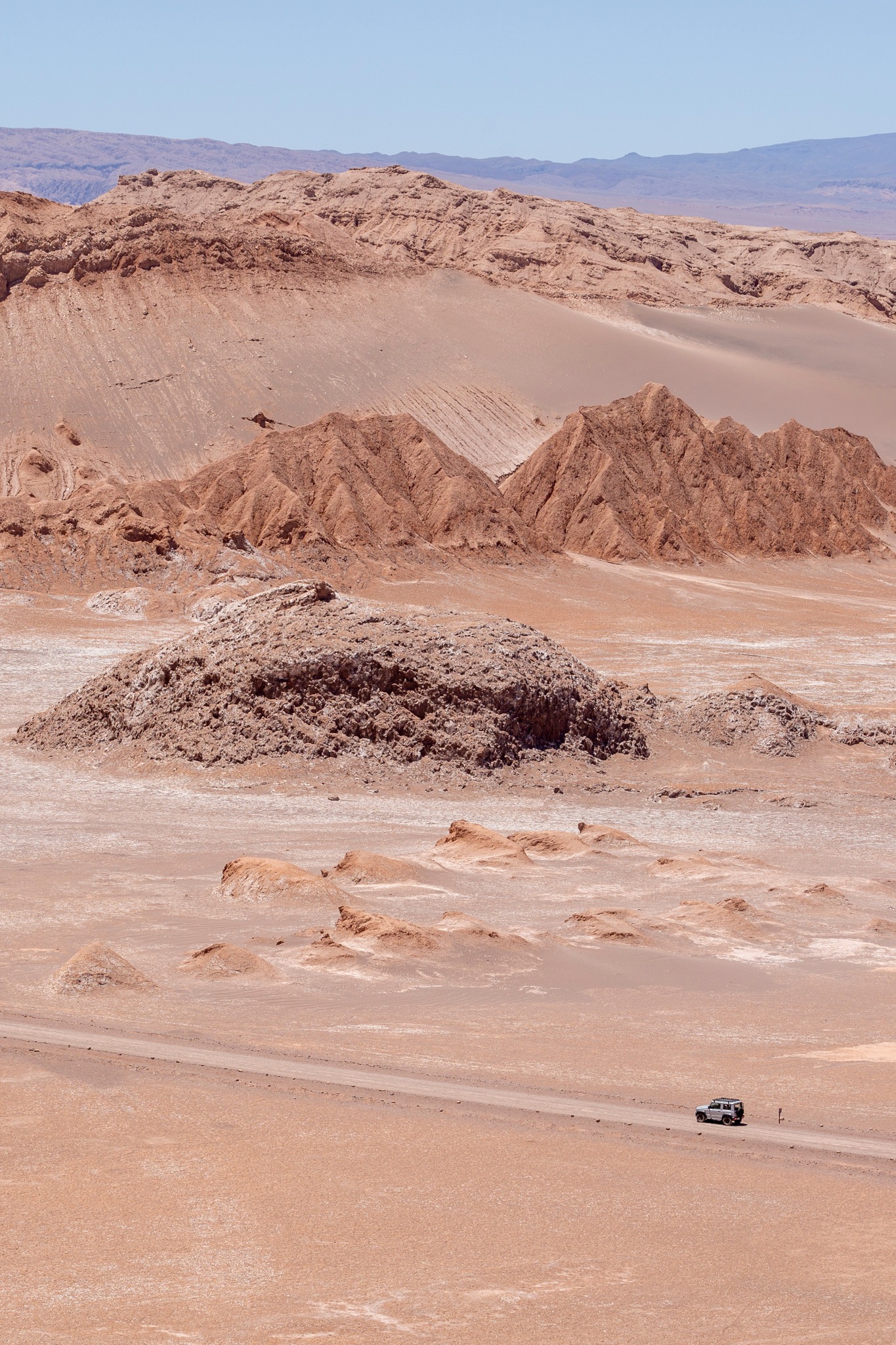


After visiting the lagoons of the Salar de Atacama, we head back toward the town of San Pedro de Atacama. Our second stop of the day is one of the area’s best-known attractions – Valle de la Luna. The name alone hints at a landscape that barely feels connected to Earth.
Valle de la Luna: the basics
Valle de la Luna (the Moon Valley) lies just a few kilometers from San Pedro de Atacama and is part of the Reserva Nacional Los Flamencos. The area is known for its extremely dry climate, wind- and salt-driven erosion, and a landscape whose shapes and colors resemble the surface of the Moon.
The valley is open to the public, and most spots can be visited from the comfort of your car. For those keen to walk, there are short walking loops leading to viewpoints and rock formations.
Entering the lunar landscape
We arrive at the main entrance to Valle de la Luna, where there’s an admission fee. It’s straightforward – we bought our tickets online, and at the gate we just show a QR code on our phone. An attendant scans it and waves us through. We get a quick briefing on protecting the area and staying safe, and a map of the route with the designated stops.
We roll onto the road that’s meant to take us to something we still can’t quite picture. The name suggests a “lunar” scene, yet we’re curious how a place so devoid of life could become a tourist draw.
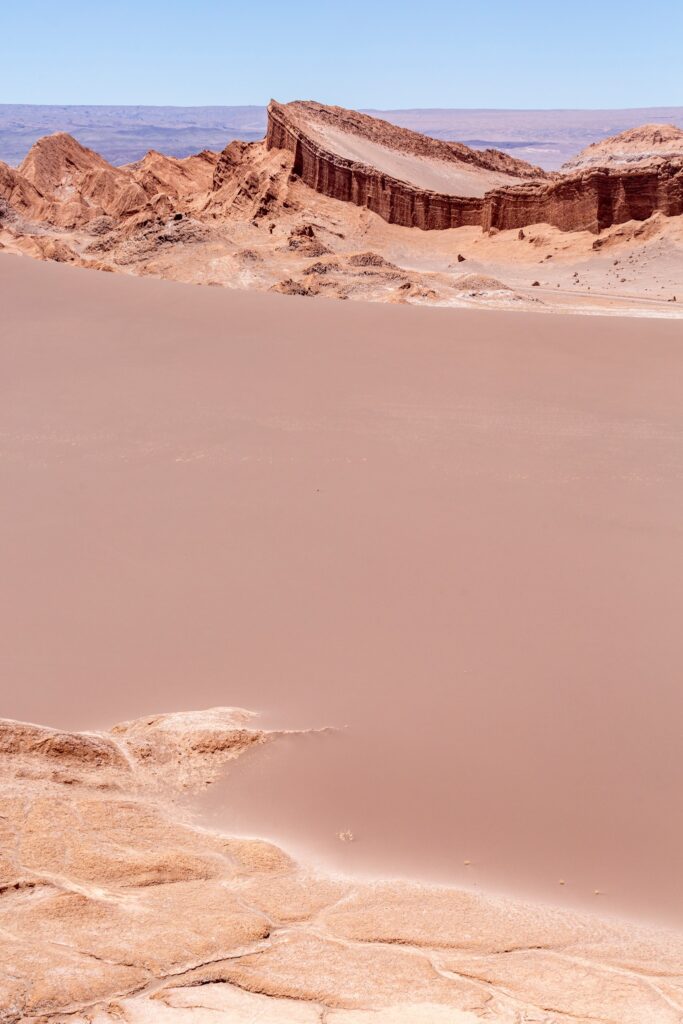
After barely a kilometer it’s clear there’s plenty to see. Sand dunes rise around us, strange lines cut across the land, and the first bizarrely sculpted rock formations appear, looking downright unearthly.
We gradually pass a series of stops that serve as starting points for various loops in the area. Some are basic – just a pull-off with a small parking area. Others even offer running water and toilets. It’s all very simple, but it works.
Sand, rock, and absolute dryness
We pick one of the shorter walking loops and set off on foot into the lunar landscape toward a nearby hill. The route is well marked, but in places it cuts across soft sand that we sink into. Good footwear would definitely help here.
We reach the top after roughly 30 minutes of walking. The reward is a sweeping view of a landscape of dunes, rock, and emptiness. Sand dunes alternate with slopes carved by erosion and rocks shaped over thousands of years by wind and salt. Some dunes reminded us of the Sahara – fine sand, sharp lines, and absolute emptiness all around.
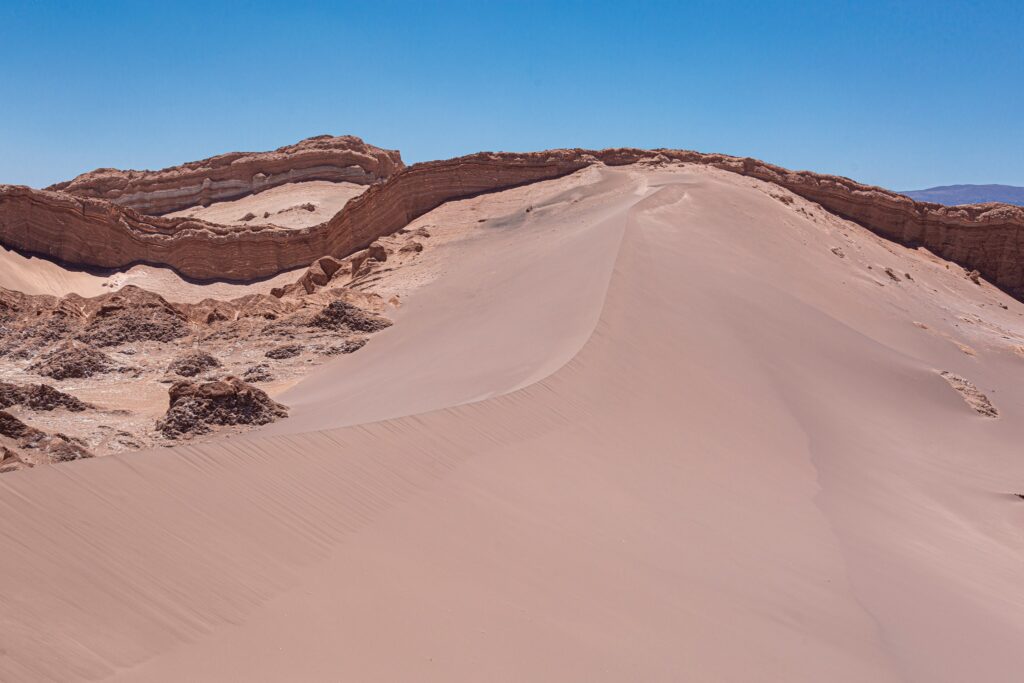
It’s fair to say we’re here at a less-than-ideal time – it’s midday and the sun is beating down mercilessly. Without sunscreen, sunglasses, and plenty of water, I wouldn’t even try this – the sun in this environment is truly relentless.
The air is extremely dry, temperatures are high, and there’s virtually nowhere to hide from the intense sun. Don’t underestimate time spent outside the car – plan for it and prepare well.
Life at the limits
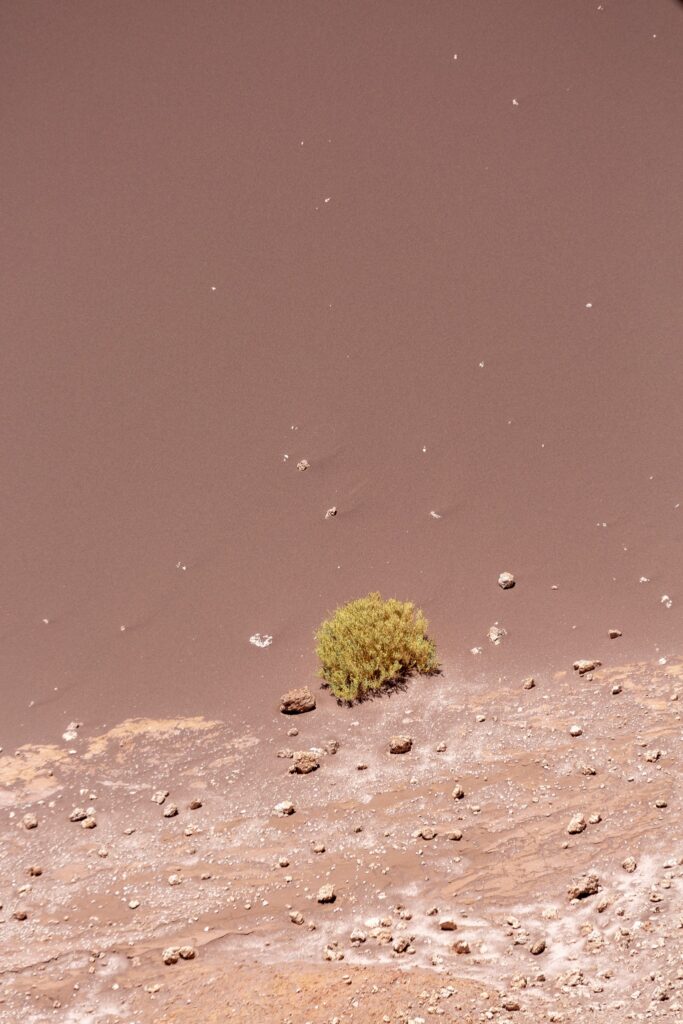
The only sign of life we noticed out here was a small green shrub, about the size of a soccer ball. In a place where it barely rains and the soil is saturated with salt, its very existence feels like a small miracle.
Rock formations and imagination
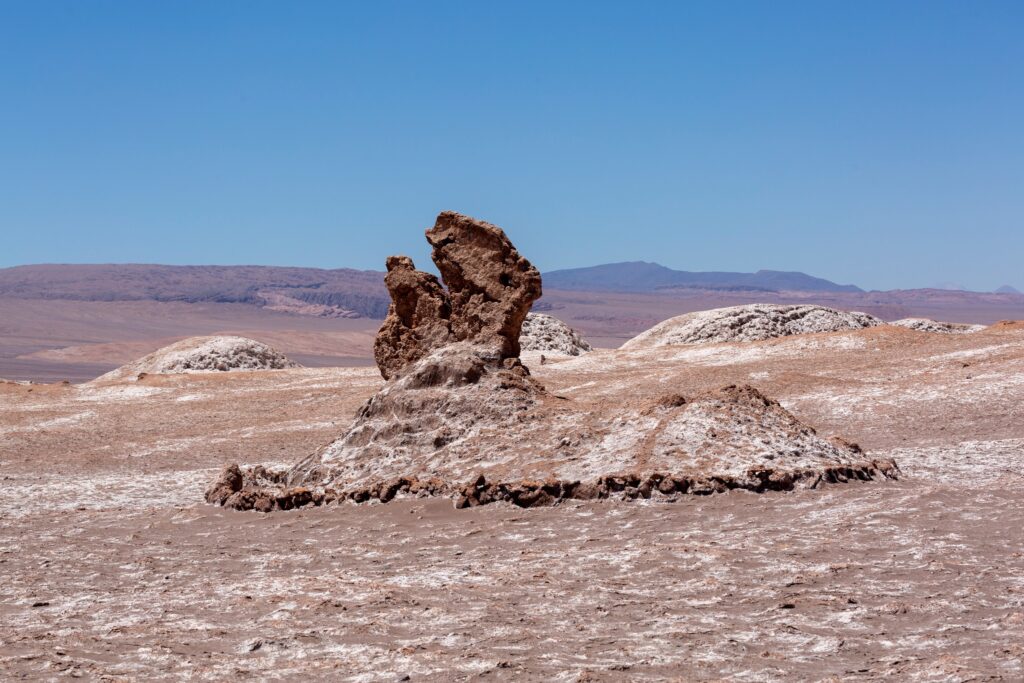
While the whole area brims with odd shapes, some stick with you more than others. One of the last formations we visited looked strikingly like the head of a Tyrannosaurus rex. It’s a well-known feature called Tres Marías, one of the valley’s icons that often shows up in photos from this region.
Into the off-limits section
To finish, we drive to the very end of the official road. The track continues, but a metal barrier blocks it. According to the map, this road could link back to the main road to San Pedro de Atacama.
Two young Dutch travelers have a camper van parked nearby. We ask if they know whether this road goes through. They answer curtly that we should just try it and see. So we give it a go.
We slide the barrier aside and carry on. At first the track is in good shape and no different from what we’ve driven so far. After about a kilometer it bends sharply and drops steeply toward the main road. Without a 4×4 off-road vehicle I wouldn’t recommend attempting it.
And even if you do try, you’ll reach the same conclusion we did. At the very end there’s a man-made berm that even our car couldn’t clear. With the main road literally in sight, we have to turn around and head back the standard route to the official entrance to Valle de la Luna.
We tried. It didn’t work. That’s part of exploring.
Final thoughts
For us, Valle de la Luna was a clear counterpoint to our earlier stop at Laguna Chaxa. While the lagoon felt calm and gentle, Valle de la Luna is all about harshness, dryness, and an inhospitable yet fascinating landscape. We first treated it as a quick stop along the way, but it soon proved to be a place that deserves far more time and attention.
This stretch of the day revealed a completely different face of Atacama – a land with no shade, barely any life, and a striking visual impact. If you find yourself in San Pedro de Atacama, make time to stop here.