

Dog walking in Europe has its clear rules. Parks, leashes, fenced runs, mandatory vaccinations and a relative control over what happens around you. When a dog gets into a conflict, it’s usually a situation between two owners trying to resolve it.
After arriving in South America we very quickly experienced what we had already somewhat suspected – the reality of dog walking here is different.
Walking here is not always a polished and trouble-free activity. Dogs move freely, many do not have collars, some do not even have an owner in the true sense of the word. This environment will thoroughly test your patience and preparedness and show how much control you have over your dog. Ibo experienced encounters with household dogs (and other animals), stray dogs, and also with small packs.
They weren’t horror situations, but moments that taught us a completely different kind of vigilance. At the same time, they showed us that often it is the owner’s intervention that causes unnecessary escalation.
Leash – yes or no?
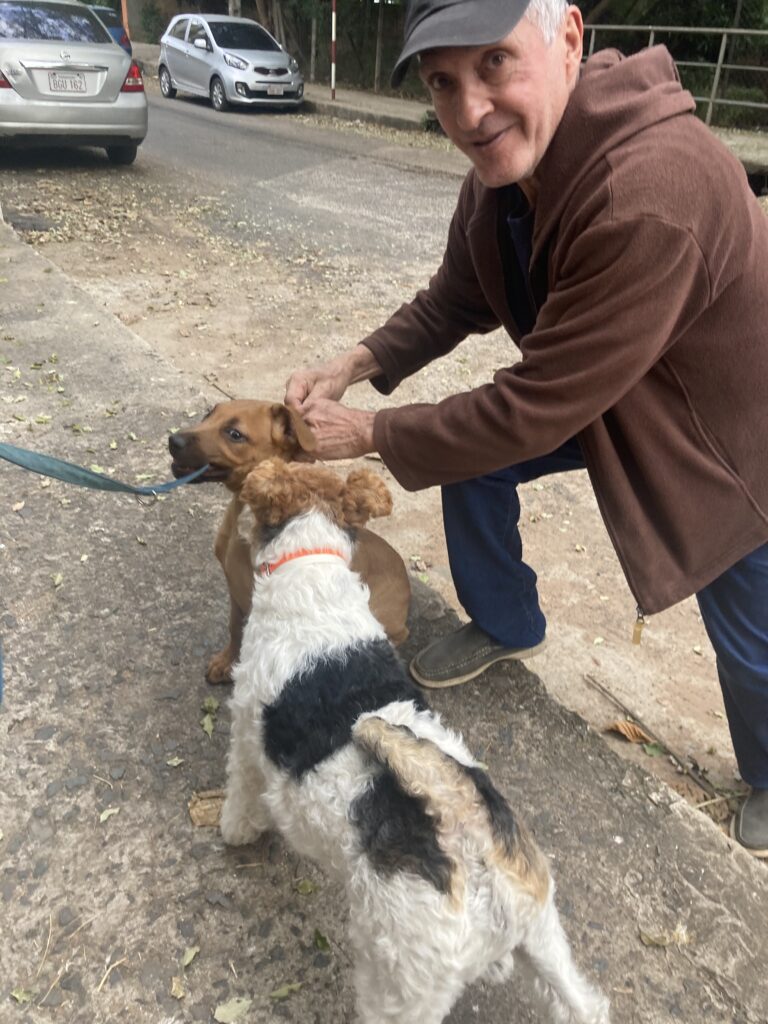
A small clarification is needed at the start of the article. Our dog Ibo has been trained from puppyhood to be walked off-leash. He obeys (almost always) the commands “come”, “sit”, “stay” and “no”. He handles common situations that the street, park or forest bring very well.
This behavior is naturally reflected in the advice we give below. However, you should take it with regard to your dog and always adapt it to your pet’s character, experience and level of obedience.
If you have a super well-behaved dog who handles crisis situations, you can allow yourself more than we do. The opposite logic also applies. If your dog doesn’t listen to you, you have trouble crossing a busy road with them or they react inappropriately when encountering other dogs, these shortcomings will only multiply when moving to a foreign country.
Encounters with ‘domestic’ dogs
If we want to discuss experiences with encounters with domestic dogs, it’s fair to start with Paraguay. It was here we walked Ibo most often in environments where he met domestic dogs accompanied by owners on the street.
In the safer parts of towns it was very similar to the experience in Europe. Most owners walk their dogs in the local streets, usually on a leash, and the dogs are used to this routine.
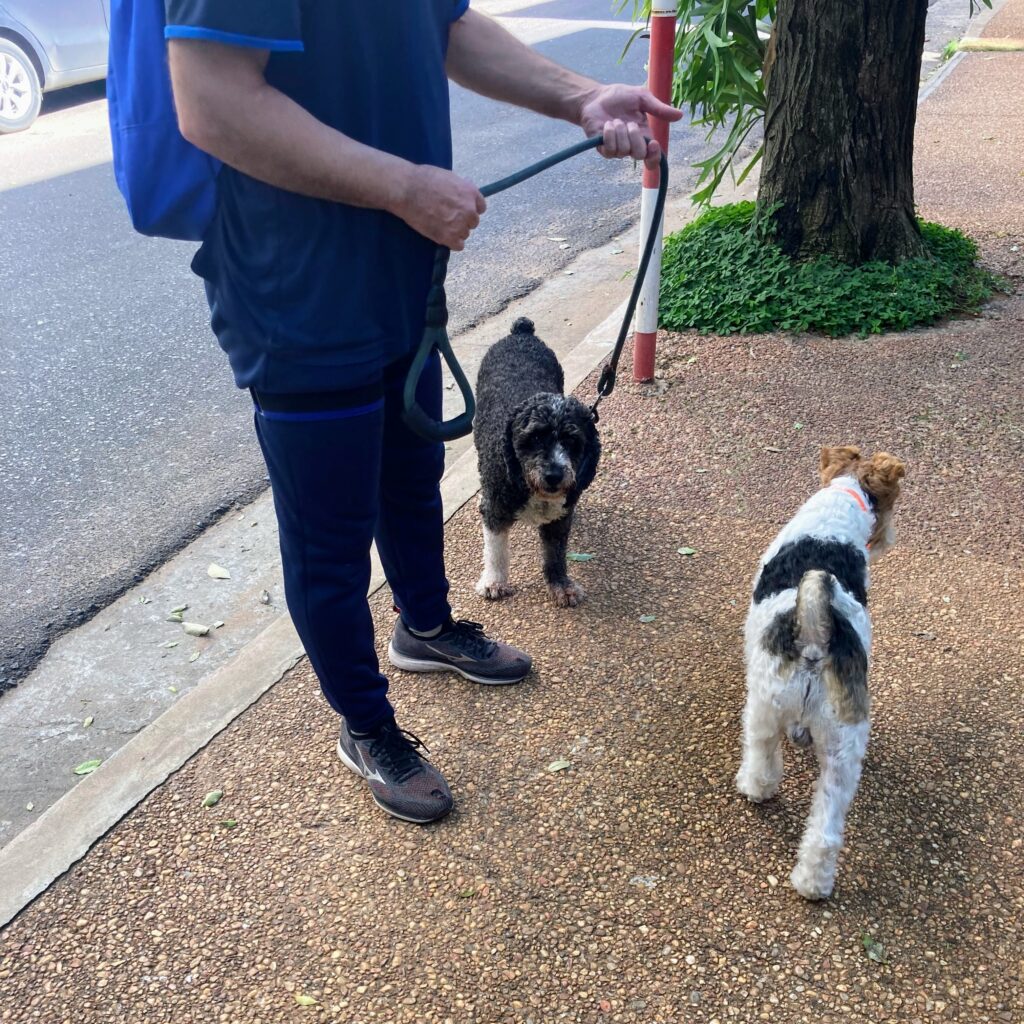
We had many encounters and interactions. Even though Ibo sometimes tried to act dominantly (he’s a terrier, after all), there was never a serious conflict.
We had a similar experience in Santa Cruz de la Sierra in Bolivia. The very city center feels hectic – narrow streets and busy roads full of cars practically require a leash at all times. The situation changes already a few kilometers from the center, where you find more modern neighborhoods with parks of various sizes. Traffic is calmer and side streets offer relative peace even for off-leash walks.
However, in both countries the situation changes if you move to less developed or peripheral neighborhoods.
Street and stray dogs
In Paraguay and Bolivia the presence of street dogs is a common part of daily life, especially in the outskirts of towns and in rural areas.
Some dogs do have an owner, but they wander alone and completely free. Another group are typical strays without any care.
Their behavior is varied. Often it’s marked territoriality around the house or the whole block, constant barking from yards and behind fences, or sudden sallies onto the street from an open gate. Smaller “organized” packs of two to four dogs guarding their space are also common. Alongside them you’ll also meet fearful and withdrawn dogs that will rather avoid you and do not seek conflict at all.
The atmosphere is simply different than in Europe. You walk down the street and suddenly a gate opens or a group of dogs appears from around the corner. Sometimes it’s just barking, other times a quick rush toward you.
It really happened to us once – exactly in the scenario when we had Ibo on a leash. A significantly larger dog ran out of a gate with a clearly territorial intent. Everything happened within seconds. The dog attacked Ibo and I had no choice but to intervene with my foot and separate them. The moment it realized we outnumbered it, it turned and ran back home.
It sounds chaotic and unpredictable. But despite a relatively long stay with the dog in two South American countries, we managed everything without a single serious injury.
Below we list some basic tips that proved useful to us:
Spray as a safeguard
Arm yourself with dog spray. We never had to use it, but it gave us the assurance that we had a tool for an extreme situation.
Use the leash wisely
If your dog is well-behaved and the situation allows, consider whether the leash is always necessary. A leash restricts the dog and in some situations takes away the possibility to react naturally. Pulling on the leash in crisis moments often escalates the situation further.
Check your gear
Keep the dog’s gear under control. The collar must hold firmly. If you use a training collar, keep it charged and functional. Have the spray available and know how to use it.
Stay calm
Remain calm even when the situation looks unpleasant. A dog very quickly senses your unease. Not every tense situation requires shouting and panic. Handle it more with reason than with emotion.
Be prepared for conflict
Be prepared for the fact that sometimes conflict simply cannot be avoided. Keep your dog in good condition and properly vaccinated. Have a plan where you’ll go in case of injury or complications.
Avoid risky places
Don’t seek out risky places. Walk the route of your walk in advance without the dog. Avoid wild and busy areas. If you find yourself somewhere you don’t feel safe, turn back and return via a familiar route.
Watch your surroundings
Be aware of what’s happening around you and of potential risks. Many problems can be avoided simply by crossing to the other side of the street.
Risky places
Avoid places with trash or other spots with accessible food for dogs. They are natural centers for packs.
When choosing a suitable park or area, use the internet. Check reviews and look for experiences of other travelers with dogs.
Bolivia: literally a higher altitude
In Bolivia, besides Santa Cruz de la Sierra, we spent a lot of time on the Altiplano – in towns like Uyuni or San Pedro de Quemes, but especially in the smaller villages and towns of this high plateau.
Dogs here live a completely different life than we can imagine in Europe. Extreme temperature differences during the day, lack of regular food, harsh weather conditions (drought, wind) and extreme altitude.

Most of them roam the streets during the day regardless of whether they have an owner. From our experience these dogs seemed rather trouble-free and non-confrontational.
It was here that it became clear to us that local dogs live their true ‘dog life’. They have deeply rooted and actively used instincts that allow them to survive. Their interaction with Ibo was natural, often playful. The biggest conflict we experienced was the clear body language of a local dog that simply showed no interest in meeting Ibo.
Health risks not to be underestimated
When your dog encounters local dogs in South America you must also consider the health aspect. While in Europe our pets are usually well taken care of, that may not be the case here.
From the many risks we pick the most common ones.
Rabies
It is still present in some areas. Your dog’s vaccination should be up to date and, if necessary, provable.
Parasites
Fleas, ticks and internal parasites are more common than in Europe. Regular protection is essential. Prevention is half the success in this case.
Leishmaniasis
In some regions it represents a real risk. Prevention is extremely important. Vaccination is an option, but it’s a more complex topic. An alternative are insect-repellent collars against the insect that transmits the disease, although they do not provide 100% protection.
Bites and infections
Even a small wound can quickly become infected in a tropical environment. Disinfection and monitoring are fundamental.
What did we gain from it?
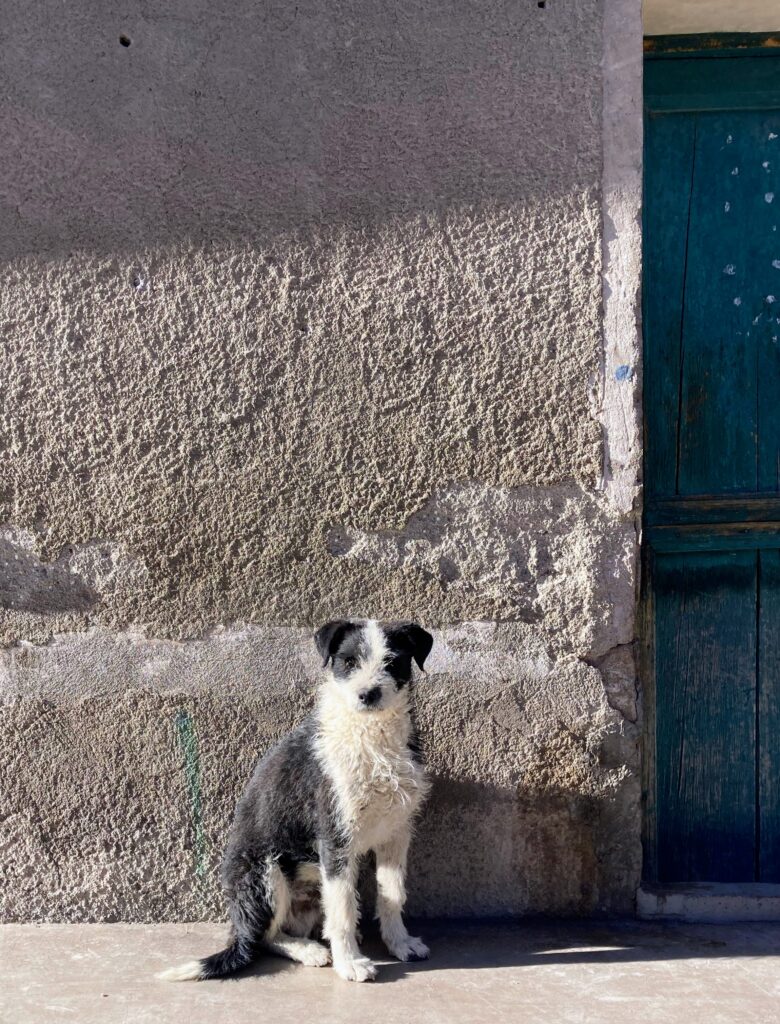
As they say, what doesn’t kill you makes you stronger. And that was the case for us. At first we were indeed worried, but it turned out that even a chaotic environment like South America can be handled with a dog – and in the end it can even be very instructive.
Ibo learned to handle new situations and we learned to be one step ahead. To read the streets, assess risk, and react before something happens.
We will definitely be happy to return to these parts of the world with him. This time we will be even more prepared and experienced.