
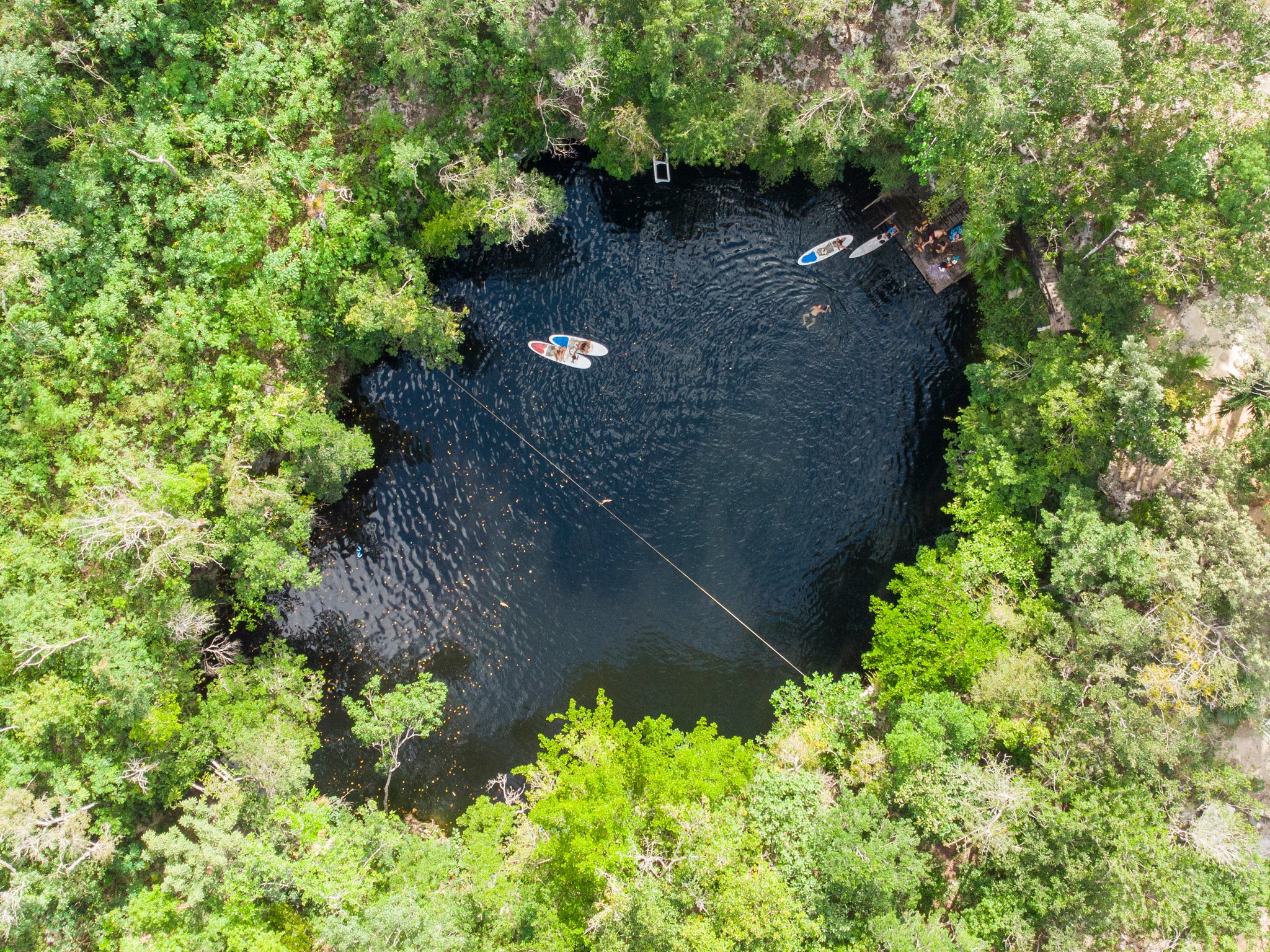


How many cenotes are there on the Yucatán Peninsula? No one knows the exact figure. Estimates put it at more than six thousand. Some are major tourist attractions with parking lots full of buses. Others are small, almost unassuming spots tucked just minutes off the main road. I came across one of these during our stay in Playa del Carmen.
Mexico’s Yucatán Peninsula is home to thousands of cenotes—natural limestone pools formed where the rock above underground caves collapsed. For the ancient Maya these places were sacred and, importantly, a source of drinking water. Today they rank among the Riviera Maya’s most popular natural attractions.
During our time in Mexico we based ourselves in Playa del Carmen. One afternoon I decided to slip away on a short outing to a lesser-known spot called Cenote Ojo de Agua.
Unlike many of the famous cenotes nearby, I didn’t have big expectations. What drew me was its proximity—it was just a short hop from where we were staying.
How to get to the cenote
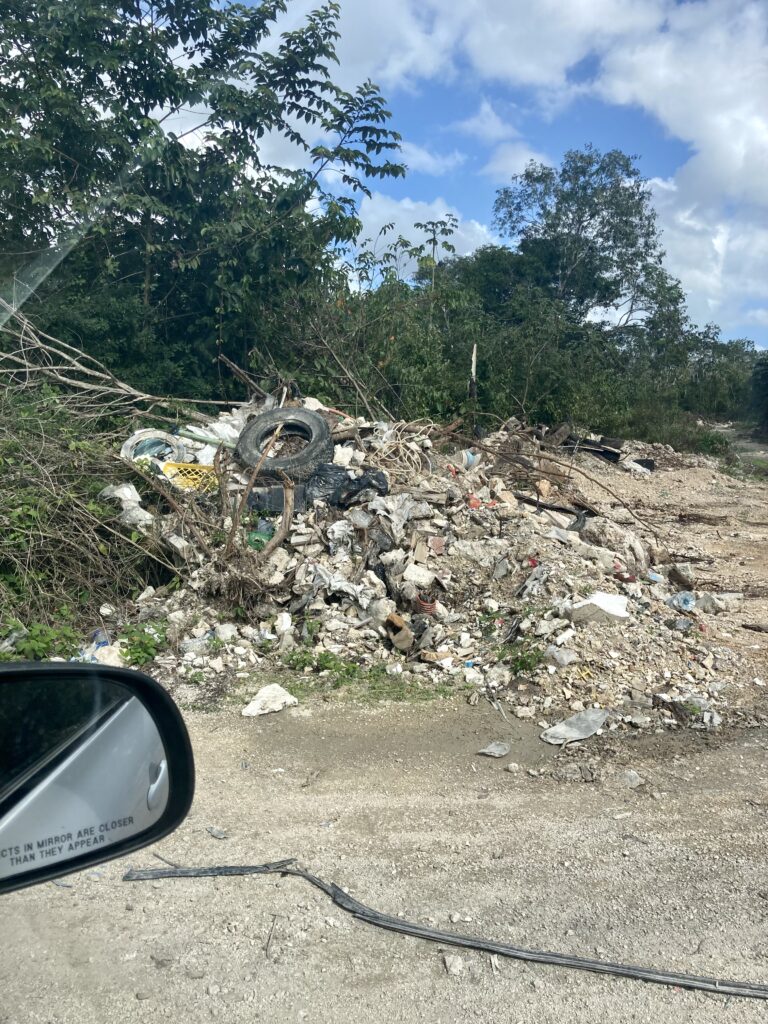
Leaving Playa del Carmen to the northwest on Highway 305D, there’s a right-hand turn to the cenote just after the toll booth. Not keen to pay the toll for such a short stretch, I chose another route. I turned off before the booth and wound my way through smaller backstreets on the edge of town until I reached the spot.
It’s worth saying this route—often unpaved—also revealed less polished parts of the city. Outlying neighborhoods strewn with trash stand in contrast to the touristy center of Playa del Carmen. Even so, the whole detour took only about 15 minutes from our accommodation. Use a map app or navigation rather than relying on local signs.
A low‑key spot hidden off the main road
At the end of the access road there’s a small parking area. I was greeted by the local landowner, who explained that there’s a small admission fee that covers everything on site—not just entry to the cenote, but also access to a simple lounging area with loungers and the toilets.
Cenote Ojo de Agua is an open cenote. Unlike cave cenotes hidden underground, the water surface here is fully exposed and ringed by greenery. That gives it a pleasant feel and makes it a good pick for families with children.
The whole area felt very simple. Nothing fancy or overly touristy. On the contrary—it was modest, clean, and surprisingly cozy, with a friendly, family vibe.
Swimming in the cenote
Getting into the water is straightforward. Wooden steps lead down to a larger wooden platform set right above the surface.
For the more adventurous there’s also a small platform for jumping straight into the cenote. I didn’t try it—the height felt fairly respectable—but braver visitors will no doubt give it a go.
The water was pleasantly cool and wonderfully refreshing after a hot day on the coast. Much of the cenote is quite deep, so it helps to be a confident swimmer. For extra peace of mind, bring something that keeps you afloat, like a snorkel vest or another simple aid.
The surroundings are lush with trees that cast plenty of shade. Thanks to that, it feels noticeably more comfortable here than on the nearby town beaches.
Besides me, two families with kids were spending time here. There’s ample space, so none of us got in each other’s way.
A quiet alternative to the touristy cenotes
Around Playa del Carmen you’ll find plenty of well-known cenotes that are often packed with tourists. Cenote Ojo de Agua, by contrast, feels like a small local spot where people come for a few unrushed hours.
I spent about an hour here, but I can easily imagine staying much longer. Stretch out in the shade, swim in the cool water, and slow the tempo of a typical sightseeing day.
Sometimes it’s the low‑key places that surprise you the most.
Practical tips before you go
If you decide to visit, pack a few basics. You’ll want swimwear and a towel, and perhaps a beach towel for the loungers. Simple snorkel gear can be a good call—the water is clear and, at a relaxed pace, you can get a nice look at the underwater world.
Because the cenote is surrounded by shade and vegetation, mosquito repellent isn’t a bad idea, especially if you plan to linger.