
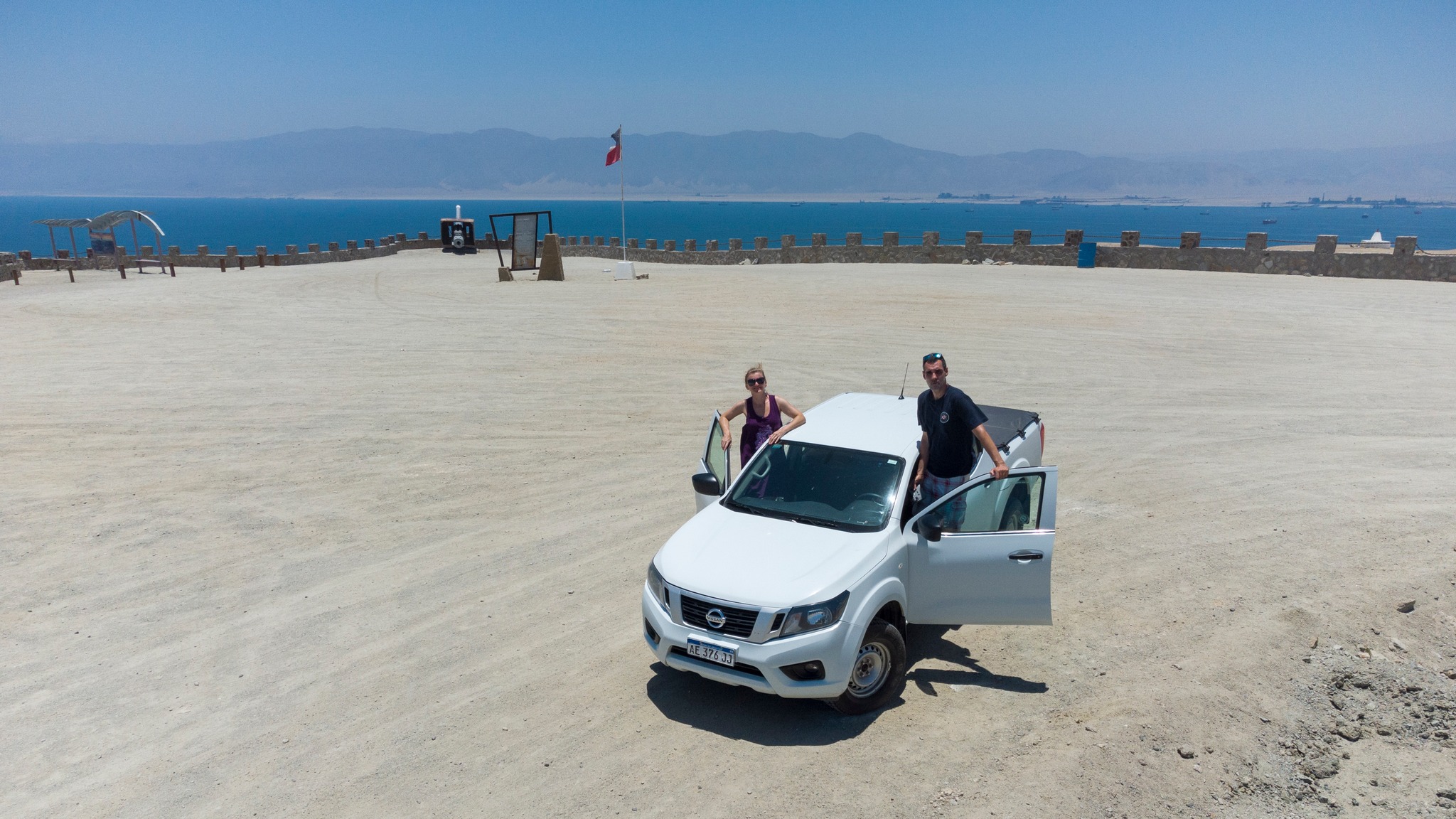


Our journey across Chile enters its second half, and after crossing the Andes we finally reach the Pacific—specifically the port town of Mejillones, just north of Antofagasta. The town itself is low-key, but one look toward the water makes it clear what steals the show: the hulking mass of the Península de Mejillones rising straight from the sea. It dominates the horizon and keeps pulling your gaze back. After only a few hours in town, it was obvious we’d be heading out onto that peninsula.
Heading out onto the peninsula
We drive onto the peninsula straight from Mejillones. The road is paved the whole way, but fairly narrow, and in places it’s steep and tightly winding. No surprise—it runs just below Morro Mejillones, the local high point rising 751 meters above the surrounding ocean.
On its summit sit military and navigational installations, including radars and a lighthouse, a clear hint at the site’s strategic importance. As we drive, the views keep shifting—on one side the dry, inhospitable Atacama Desert, on the other the endless Pacific. The contrast between these two worlds is unusually strong, almost surreal. After two days crossing the Andes, we welcome it with open arms.
A strategic site with a military past
The Península de Mejillones stands out not only for its raw scenery but also for its ecological importance. The southern part of the peninsula is part of Morro Moreno National Park, which protects the unique ecosystem where the extremely dry Atacama Desert meets the ocean. Many species of birds, marine mammals and coastal fauna find refuge here, giving the peninsula considerable weight from a conservation standpoint.
Alongside its natural significance, the peninsula has long played a key strategic role. Its position allows control over shipping routes along Chile’s northern coast, a fact that became especially clear in the 19th century during the War of the Pacific between Chile, Peru and Bolivia.
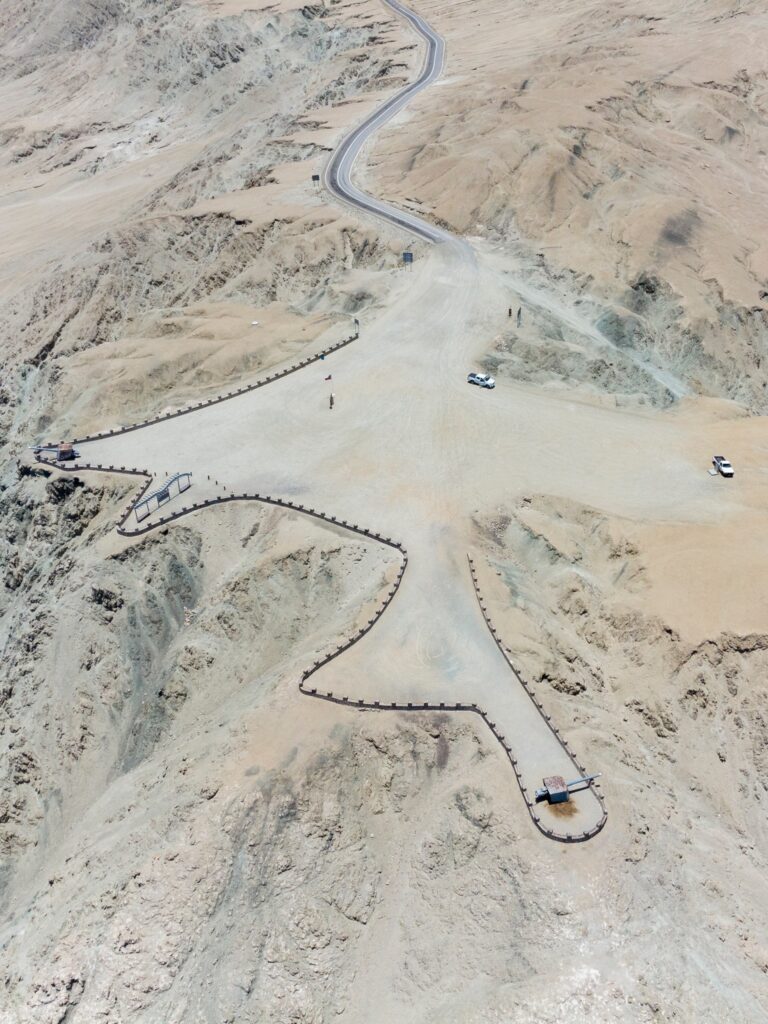
One of the most striking spots on the peninsula is Mirador Punta Angamos, a viewpoint at the end of the road that crosses the peninsula. Beyond the sweeping views, you’ll find historic coastal guns that still recall its military importance. As we read the information panels, the silence is occasionally broken by an unidentifiable sound drifting from the nearby cliffs. For all our guessing, we can’t pin down what’s making it.
At last, a beach
From the viewpoint we descend the steep road to the nearby beach of Punta de Cuartel. The drop to the sea is an experience in itself—the dry, stony landscape slowly gives way as the ocean draws closer with every meter. The road grows steeper the nearer you get to the water, finishing with a very sharp pitch that ends right on the sand.
Punta de Cuartel has a completely different feel from the beaches we’d known so far. It isn’t a tourist spot so much as a place where locals come for picnics and quiet afternoons.
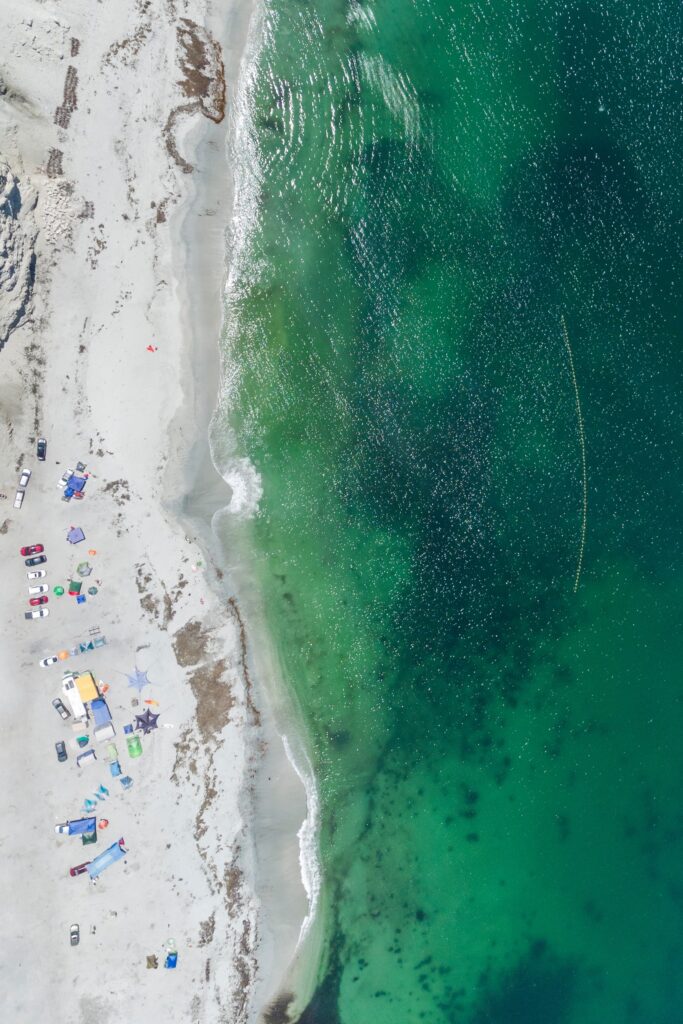
Here the ocean takes on an unreal shade of green, which looks almost otherworldly against the desert backdrop. But the biggest thrill was something else entirely. While swimming, Iva noticed a creature moving right along the beach—not a small fish, not a dolphin, but a sea lion (often mistakenly called a walrus). I don’t hesitate, pull on my mask and head after it, hoping to see it up close.
In the end, the animal is shyer than I expect and easily slips away, putting a safe distance between us. The encounter doesn’t quite happen, but its presence finally explains the sounds we’d heard at the viewpoint. They turned out to be the calls of this, to us, rather exotic creature. Seeing it in the wild still becomes the highlight of the day.
We ended up spending the entire afternoon on the beach and even managed a bit of a tan. And although the water was on the brisk side, we took several dips.
Final thoughts
The Península de Mejillones is the kind of place you choose on a whim, only to realize once you’re there that you’re standing somewhere with deep historical and military weight, a meaningful role in conservation, and a front-row seat to where the Atacama meets the Pacific.
Here, everything blends together—and far from clashing, it creates a unique, unforgettable atmosphere we carry with us.
As a bonus, that sea lion encounter lingers in the memory—a brief, unexpected moment that neatly wraps up the trip.