
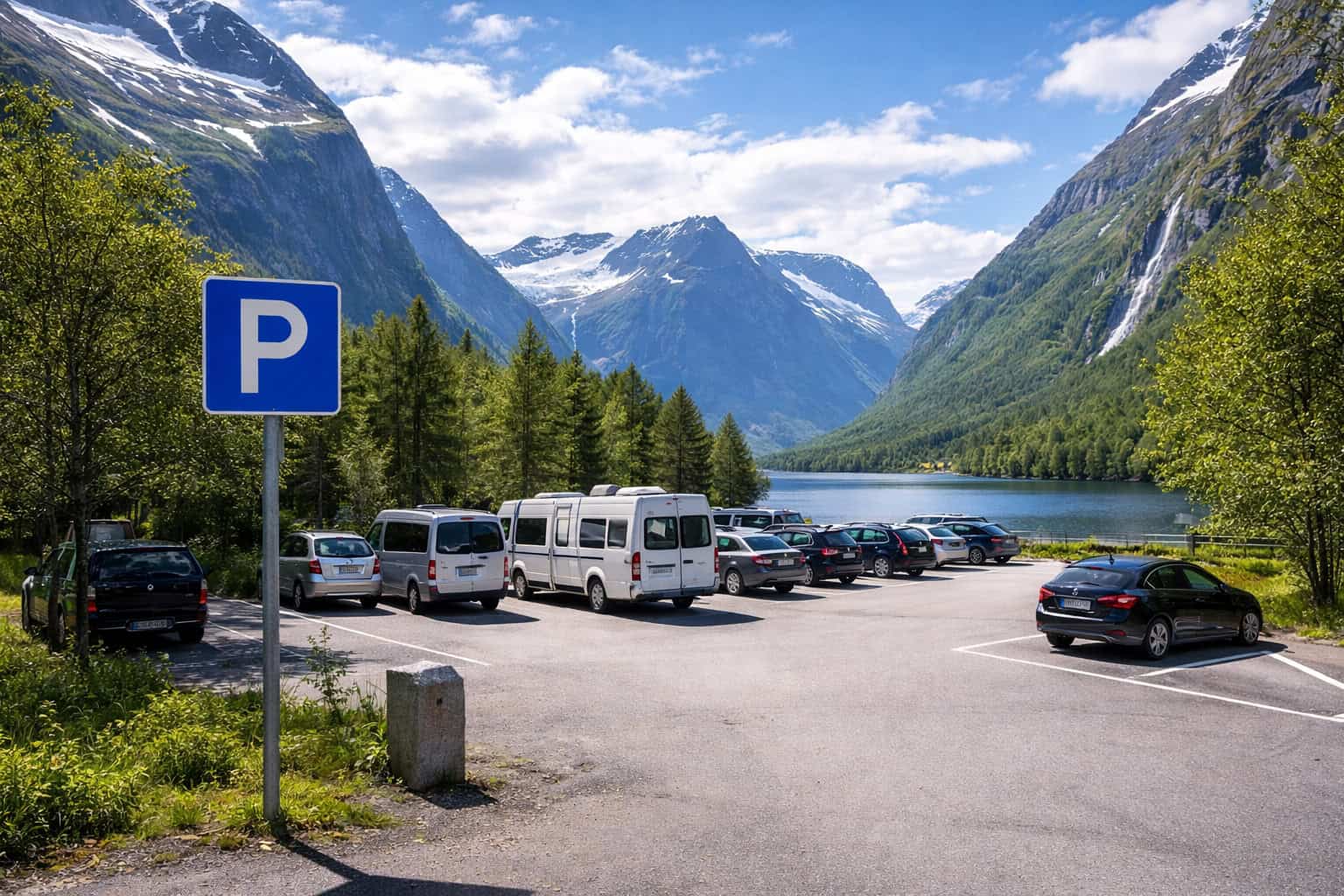


Parking in Norway is generally straightforward, but if you’re visiting this Nordic country for the first time, it can feel a little confusing at the start. The issue isn’t so much a shortage of spaces as the way you pay and the rules, which differ noticeably from those in Central Europe. This article offers a practical overview of how parking works in Norway, which apps to install before you go, and what to know if you plan to sleep in your car.
Parking and paying with apps
In cities and smaller towns across Norway, parking is handled mostly digitally. Traditional pay-and-display machines are increasingly rare, being replaced by mobile apps. The most widespread and almost universally accepted app is EasyPark.
EasyPark lets you select the parking zone, start your session, and stop it the moment you leave. The big advantage is you pay only for the actual time parked, without running back to the car to extend a ticket. The app works in most Norwegian towns and often at smaller car parks outside the main tourist hubs.
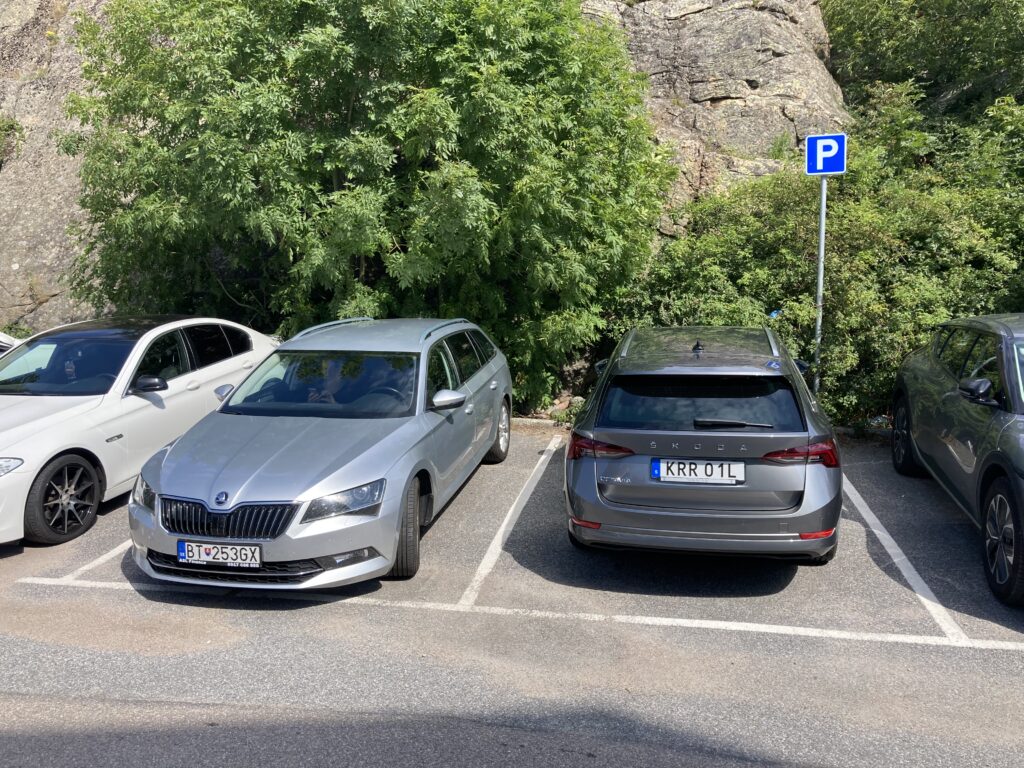
Parking zones are marked with a numeric code shown on a sign at or near the car park. Enter that code in the app and you can start parking in seconds.
It’s worth comparing several nearby options in the app, as prices can vary significantly even within the same area.
Besides paid zones, you can—though less commonly—come across classic, free parking spaces. These are marked with a standard parking sign without any additional information panel.
Paying via QR code on site
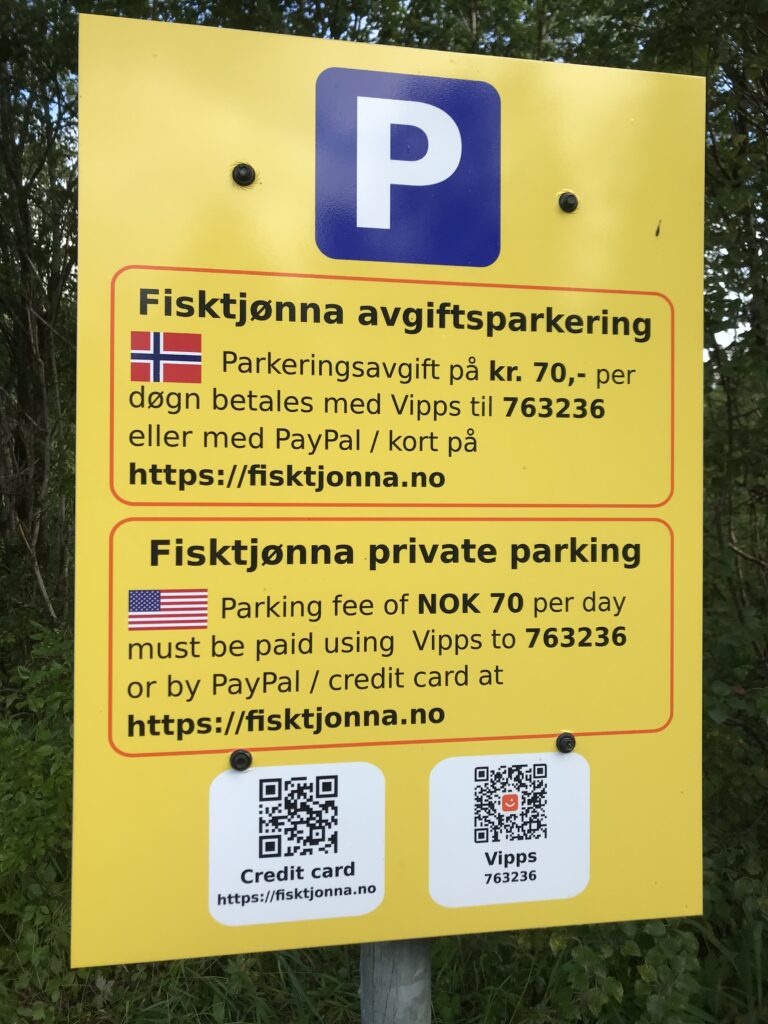
In addition to apps, you’ll increasingly find car parks with a QR code posted at the entrance or on an information board. Scan it with your phone and you’ll be redirected to the operator’s online payment page.
This payment method is especially common at smaller car parks by attractions, viewpoints, or in remote areas. Everything runs in your web browser—no extra app needed. Enter your license plate and the parking duration, then pay by card.
Here too, parking is tied to your license plate number, not to a paper ticket on the dashboard.
Sleeping in your car and overnight parking
Parking with the intention of spending the night in your vehicle is a topic of its own. While Norway offers broad rights of public access to nature, parking and overnighting aren’t automatically allowed everywhere.
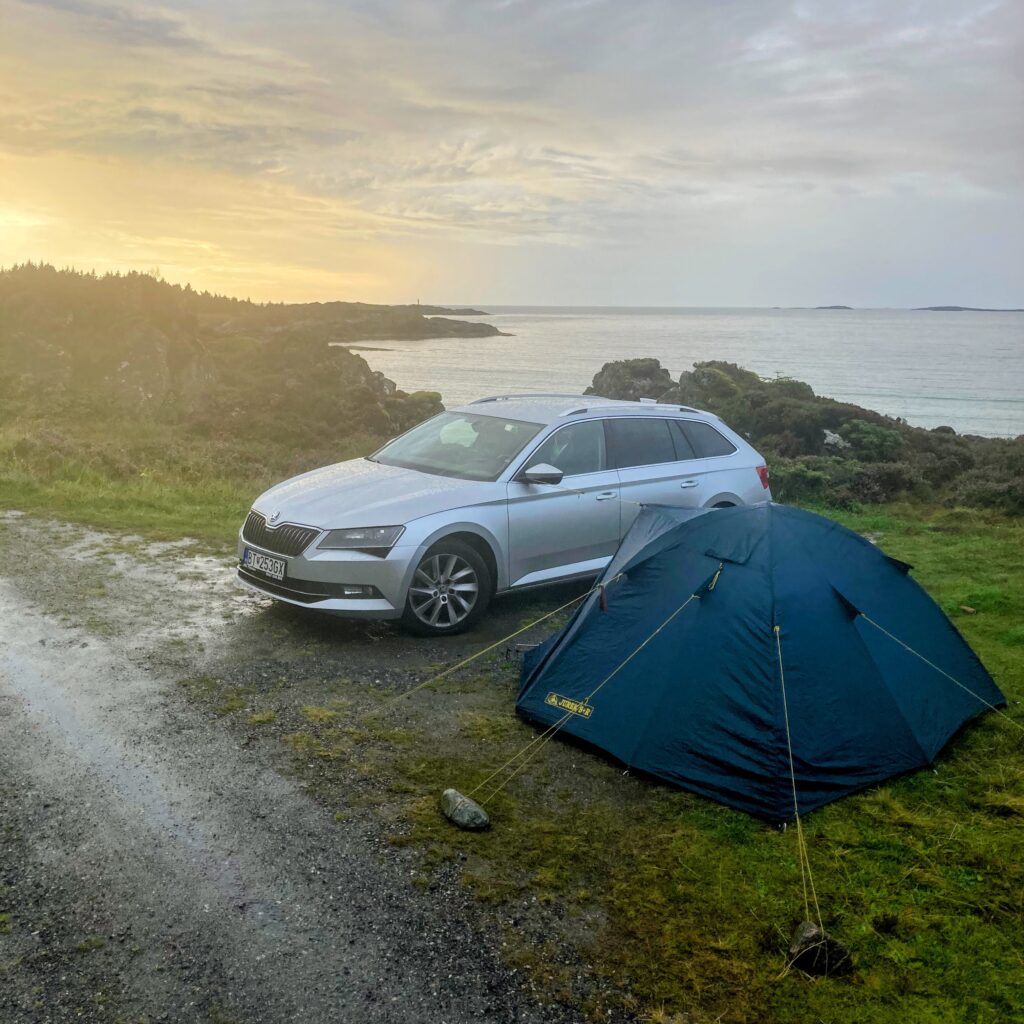
The basic rule is to respect local bans and traffic signs. If a car park is for short stays only or explicitly forbids overnighting, you must comply. Such restrictions are always clearly stated on the sign or information board.
Another key rule is respecting privacy. Sleeping in a car or tent is generally permitted, but you must keep a minimum distance of 150 meters from the nearest inhabited house or cabin. It’s also not appropriate to stay overnight on public grounds such as parks, sports fields, or playgrounds unless this is expressly allowed.
park4night as a handy resource
One of the best apps for finding places to sleep in your car is park4night. It’s a community app where users share experiences with car parks, pull-outs, viewpoints, and simple overnight spots.
In the app, you’ll find:
- places suitable for overnighting in a passenger car or campervan,
- information on whether overnighting is prohibited or allowed,
- photos and up-to-date experiences from other travelers,
- warnings about noise, traffic levels, or proximity to residential areas.
Even when using park4night, use common sense, be considerate, and respect the surroundings. The fact that someone slept there before you doesn’t automatically mean it’s permitted at all times or in every situation.
It’s worth noting that, especially in busy tourist areas, it’s smart to secure a place to sleep as early as possible. We speak from experience in the Lofoten Islands: after arriving on a late-night ferry, we hunted for a spot to sleep in the car well past midnight—and it was a losing battle from the start.
We eventually found a place far from where we’d planned, and only on the very edge of a car park. We fell asleep late, passing traffic kept waking us, and it’s likely our late arrival disturbed others too. We don’t recommend leaving your arrival at your intended sleeping spot to the last minute and, if you can, avoid setting up in the dark.
Practical tips to wrap up
Parking in Norway isn’t complicated, but it does require a bit of attention. We recommend installing EasyPark and park4night in advance, being ready to pay via QR codes, and—if you plan to sleep in the car—always checking the rules for the specific spot beforehand.
If you respect signage, follow local rules, and act considerately, driving and parking around Norway should be free of unnecessary complications.