
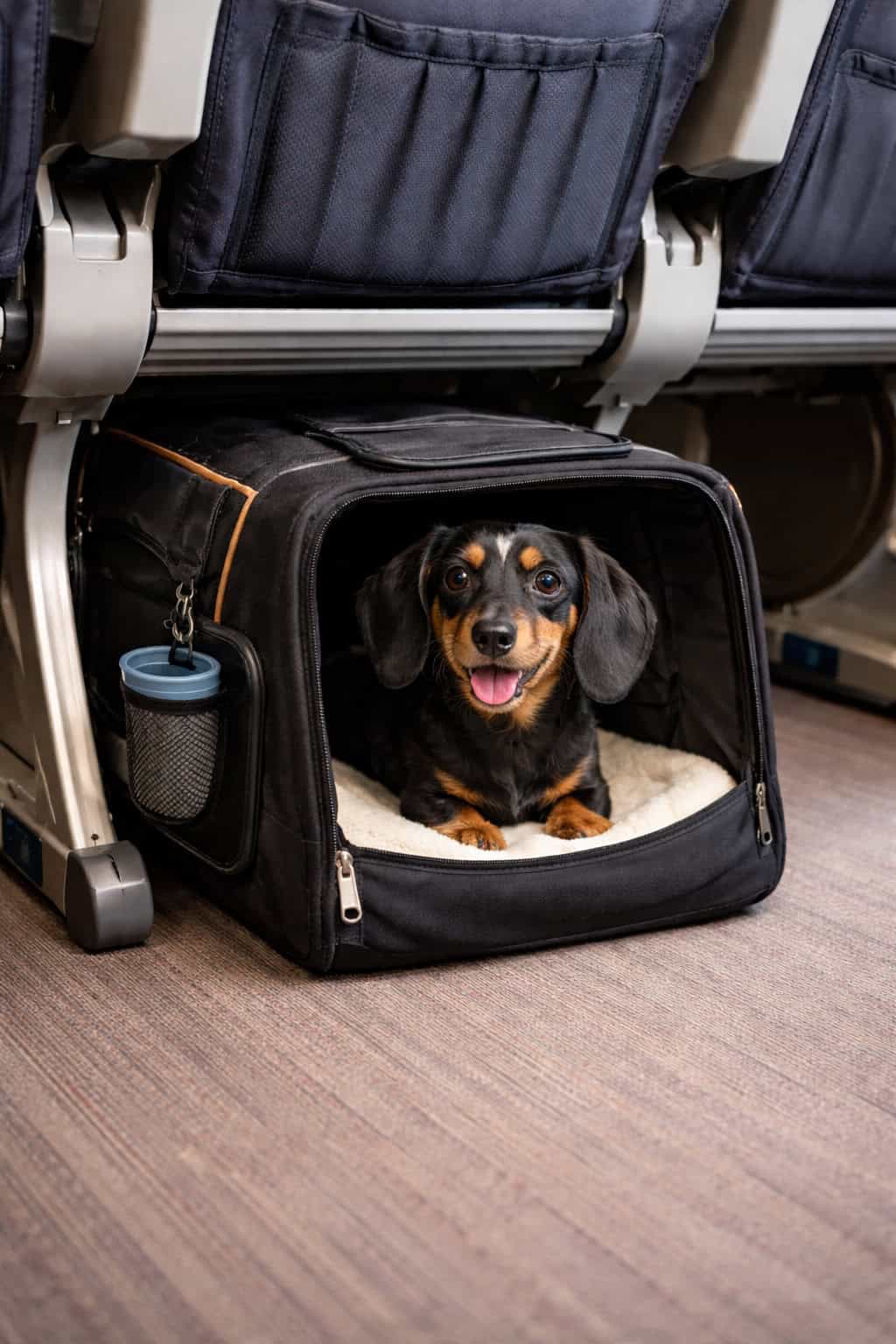


If your dog meets the airline’s weight and size limits, your dog can travel with you in the airplane cabin. In that case, choosing the right carrier is just as important as for travel in the airplane hold—the criteria are simply different.
An in-cabin carrier has to fit under the seat in front of you. That means not a hard plastic crate, but a soft, flexible carrier that meets your airline’s requirements.
This article covers choosing, buying, and practical use of an in-cabin carrier.
Basic airline requirements
Every airline sets its own limits, but in general:
- the maximum weight of the dog plus carrier is around 8 kg,
- the carrier must fit under the seat in front of you,
- the dog must remain inside for the entire flight,
- the number of animals allowed in the cabin is limited.
Before buying a carrier, always check the exact dimensions your airline allows. A few centimeters can be the difference between being accepted and being refused.
A soft-sided carrier is the standard
Unlike in the hold, the cabin calls for a soft-sided fabric carrier with a rigid frame and a reinforced base.
For practical reasons:
- it needs to flex slightly to fit the space under the seat,
- it’s usually lighter than a plastic crate,
- and easier to carry.
The base should be firm and stable so your dog doesn’t sag or slide around in flight.
Are you planning a trip abroad with your dog? Check the entry requirements for various countries directly in BorderCooler®.
The right size: not too small, not too big
Your dog should be able to turn around and lie down comfortably. At the same time, the carrier can’t be too tall or wide, or it won’t fit under the seat.
We recommend trying specific models in a store and placing your dog inside. That’s the best way to check if the height and width work for them.
Ventilation and secure closure
The carrier needs ample mesh panels for airflow. Zippers should be sturdy and, ideally, lockable or at least securable against accidental opening.
Some models let you crack open the top, but it must remain closed during the flight.
Carrying comfort
You’ll often end up carrying it around the airport for quite a while. Look for:
- an adjustable shoulder strap,
- sturdy hand grips,
- and a low overall weight.
Small external pockets for documents or small items are handy, too.
Outfitting your in-cabin carrier
We recommend adding:
- an absorbent pad,
- a thin familiar blanket or a piece of clothing with your scent,
- and, for longer flights, a small collapsible bowl.
Feeding during the flight is generally not recommended. Walk your dog before departure and make sure they’re well hydrated.
What to watch out for
Crates designed for the hold are unsuitable for the cabin—they’re too large and rigid. And not every fabric pet bag meets airline rules.
It’s important to get your dog used to the carrier at home. If they see it as a safe space, the flight will be much calmer.
Final thoughts
An in-cabin carrier is a compromise between your dog’s comfort and the airplane’s technical limits. Choosing well will save stress at check-in and in the air.
If you’re unsure which model suits your specific flight or airline, feel free to contact us. We’ll happily advise you based on our own experience.