
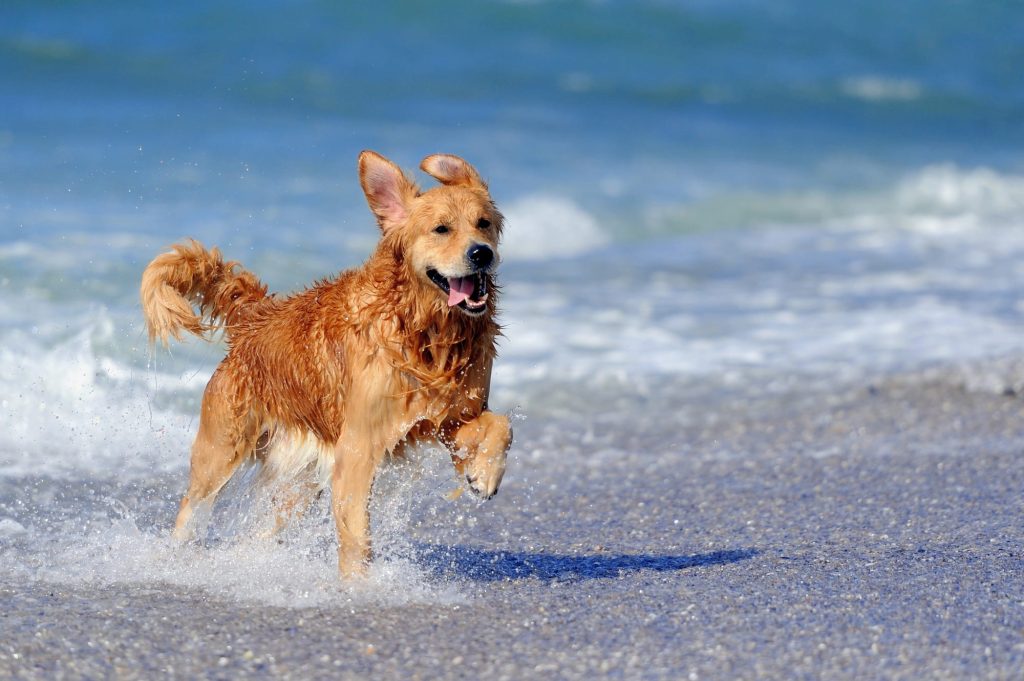


The Canary Islands are one of Europe’s favourite holiday destinations. Going to the Canaries with a dog, however, isn’t the obvious choice and takes more planning than a standard beach‑hotel break. The reliable weather, ocean and volcanic landscapes attract visitors year‑round. The question is: is it a good choice if you’re travelling with a dog?
If you’re thinking about bringing your four‑legged companion to the Atlantic, it helps to know the entry rules, transport options, beach restrictions and health risks linked to a warm climate. This guide sums up what matters most—from the paperwork to the practical decision of whether this destination suits your dog.
Table of Contents
Can you take a dog to the Canary Islands?
The Canary Islands are an autonomous community of Spain and therefore part of the European Union. For pet travel this counts as an intra‑EU trip, covered by the same rules that apply across all member states.
In practice, a dog needs to meet three basics: be microchipped, have a valid rabies vaccination, and hold a European pet passport.
The rabies vaccination must be administered after the microchip is implanted and be at least 21 days old before travel. These details are recorded in the pet passport, which serves as the main document for travelling with a dog within the European Union.
If you’re travelling from, for example, Slovakia, Czechia or Austria, there’s no quarantine or additional blood tests required. The paperwork is therefore much simpler than when travelling from outside the EU.
The same rules apply not only to the Canary Islands, but to all of Spain, including the mainland and the Balearic Islands.
You’ll find a detailed explanation of all rules, including the differences between travelling from EU and non‑EU countries, in our separate article on the conditions for entering Spain with a dog.
Is it a good destination for a dog?
The Canary Islands have a stable, warm climate year‑round. That’s great for people but can be taxing for dogs—especially in summer. Pavements, sand and dark lava rocks can heat up significantly.
On the other hand, the islands offer plenty of natural areas—volcanic zones, mountain routes and coastal paths. With good planning and the right season, it can be an interesting destination for an active dog.
The most suitable period is usually October to April, when temperatures are milder and the risk of overheating is lower.
Interested in this destination? Would you like to visit it with your dog? Check the entry requirements directly in BorderCooler®.
How to get to the Canary Islands with a dog?
By plane
For most travellers, this is the most practical option. Direct flights to the Canary Islands mainly operate from mainland Spain (Madrid, Barcelona), with year‑round services. From other European cities, including Vienna or Prague, flights are often seasonal or involve a connection.
Small dogs (usually up to 8 kg including the carrier) can travel in the cabin; larger dogs travel in the hold in an IATA‑approved crate. Always reserve a place for your dog in advance and check the specific conditions of your airline.
Air Europa
Air Europa is among the carriers that allow dogs in the cabin and in the hold, subject to weight and size limits. We have personal experience with this airline on a flight to South America with our dog, Ibo. Booking, document checks and handling of the crate were standardised and trouble‑free. For flights to the Canary Islands, Air Europa can be a sensible choice thanks to its clearly defined pet policies.
Iberia
Iberia operates regular year‑round services between Madrid, Barcelona and the Canary Islands. It accepts smaller dogs in the cabin and larger ones in the hold, always by prior request. Conditions vary by aircraft type and route.
We also have personal experience with Iberia on the Vienna–Madrid route and back. Ibo travelled in the hold in his crate and the whole process was smooth. Before flying with Iberia we recommend confirming the amount of the pet transport fee at the airport, as this airline charges it at check‑in.
Vueling
As a low‑cost carrier, Vueling allows smaller dogs in the cabin for a fee and within weight limits. It generally does not transport larger dogs in the hold. Check current rules before booking.
Eurowings
Eurowings allows small dogs in the cabin in a carrier, with weight and size limits. It does not carry larger animals in the hold on all routes, so you’ll need to verify the specific route.
Smartwings
Smartwings transports dogs by prior request, either in the cabin or in the hold depending on the animal’s size. Reserve a place for your dog in advance, as the number of pets allowed on board is limited.
Binter Canarias
Binter Canarias is a regional carrier operating mainly between the individual Canary Islands and between the islands and mainland Spain. It allows small dogs in the cabin (usually up to 8 kg including the carrier, with maximum dimensions of approximately 45 × 35 × 25 cm) for a fee. Larger dogs can travel in the hold in an IATA‑approved crate if they meet weight and safety conditions. You must request pet transport in advance, and availability is subject to the airline’s approval.
Ryanair
Ryanair generally does not transport pets, except for certified assistance dogs. If you’re travelling with a dog, this carrier is not a suitable choice.
easyJet
easyJet likewise does not transport pets (except assistance dogs). When planning a trip to the Canary Islands with a dog, you’ll need to choose another airline.
By ferry
An alternative is to drive to southern Spain and then take a ferry crossing to the Canary Islands. The crossing can take roughly 28 to 36 hours depending on the route.
The advantage is taking your own car and avoiding the stress of air travel. The downside is the long transfer time and higher overall costs.
Once you’re on the Canary Islands, there are regular ferry connections between the islands too. They link, for example, Tenerife with Gran Canaria, Lanzarote with Fuerteventura, and smaller islands like La Gomera or La Palma with the main hubs.
Dogs can usually travel on ferries, but you need to add the animal when booking. Conditions vary by company and vessel type. Smaller dogs can sometimes stay with the owner in a carrier; larger dogs are usually placed in designated areas or kennel boxes. On some longer routes you can also book a pet‑friendly cabin.
For ferry travel you also need the pet passport, and your dog must be kept under control—usually on a lead and, depending on the operator’s rules, sometimes with a muzzle.
Beaches and getting around with a dog
Not all beaches in the Canary Islands are dog‑friendly. Each island has designated sections where dogs are allowed, but these are often smaller, rockier or less‑frequented parts of the coast.
In towns, leads are compulsory and some breeds may also be required to wear a muzzle. If you’re planning a classic beach holiday lying on the sand, check in advance which specific spots allow dogs.
Bear in mind that sand and dark rocks heat up quickly in summer. Plan walks early in the morning or in the evening.
Accommodation with a dog
Although we don’t yet have first‑hand experience in the Canary Islands, even an online search shows that pet‑friendly options make up only a smaller share of the overall supply. In other words—not every place that’s available will automatically accept dogs. Start booking early and filter for pet policies from the outset.
Options include pet‑friendly hotels, apartments and private homes via platforms like Airbnb.
Common restrictions include a weight limit (often 10–15 kg), a surcharge of roughly €10–25 per night, and no dogs in pool or restaurant areas.
Practically speaking, an apartment with its own entrance or a terrace is often the most convenient choice, allowing you to adapt the daily routine to your dog’s needs.
Risks and diseases
The Canary Islands differ slightly from Central Europe. Health risks include leishmaniasis, transmitted by sandflies, and dirofilariasis (heartworm), transmitted by mosquitoes.
Overheating and dehydration are also risks, especially during the summer months.
Before you go, discuss preventive measures with your vet, use a repellent collar or spot‑on against insects, and ensure plenty of shade and water. In hot months, plan walks outside the peak heat.
Veterinary care
Access to veterinary care in the Canary Islands is generally good, especially in larger cities and tourist areas such as Santa Cruz de Tenerife and Las Palmas. On the main islands you’ll find standard vet practices and clinics with diagnostic equipment (X‑ray, lab testing), and in tourist zones you can often get by in English.
Do bear in mind that outside bigger towns or on smaller islands, emergency care may be limited. If you’re planning to stay away from the main centres, look up the nearest veterinary clinic in advance and save the contact.
It’s sensible to carry a basic first‑aid kit for your dog and travel insurance that also covers veterinary treatment abroad. If health issues arise, you’ll be ready to deal with them without unnecessary stress.
Which island should you choose for a holiday with a dog?
If you’re considering the Canary Islands with a dog, it’s worth thinking through the choice of island.
Tenerife offers the widest infrastructure, more services, and a mix of mountains and coast. Gran Canaria is a balanced choice in terms of accessibility, nature and accommodation. Lanzarote is drier and more volcanic, with little shade, which can be limiting on hot days. Fuerteventura is open and windy, with vast beaches that aren’t always dog‑friendly.
When deciding, factor in temperatures, the type of activities you’re planning, and the availability of accommodation that accepts dogs.
Conclusion
A holiday with a dog in the Canary Islands can work if your dog is used to travelling, you avoid the height of summer, and you adapt your daily rhythm to the heat.
It may be less suitable for heat‑sensitive breeds or for travellers planning an exclusively beach‑based holiday without access to dog‑friendly beaches.
With good preparation, the Canary Islands can be a pleasant and interesting destination for a trip with your dog.
FAQ – frequently asked questions
Does a dog need a passport?
Yes. As this is travel within the EU, your dog must have a European pet passport, a microchip and a valid rabies vaccination.
Can a dog fly in the cabin?
Yes, but usually only up to a certain weight including the carrier (typically up to 8 kg). Conditions vary by airline.
Are beaches in the Canary Islands dog‑friendly?
Only some. Each island has designated sections, but not all beaches. Check the specific rules before you travel.
Is leishmaniasis a real risk?
Yes, the disease occurs in the Canary Islands. Insect protection and a pre‑trip consultation with your vet are sensible steps.