It’s early morning and after an extremely short night full of stargazing we wake up just below the summit of Cerro Paranal. We study the map from every angle, but it just doesn’t add up. From Cerro Paranal we had originally intended to travel all the way to Chile’s capital – Santiago. Unfortunately, we lost a few days right at the start of the trip arranging a rental car. At the same time it turns out that all those distances are actually much more time-consuming than they appear on the map.
I suggest crossing the San Francisco Pass back into Argentina. Ivana immediately supports the idea. Chile was nice, though a bit more expensive, but after a few days spent in this extremely dry part of the world we literally miss seeing something green – an orchard, a tree, or a meadow. The direction is clear – Argentina.
The San Francisco Pass border crossing sits at the respectable altitude of 4 726 m n. m. Since we slept a bit below Cerro Paranal, roughly at 2 400 m n. m., we try to avoid a significant descent back to the coast and then climbing again. We want to minimize the risk of altitude sickness complications.
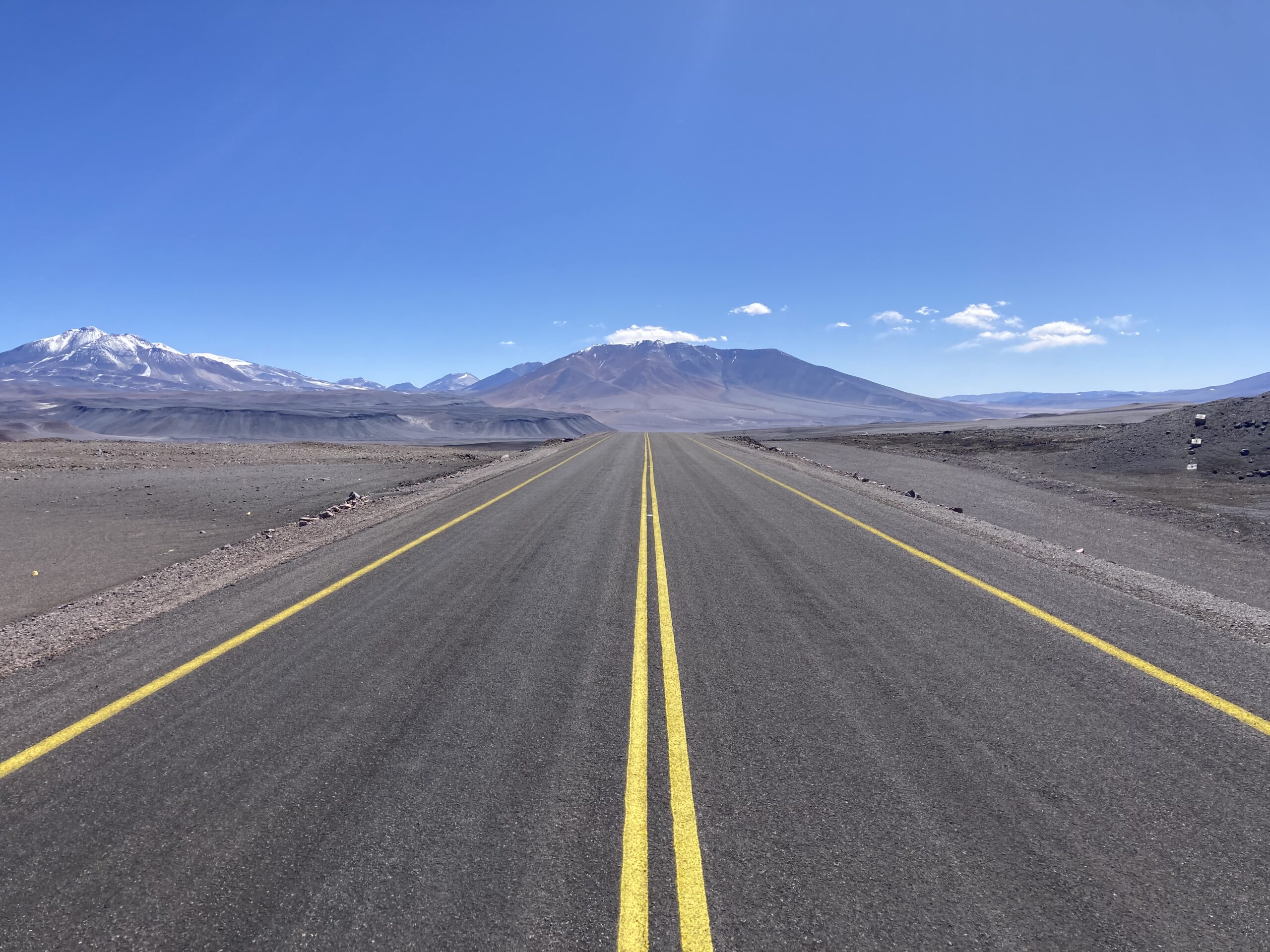
The only way to avoid the main coastal route is to continue across the Atacama Desert. That includes nearly 100 kilometres on an unpaved road through an extremely remote part of the Altiplano. It proves to be the riskiest transfer of the whole trip. There’s no signal, no people, no villages. We don’t meet a single car. No streams, no lakes, no life. A car breakdown would likely mean hours of walking in hostile conditions. It’s also worth mentioning that the difference between day and night temperatures here can reach up to 30 degrees. In the end everything goes well and we rejoin the main Route 5.
For journeys like this you need to plan refuelling very carefully. This applies not only to the Atacama Desert but also to the Andean crossings themselves. Gas stations appear more often than the map might suggest, but they are still often hundreds of kilometres apart. At the time of our visit fuel in Chile was somewhat more expensive than at home in Slovakia. Conversely, in Argentina it cost about half.
Our effort not to descend all the way to the sea resulted in a partial success. We didn’t reach the sea, but the route eventually led us down to relatively low areas at around 550 m n. m. The real climb to the San Francisco Pass begins in the town of Diego de Almagro (790 m n. m.). According to the map it’s the shortest route, but certainly not the most comfortable.
Information – the basis of success
In the town we still ask for directions and whether the road is passable. An older man in the local shop kindly draws us a map in fluent Spanish. Essentially it’s one long straight line with a single turn at the end and an X that clearly indicates that turning right is not the correct choice. Bolstered by this “valuable” information we press on.
Thanks to the ubiquitous mineral extraction the paved road goes up to roughly 3 000 m n. m. From that point the road quality drops sharply and the altitude rises quickly. Just before a steep ascent the very right-hand turn the man marked with an X appears. When we see it, that X on the map immediately makes sense. The route we continue on is steep but still seems safe.
After a long climb through wildly looking switchbacks the road finally reaches a plateau and runs near the Salar de Pedernales. In these parts it becomes paved again and heads toward Route 31 leading to the Salar de Maricunga.
The border
The official border between Chile and Argentina lies right at the San Francisco Pass saddle at 4 726 m n. m. Logically, nobody would want to work at such an altitude, so the border controls are placed much lower. The Chilean checkpoint is therefore roughly 120 kilometres from the Argentine one.
The first thing we come across is the border booth on the Chilean side – and an interesting surprise awaits us. There is no customs officer, no policeman, no soldier at the border. The offices are open but empty and give the impression that they are under renovation. The only thing suggesting you should stop here is a thin chain stretched across the road.
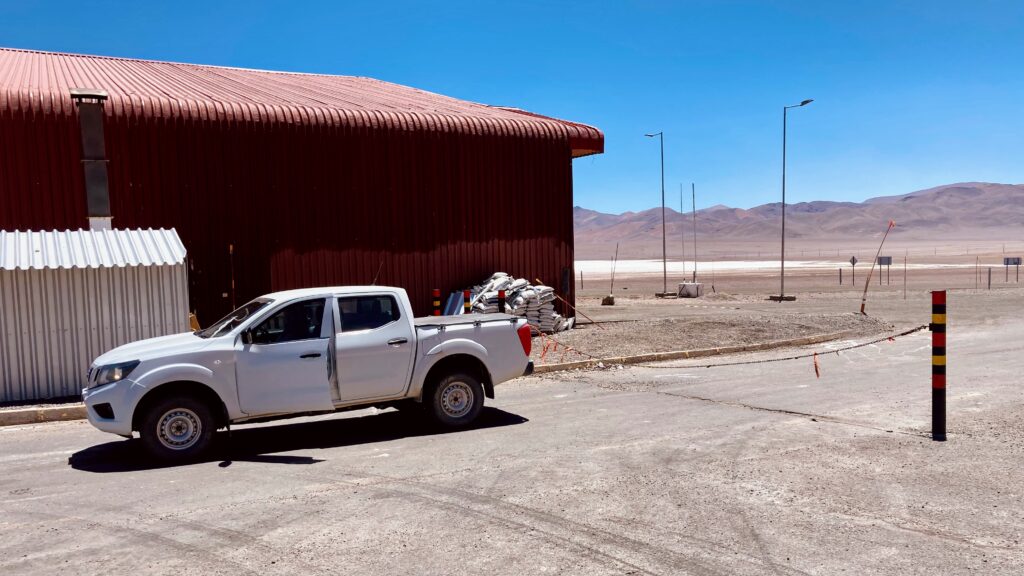
We are puzzled for a moment about how things work here and try to find out what we should do. Meanwhile a truck stops beside us. The driver gets out, unhooks the chain, gets back in the truck, drives past it, hooks it up again and continues toward Argentina. We think that this is probably exactly what is expected of us.
We look for someone to ask. We meet only three people: a labourer who gestures with hands and feet to indicate the border is closed, and two road administration employees. In broken Spanish-English-gesture-speech they tell us to continue along the road. I hesitate for a moment, but in the end I unhook the mentioned chain and we continue as well. We tell ourselves it is a truly strange form of border “control”.
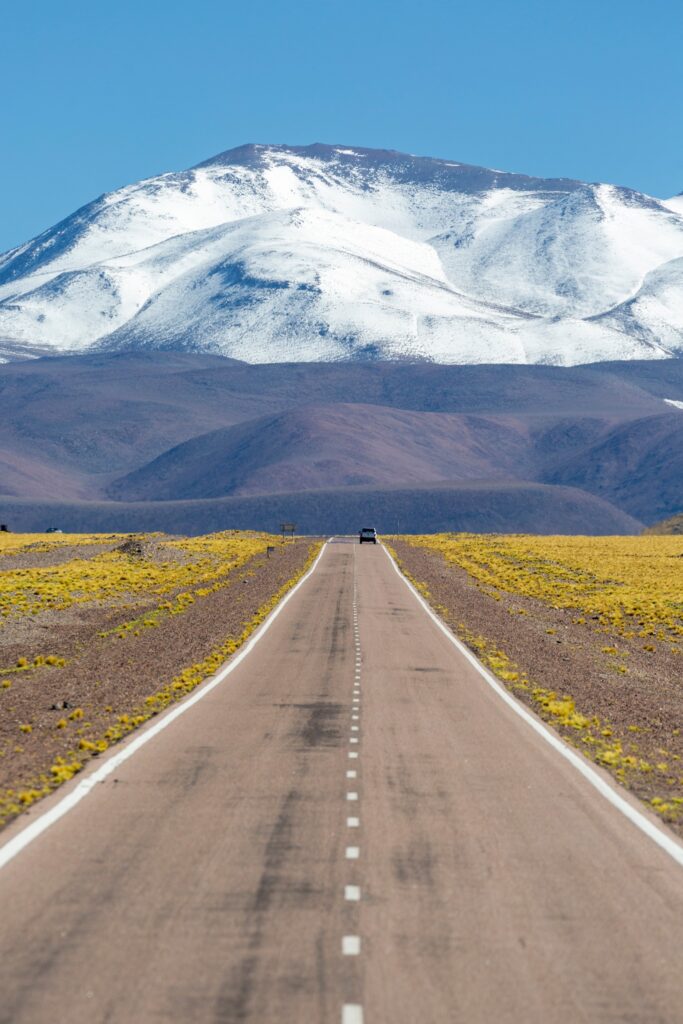
After a few kilometres we reach the highest parts of this road. The views here are truly beautiful – in every direction. We can’t help stopping several times to photograph scenery that is completely new to us.
Just before crossing the border we take a short break at Laguna Verde at 4 328 m n. m. The water in the lake is extremely salty and has an incredible turquoise colour that creates a strong contrast with the surrounding mountains.
Driving at these altitudes brings specific problems. Rapid ascent does strange things to the body. Headaches are just one possible symptom. Dry mouth, congested sinuses, swollen feet, overall fatigue, frequent urination, or shortness of breath during very simple tasks are common. Even so, it was worth it.
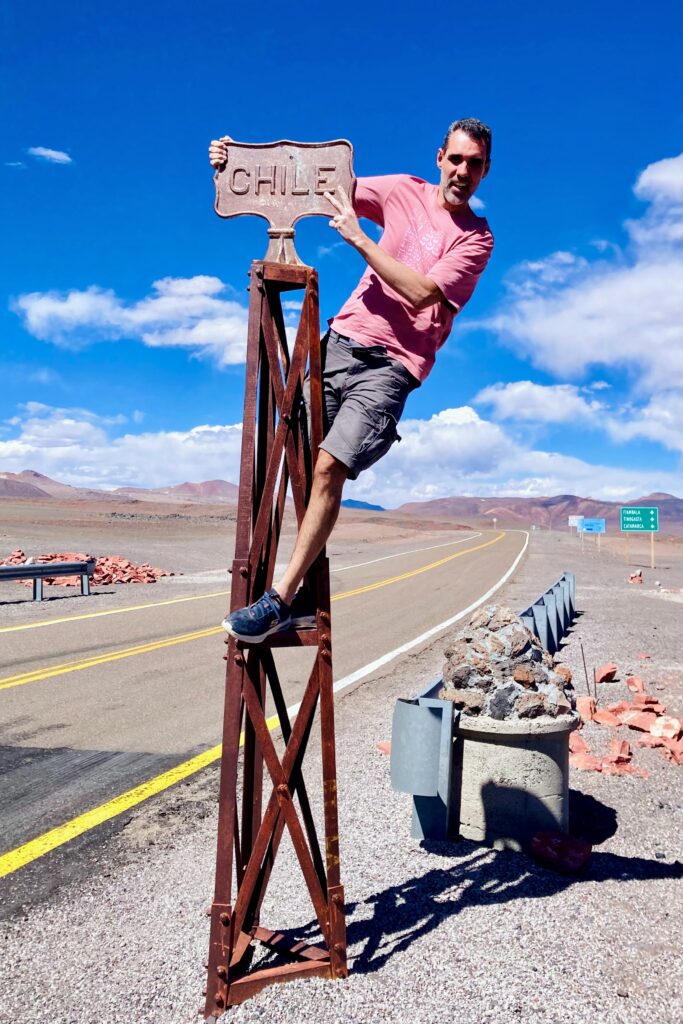
We reach the saddle itself. We take photos by the border posts, gasp for air, get back into the car… out of breath again.
We’ve crossed into Argentina and the landscape here gradually changes. You can see that it sometimes even rains here. The first hints of green appear and we slowly but surely descend.
Closed
The Argentine border control clearly has one of the most beautiful views in the world – but problems start for us here. From the customs officers’ initial reactions we understand that something is wrong. No one understands what we’re actually doing here. We learn that the border is officially open only on Mondays and Thursdays. But we are here on a Wednesday. Like… couldn’t you have put that somewhere?
They simply don’t want to let us into Argentina. Besides bad timing, we lack the Chilean exit formalities, a stamp in the passport, and a record that our rented car left Chile. To make matters worse, no one here speaks English.
The whole situation starts to take on absurd proportions. First they ask us to go back into Chile and cross the border “the way it’s supposed to be done.” We refuse. We don’t have enough petrol, energy, or time to return to Chile.
The second option is to sleep at the border and resolve the problem the next day. That also proves complicated – there is no suitable place to sleep and a night in the car would be truly cold.
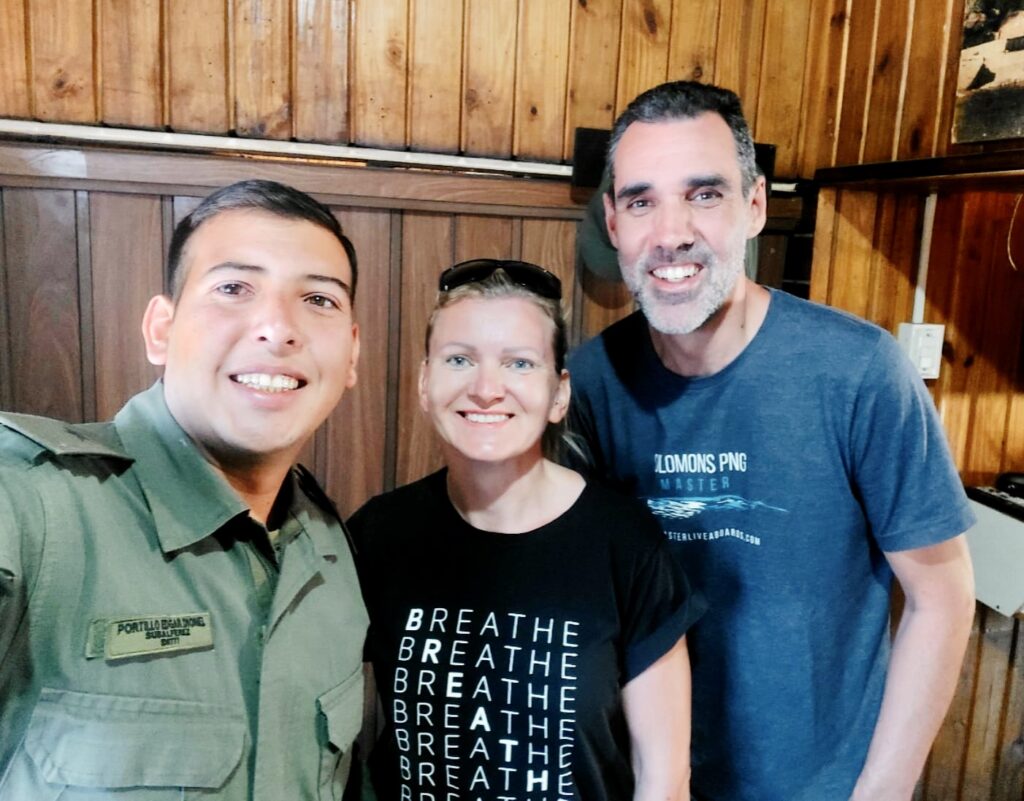
We have to negotiate a lot and be somewhat assertive. In the end one of the employees entrusted with us as “the exotic of the day” arranges an exception. An older gate guard finally lets us into Argentina for one day solely for the purpose of sleeping, with the condition that we return the next day to sort out all formalities.
We even have to promise that we won’t “run away” into Argentina. We’re happy… until we learn that the nearest hotel is “only” 80 kilometres from the border.
I really don’t feel like driving 80 kilometres three times. We consider sleeping in the roadside SOS shelters for a while – two benches and a stove. In the end comfort and fatigue win. We follow the customs officers’ recommendation and stay at the suggested hotel. Warm, cheap, great room, excellent food, tasty Argentine wine.
The border of absurdity
The next morning there is a disagreement in the car. I’m in favor of continuing the journey, but Ivana insists on returning to the border. For peace in the car we turn back. Yesterday’s wine combined with the altitude still lingers in our heads.
We return to the border and undertake the necessary formalities – fortunately without the need to go back into Chile. They even inspect our car and search for contraband. At this point the absurdity reaches its peak. We lose half a day, the officials are satisfied, and we get stamps that are probably completely useless to us. But if not for this situation, some photos would never have been taken.
From the border we move deep into the interior of Argentina. We find accommodation in the town of Famatina. Olives, jojoba and walnuts are cultivated here. Suddenly there is greenery, a river flows – after days in the Atacama it’s a small shock, but this is exactly why we left Chile and said goodbye to the Andes for a while.
The next morning the car won’t start. The diagnosis is clear – the battery is dead. That’s when we fully realize what incredible luck we had. If it had broken down a day earlier, somewhere in the Andes or on the Altiplano…