When the Andes are mentioned, most people imagine extremely high mountains, snow and thin air. However, the reality is much more complex. The Andes are not a uniform mountain massif – their elevation, character and visual impression change dramatically from north to south. And what’s even more interesting: how high the Andes appear often does not match the numbers on the map.
This text therefore looks not only at elevation but also at something called prominence, and at what could be called the illusion of height – that is, how the landscape, climate and contrasts shape our perception of the mountains.
Absolute elevation: numbers that don’t tell the whole story
Absolute elevation is what we know best – how many meters a peak is above sea level. From this perspective, the Andes are home to the highest mountains in South America, including Aconcagua (6 961 m).
Equally important are areas like the Altiplano, where the entire region is situated at “only” around 3 500 – 4 000 meters. People can function, travel and live here; it’s not the typical high-mountain environment. Elevation manifests differently here than in classic high mountain massifs.
Prominence: why some mountains take your breath away more than others
Prominence describes how much a peak rises above its immediate surroundings. Simply put: if from this peak you wanted to continue to something higher, prominence expresses how many meters you would first have to descend to the lowest saddle.
It is precisely prominence that explains why lower peaks can seem more monumental than higher ones. Examples include the steep towers of Patagonia, which appear “larger” than the numbers suggest. At the same time, it also explains why you can be on the plain of a plateau and yet be at extreme altitude.
Prominence is the key to understanding why the Andes don’t appear equally high everywhere.
Illusion of height: when the landscape deceives the senses
To round out the topic, it should be said that the feeling of height is not influenced only by metres themselves. The colors of the landscape, vegetation, humidity, cloudiness and the contrast between the mountains and their surroundings also matter. And this is precisely where the Andes begin to behave completely differently.
Northern Andes: the green and humid Ecuador
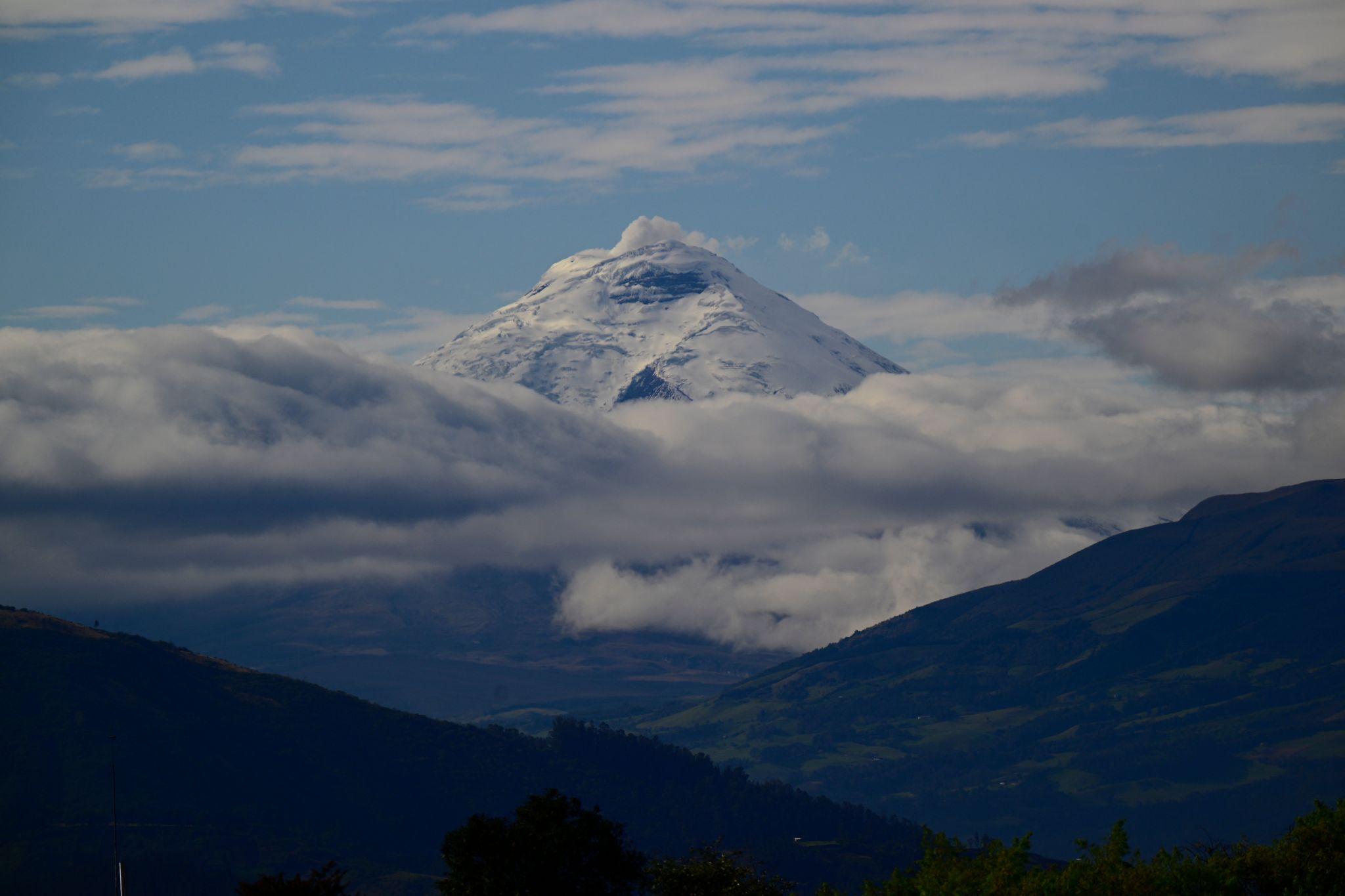
The northern Andes in Ecuador appear surprisingly green and humid. Even at high elevations vegetation, cloudiness and precipitation are present. The mountains here don’t seem inhospitable, but rather dramatic and very lively.
An interesting contrast is that peaks are often more noticeably snow-covered than equally high volcanoes in the Altiplano area. Snow here is not an exception but a natural part of the landscape.
Elevation is felt here, but the landscape visually softens it. Green color, clouds and humid air create the feeling that the mountains are closer, more massive and at the same time more accessible.
Altiplano: elevation without green, but with space
A completely different world is represented by the Altiplano in Bolivia and adjoining parts of Chile and Peru. The landscape is extremely dry, almost without greenery, yet paradoxically full of lagoons of various colors. Horizons are open, distances deceive and the scale of the landscape is lost.
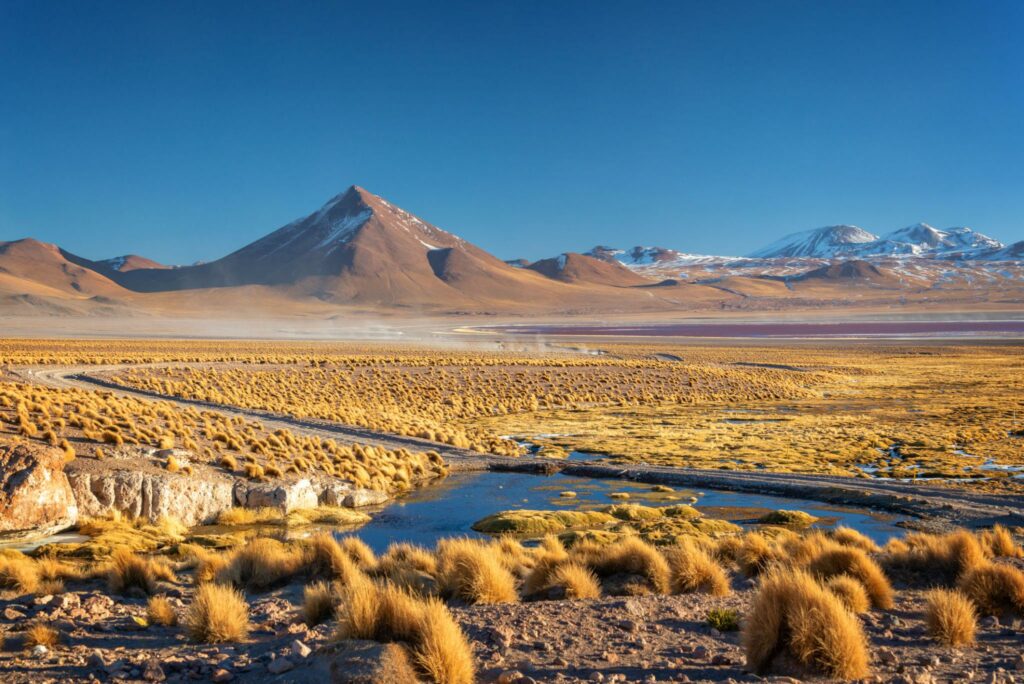
Hills and volcanoes here are often relatively easily accessible; sometimes it’s possible to reach very high elevations by car, in places almost up to the summit. One example is the road within the massif of the volcano Uturuncu.
During the day it’s relatively warm thanks to strong sun. At night, however, temperatures drop sharply and the reward is an almost completely clear sky and exceptional views of the starry sky.
The Altiplano is a place where elevation doesn’t look dramatic, but is constantly present – in your breath, in sleep, in fatigue.
Patagonian Andes: lower numbers, stronger impression
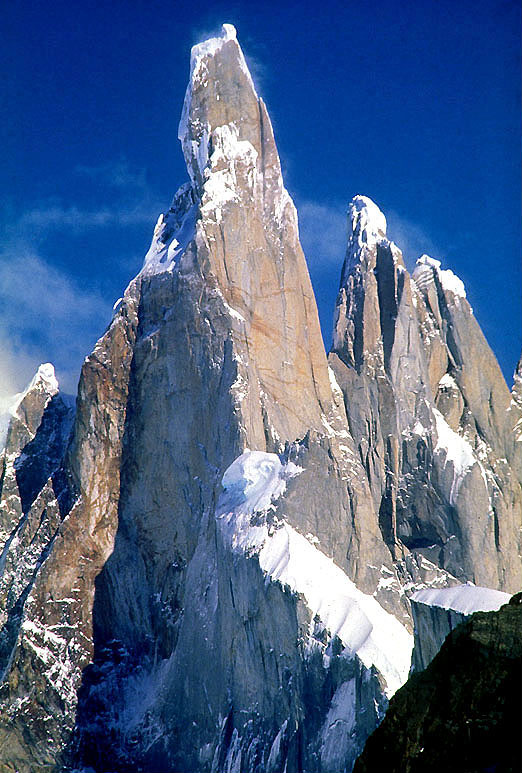
Although the Patagonian Andes don’t reach extreme elevations, their prominence and rugged terrain make them some of the most visually striking mountains in the world. Peaks rise steeply from their surroundings, often almost from sea level.
Glaciers, vertical walls and rapidly changing weather make the mountains seem higher than they actually are. Here the illusion of height works opposite to the Altiplano – the numbers are lower, the impression extreme.
Among the most famous Patagonian peaks are especially Cerro Torre and Fitz Roy (Cerro Chaltén), the iconic granite towers near the town of El Chaltén. Other notable summits include Cerro Torre Sur, Cerro Torre Egger and the Cerro Torre Standhardt massif. Although their elevation rarely exceeds 3 500 meters, thanks to extreme prominence and steep walls they rank among the most impressive mountains in the world.
Colombian Andes: high mountains in a tropical environment
The Andes in Colombia are less known than in Ecuador or Peru, but extremely interesting in terms of contrasts. The Andean range here splits into three main branches – the Western, Central and Eastern Cordillera – between which lie the deep valleys of the Magdalena and Cauca rivers. The result is a landscape with extremely rapid transitions between lowlands and high mountains.
One of the most interesting Andean areas in Colombia is considered to be the Cordillera Central, where the country’s highest active and extinct volcanoes are located. Peaks such as Nevado del Ruiz and Nevado del Tolima reach heights above 5 000 meters and despite their location near the equator are often covered with snow and glaciers.
A specific Andean environment is also the Cordillera Oriental, especially the Sierra Nevada del Cocuy range. It is one of the few places in the northern Andes where extensive glaciers, sharp peaks and high mountain plateaus have been preserved. Tropical latitude, high elevation and frequent cloudiness here create a strong contrast between green valleys and the cold high-mountain world.
Thus the Colombian Andes don’t appear high because of vastness or plateaus, but because of sharp transitions between climates, vegetation zones and elevations.
The Andes are not a single mountain range, but several worlds
The Andes certainly cannot be judged only by elevation. To understand them, we must take several factors into account.
Green and humid Ecuador, the dry and open Altiplano or dramatic Patagonia show that elevation has many forms. Before you set out to any of these parts of the Andes, be sure to study as much information as possible so you have an idea of what you’re getting into and what to pack. Whichever part of the Andes you choose, you certainly won’t regret the visit. It is truly a unique and beautiful corner of the world.
Facts about the Andes
- Highest peak: Aconcagua (6 961 m a.s.l.) in Argentina is the highest peak of the Andes and of all South America.
- Range length: The Andes are the longest mountain range in the world – they stretch for approximately 7 000 kilometres along the western edge of South America.
- Countries they pass through: Venezuela, Colombia, Ecuador, Peru, Bolivia, Chile and Argentina.
- Altiplano: one of the highest inhabited plateaus in the world, with an average elevation of around 3 700 meters.
- Glaciers in the tropics: The Andes are the only mountain range in the world where glaciers are found directly in the tropical zone.
- Tectonic origin: the formation of the Andes is related to the subduction of the Pacific Nazca Plate beneath the South American Plate.
- Climatic diversity: the Andes contain deserts, rainforests, high mountain plateaus and glaciated areas – often at relatively short distances from each other.