
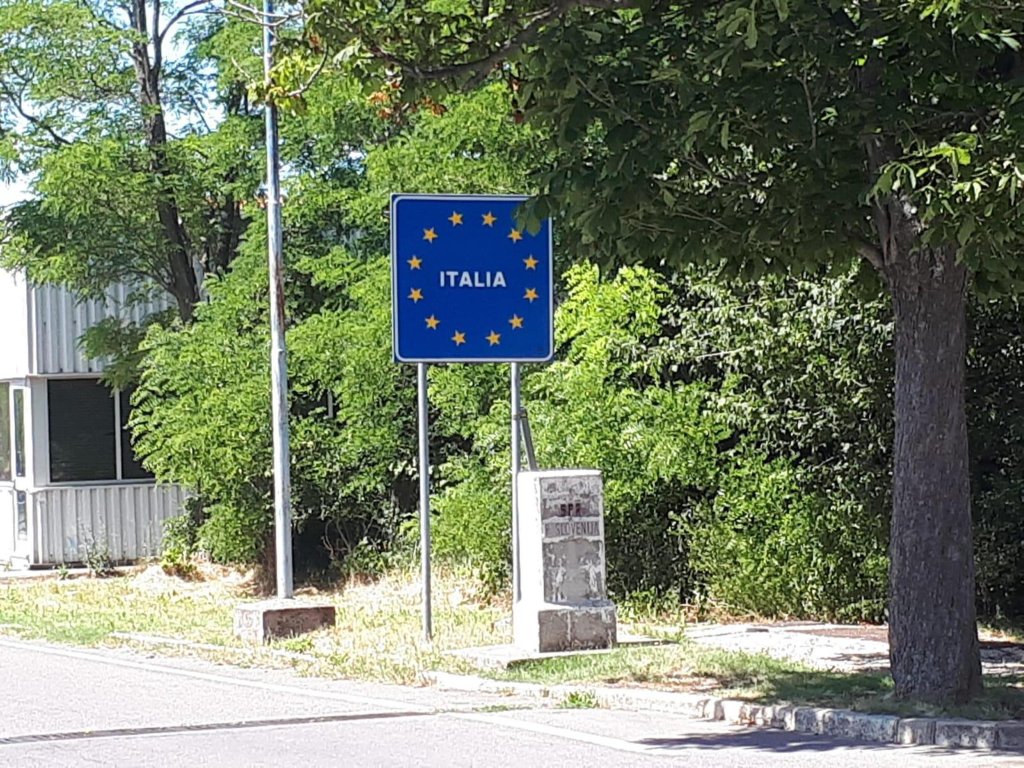


Italy is one of the easier countries to travel to with a dog. As a member of the European Union, it follows the same basic set of rules as most European nations.
That doesn’t mean there’s nothing to take care of. When traveling to Italy with a dog, you need the right documents, a valid rabies vaccination, and microchip identification. Italy applies the same rules as other EU countries, with the main difference being whether you enter from the EU or from a non-EU country.
In this article, we cover:
- entry requirements when coming from an EU country
- entry requirements from non-EU countries
- practical rules you may encounter while traveling around Italy
- whether some Italian islands have their own rules
Entry requirements for bringing a dog to Italy from an EU country
If you’re traveling to Italy from another EU country, the requirements are fairly simple.
The dog must have:
- microchip
- a valid rabies vaccination
- EU pet passport
The EU pet passport is a document issued by a veterinarian that contains your dog’s identification and vaccination records. It’s valid for travel between EU countries.
Entry requirements for bringing a dog to Italy from non-EU countries
If you’re traveling to Italy from a country outside the European Union, the rules are a bit stricter.
The dog must have:
- an ISO-compliant microchip
- a valid rabies vaccination
- a veterinary health certificate for entry into the EU
- a written declaration for the animal’s non-commercial movement
The veterinary certificate must be issued by an official veterinarian in the country of departure and generally must be issued no more than 10 days before entry into the European Union.
If you’re arriving from a country not on the EU list for simplified pet entry, a rabies antibody titer test may also be required. Blood for this test is drawn at least 30 days after vaccination, and you may enter the EU only after a three-month waiting period.
Interested in this destination? Would you like to visit it with your dog? Check the entry requirements directly in BorderCooler®.
How many animals you can bring when traveling non-commercially
For non-commercial travel, you may bring up to 5 animals per person.
If you bring more, it may be considered commercial transport and stricter rules apply.
Does the same rule apply to Sardinia, Sicily, or the Aeolian Islands?
Yes. Sardinia, Sicily, and the Aeolian Islands are part of Italy, and the same veterinary entry rules for dogs apply there as on the mainland.
This means that entering these islands doesn’t require any additional documents beyond the standard requirements for entering Italy.
The only practical issue you might encounter is checks by the carrier. When traveling by ferry or plane to the islands, the operator may verify the pet passport and rabies vaccination before boarding.
This isn’t a special island rule, but a routine document check when transporting animals.
Practical rules for getting around Italy with a dog
Once you arrive in Italy, there are a few rules that apply to dogs in public spaces.
In cities, you’re often required to have:
- a leash in public places
- a muzzle that the owner must carry and put on if requested
These rules apply mainly to public transport and busy areas.
Document checks when traveling to Italy
If you’re driving to Italy from another EU country, actual document checks at the border are fairly rare. That doesn’t mean you don’t need to have your documents with you.
When traveling by ferry or plane, or during a random veterinary inspection, you may be asked to present your dog’s documents required for entry to Italy. The simplest rule of thumb is to keep them ready at all times.
When I went hiking to Cima di Terrarossa with my dog Ibo, we crossed the Italian border from Slovenia. Ibo had all the required documents, but there were no checks at the border — either when entering Italy or on the way back.
Summary of the rules for traveling to Italy with a dog
Traveling to Italy with a dog is relatively straightforward within Europe. If you’re coming from an EU country, you’ll usually just need an EU pet passport, a microchip, and a valid rabies vaccination.
For travel from non-EU countries, you’ll also need a veterinary health certificate and, in some cases, a rabies antibody test.
Italian islands such as Sardinia, Sicily, or the Aeolian Islands have the same entry rules as the mainland, though carriers on ferries and flights may check your dog’s documents more thoroughly.
For travel, the simplest approach is to follow one basic rule: always keep all veterinary documents ready.