
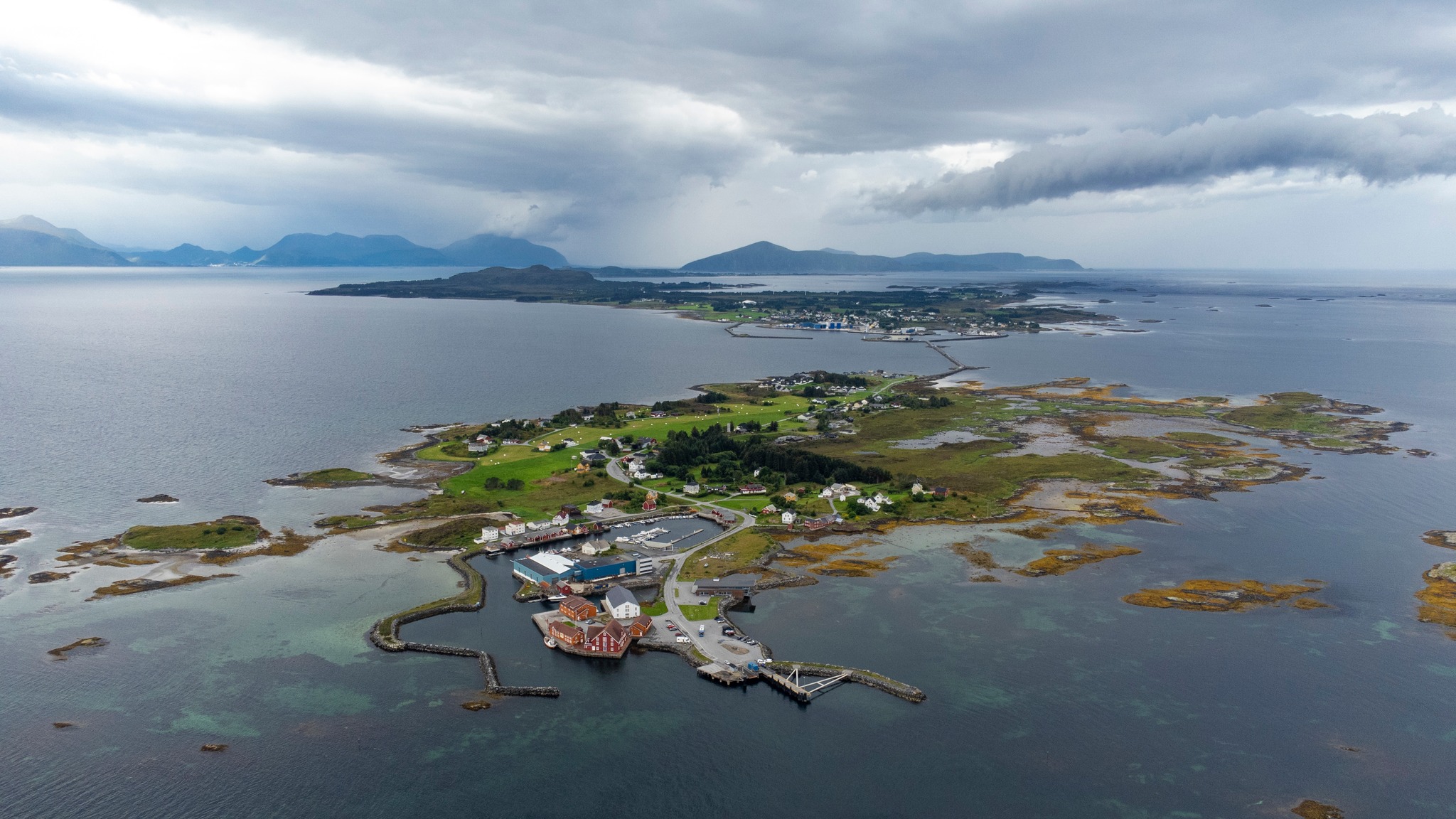
In 2024, during our road trip through Scandinavia and the Baltic countries, we also drove through almost the entire Nordøyane archipelago. This little-known area of Norway ended up on our itinerary entirely by chance – while planning the trip I noticed on the map a road that runs through the archipelago, and the fact that almost nothing was written about it anywhere. It just sounded interesting, a bit mysterious. No iconic viewpoints, no familiar names, no “must-see” places. Let’s do it!
Road 659
From the city of Ålesund we moved north along road number 659, which is part of the Nordøyvegen project. It is a relatively new road, officially opened in 2022, which, using bridges, causeways and especially subsea tunnels, connects six islands that until recently were completely dependent on ferries.
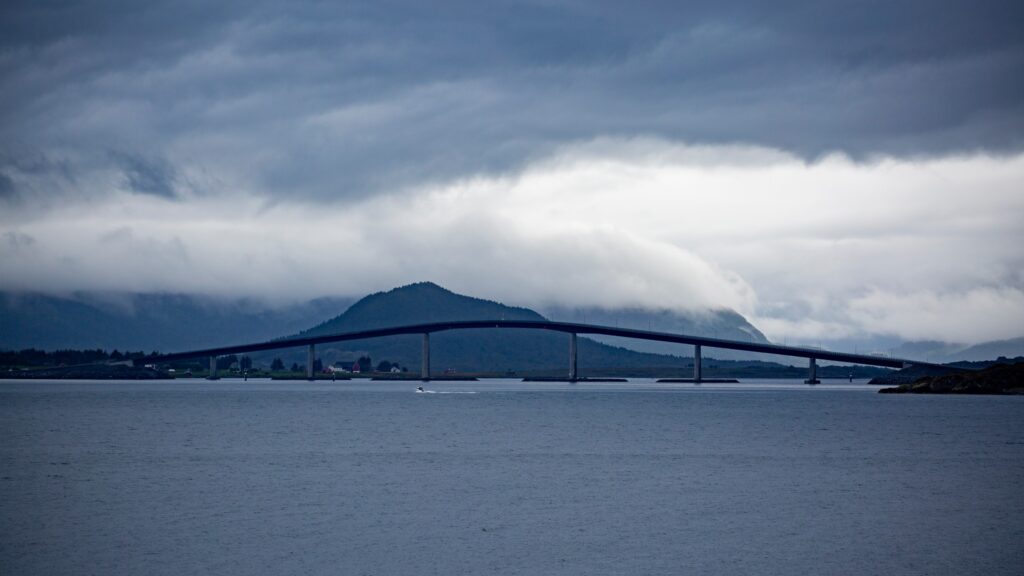
Unlike iconic Norwegian roads like Trollstigen or the Atlantic Road, Nordøyvegen doesn’t feel dramatic or showy. It doesn’t offer iconic switchbacks or viewpoints that would flood social media. Its strength is in its understatement – it works quietly, efficiently and without trying to dazzle.
The archipelago consists of the islands Haramsøya, Flemsøya (Skuløya), Fjørtofta, Harøya and Finnøy. Only a few thousand people live there and tourism is still more of a side phenomenon than a main source of livelihood. All the more striking is the contrast between the modern infrastructure and the quiet, almost empty villages the road passes through.
Since time is often our biggest enemy while traveling, we skip the first island Lepsøya this time and continue without stopping across a bridge and then a tunnel straight to Haramsøya. It is here that the peculiar charm of Nordøyane fully reveals itself – the modern road may quickly move you from place to place, but the islands themselves still live at their own slow pace.
Night on the island of Flemsøya
During our journey we are amazed by several things. The bridges and tunnels surprise the most, but even the first stops reveal the natural beauty of these islands. Nature is pristine, characteristically Nordic and rugged, lush green, and the sea turquoise. All of this is complemented by a combination of relatively modern wooden buildings and older fishermen’s cottages, often with grass on the roofs.
After aimless wandering around and soaking up the atmosphere, it’s time to find a place to spend the night. There are only a few hotels on the islands – the cheaper ones were hopelessly sold out and the one expensive one was simply too pricey. Our tent and car save the day.
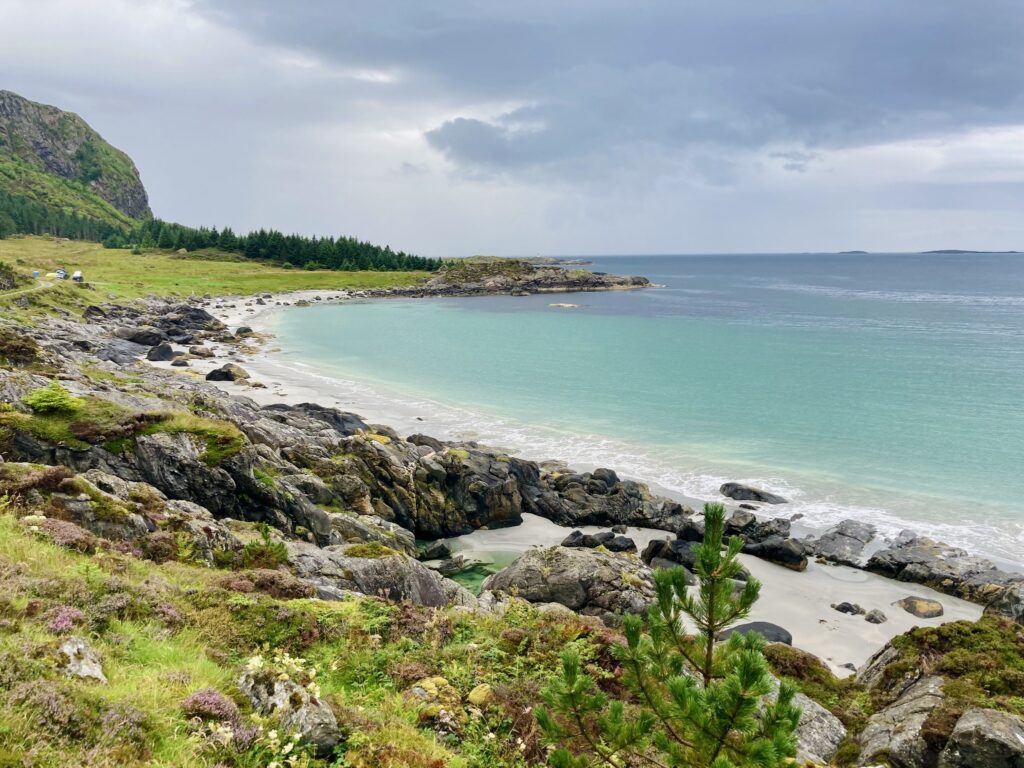
For the night we choose Sandvika beach on Flemsøya. The weather is not on our side though – it rains most of the evening and the beach, although incredibly beautiful, we can’t enjoy as we’d like.
We pitch the tent just a short distance from the sea. Despite the rain, the place has a strong atmosphere – the views, the sound of the waves, a mountain stream, a small lake with clear water and absolute tranquility. A bonus is the dwarf-pine vegetation, which combined with the proximity of the sea creates an unforgettable contrast.
To top off the picture, just before sunset a rainbow appears over the island. The color of the sky is literally golden and the rainbow in this setting feels more like a hallucination than reality. The only thing that spoils this experience are swarms of small flies that crawl everywhere they can, and unfortunately bite a little.
Harøyburet – small hill, great views
The next morning we dry the soaked tent and continue through tunnels across Fjørtofta to Harøya.
Here we take a short break and climb to the island’s highest point – Harøyburet (156 m above sea level). A short, easy hike that nonetheless offers unexpectedly wide views. We can see the entire archipelago, the mainland with significantly higher mountains, and there is also a view of Flemsøya with the beach where we slept the night before.
End of the road on Finnøy
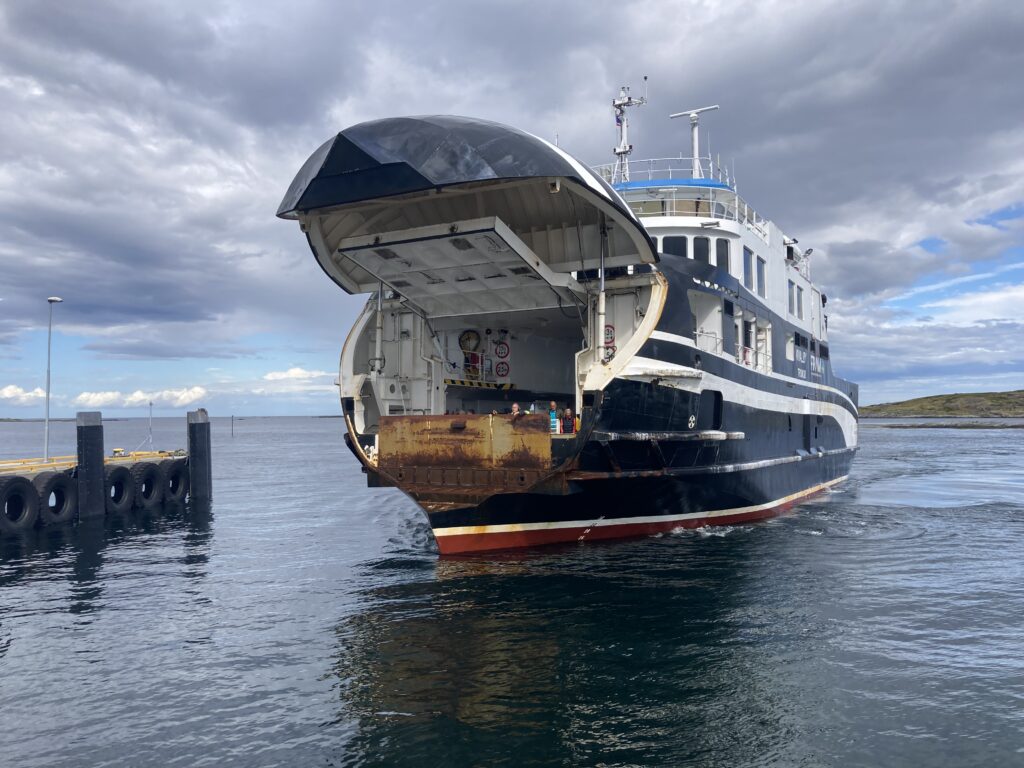
The last island of our trip is Finnøy. This is where the road ends. You either return the same way, or you can continue by ferry to the mainland, which runs several times a day.
It’s not worth waiting here too long for the ferry. Finnøy doesn’t offer many ways to kill time, so I recommend checking departure times in advance. We passed the time with a quick lunch, taking Iba for a walk and a short nap in the car. Our ferry was already visible in the distance and we moved on to the next adventure.
Conclusion
The Nordøyane archipelago offers a perfect space for solitude spent in a beautiful setting – and it’s only about an hour’s drive from Ålesund. Sea, wind, beautiful nature, beaches, silence and the feeling that you’re somewhere off the main routes. A place that asks for nothing, yet gives you exactly what you set out to find.