
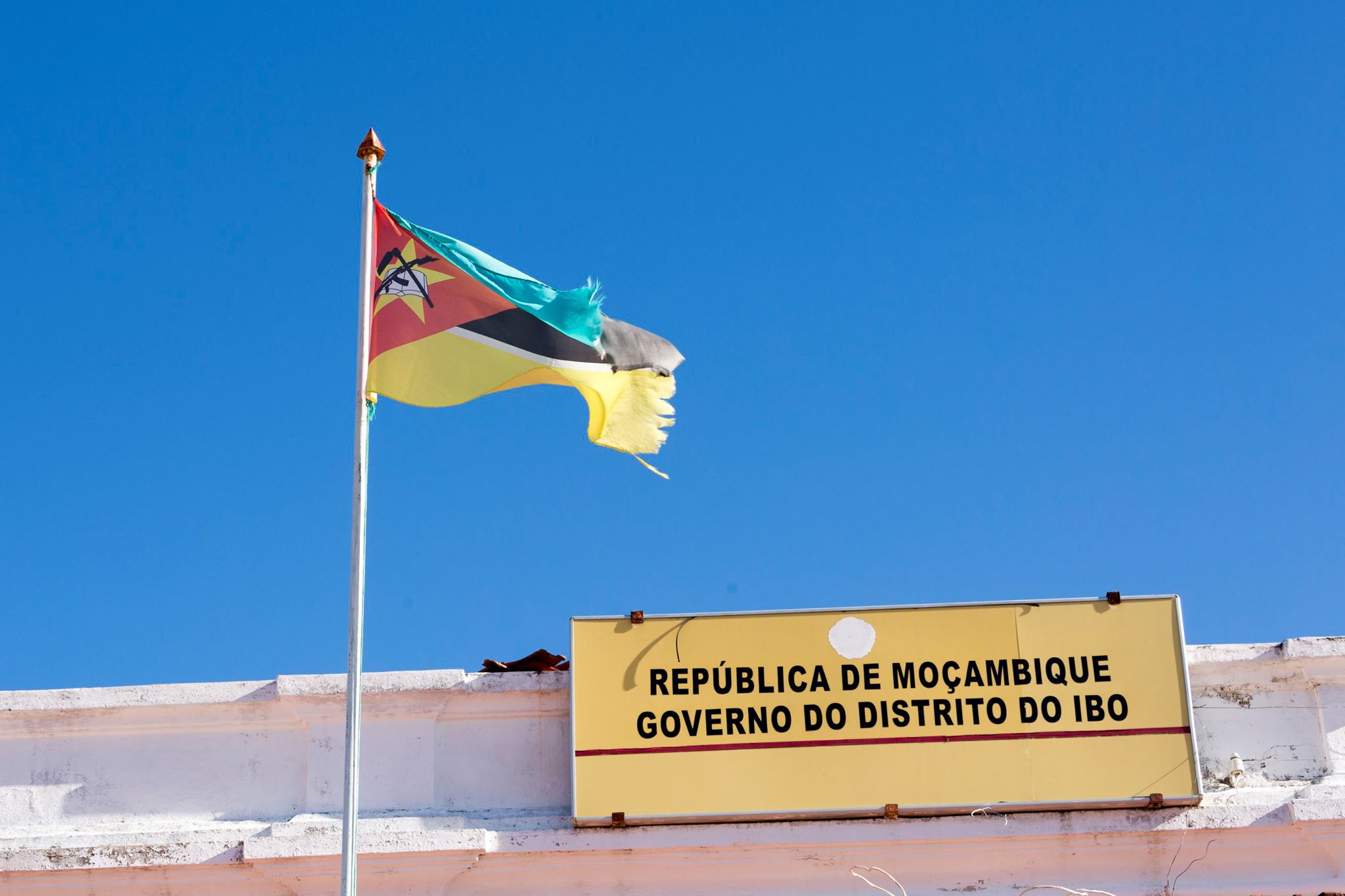
Our trip through the Quirimbas archipelago began on Ibo Island, where we arrived after a very difficult transfer from the town of Pemba. When we finally disembarked at the small port from the local boat – the so-called chappa boat – we were greeted only by a handful of local children, the atmosphere of a tropical night and complete darkness. Fortunately we had headlamps at hand. However, it would have been a shame to shine them.

Above us was a sky you won’t easily see elsewhere. The Milky Way was clearly visible and, with a little attention, it wasn’t hard to spot distant galaxies as tiny nebulae. The noisy chatter of children around us, their endless questions and our heads turned toward the starry sky. An unconventional introduction – much like the island itself.
History of the island
Historically, Ibo Island was one of the most important places in the Quirimbas archipelago. When the Portuguese colonized what is now Mozambique in the 16th century, they seized this strategic port by bloody means. From here trade routes led to the Arab world.
Spices, silver, and slaves were traded here. For many years the island was an important trading center for the whole region.
The situation only began to change with the arrival of more modern ships. These had a deeper draft and could no longer safely reach the shallow waters around the island. Trade gradually moved to the nearby town of Pemba and Ibo Island slowly fell into oblivion.

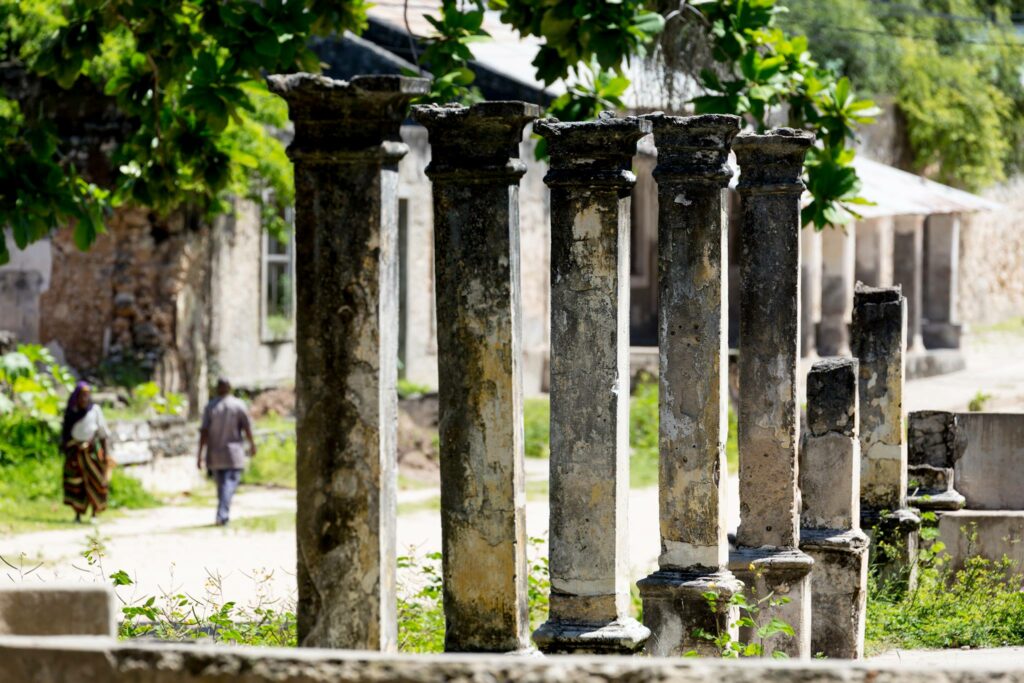
However, much of the Portuguese colonial architecture remains to this day. In the historic center there are old houses and streets that in some places resemble a small European town more than an African island. But walk a few streets further and everything suddenly changes. Sandy roads, simple houses and the slow rhythm of everyday life remind you that you are still in Africa.
Everyday life on the island
Life on Ibo is modest and certainly not easy. Most locals are directly or indirectly dependent on the ocean. The main sources of livelihood are fishing, small crafts and petty trade. Fishermen head out to sea in traditional wooden dhows, which have a shallow draft and can operate in the shallow waters around the islands. The catch then ends up either at the local market or is sent to the mainland town of Pemba.

Traditional crafts also play an important role. On the island we saw artisans making silver jewelry, working wood and building new fishing boats. Boat building, in particular, is among the most interesting local crafts. These boats are perfectly adapted to the shallow waters of the archipelago and locals have used them for generations.
In recent years tourism has slowly become part of the local economy. Several small resorts and accommodations employ locals as guides, boatmen, cooks or service staff. Tourism still represents only a small part of the local economy, however.
Life on the island is also highly dependent on natural conditions. Water is mainly drawn from wells and supplies are limited. Locals often speak of a day when the island’s water supply might simply run out.

A similar scenario already happened on the nearby, larger island of Matemo. Intensive groundwater pumping there in the past caused seawater to gradually intrude into the underground reserves, rendering the wells unusable.
After learning this, we began to look at some of the local more luxurious resorts that offer pools to their guests a bit differently. In an environment where water is scarce, it feels somewhat strange.
The rhythm of everyday life on the island is also determined by the tides. When the tide comes in, water floods large parts of the surrounding beaches. For locals it is an ideal time to fish and for children an opportunity to swim in the ocean.
Locals still see tourists here more as an interesting curiosity than as a completely normal part of life. Only a small number of travelers visit the island, so each new arrival is somewhat of an event. Because of this, contact with locals feels natural and informal, and you quickly become part of the island’s everyday life.
When the day slowly ends and the sun sets over the horizon of the Indian Ocean, life on the island slows down even more. Electricity is not a given everywhere and many streets quickly fall into darkness. Still, we felt safe on the island even after dark.
Accommodation, food and basic infrastructure
Although it is a rather remote island, basic tourist infrastructure does exist. The only ATM on the island is located in the main square. In some accommodations and larger restaurants it was possible to pay in US dollars, but smaller shops and locals prefer the local currency.
There aren’t many accommodation options, but even among the few you can choose according to the comfort you seek. Options include more authentic eco-lodges with simpler facilities as well as somewhat more luxurious resorts. There is also a small campsite suitable for backpackers.
We chose a more authentic accommodation called Baobibo. In the end we lacked nothing. We had a clean, spacious room, a bed with a mosquito net (very important), electricity, breakfasts and dinners with a touch of local Mozambican cuisine and very helpful people around us who made our stay on the island pleasant.
There are basically two kinds of restaurants here. The first belong to several resorts operating on the island and offer classic tourist menus. The second option is much more authentic – if you go to the more remote parts of the settlement, locals will often happily host you in their homes.
They will literally invite you into their thatched hut, where you sit on plastic chairs and eat what they have just prepared. Most often fish, which they probably caught themselves, rice and a simple salad. With a bit of luck the owner will also have a box of ice to chill beer or cola.
We definitely recommend this experience. It is a much cheaper form of dining than in resorts and at the same time one of the most authentic moments you can have on the island.
This kind of dining is generally simple but surprisingly cheap. Dinner costs roughly three to five euros per person and often includes a beer. Prices in resorts are of course many times higher.
Activities on the island
Large parts of the island are surrounded by dense mangroves, so the choice of beaches on the island itself is fairly limited. Those that do exist have one big advantage – you will often be completely alone on them, especially if you go outside the main settlement.

A bicycle is ideal for exploring the island. You can rent one here for a few dollars a day. The island is not large – about 6 km² – and the sandy roads can be managed fairly easily. You can cover the main settlement and most points of interest on foot or by bike in a relatively short time.
Besides a bike you can also consider renting a kayak. It is an ideal aid for moving over the sea and can take you to places you can’t reach on foot. With this form of travel it’s important to think about safety. The strength and direction of sea currents change during the day, so it’s wise to stay closer to shore and to accurately judge your abilities on open water.
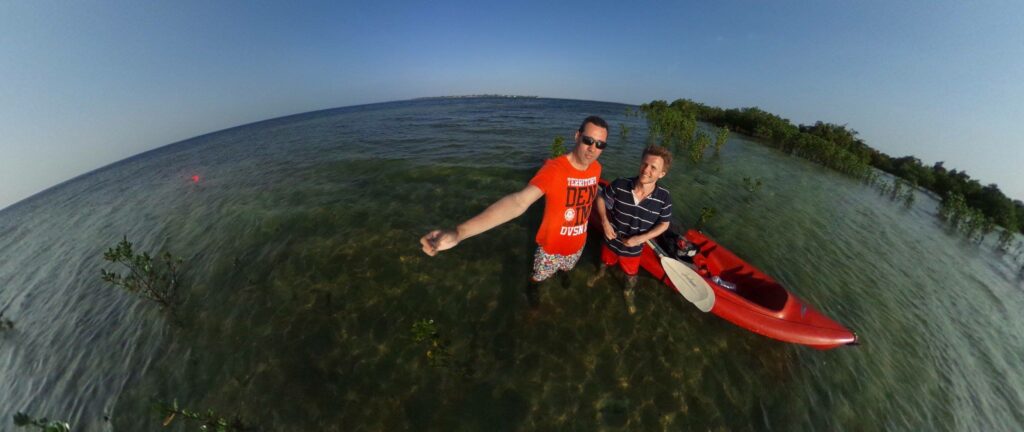
From the island you can also take boat trips to surrounding islands, for example to Matemo. A very interesting place is the nearby sandbank Baixo de São Gonçalo.
It is a typical sandbank – a small sandy islet that disappears completely underwater at high tide. When the tide goes out, a long strip of white sand appears in the middle of the ocean. At the time of our visit we were almost alone there. The perfect silence was broken only by a few local fishermen.

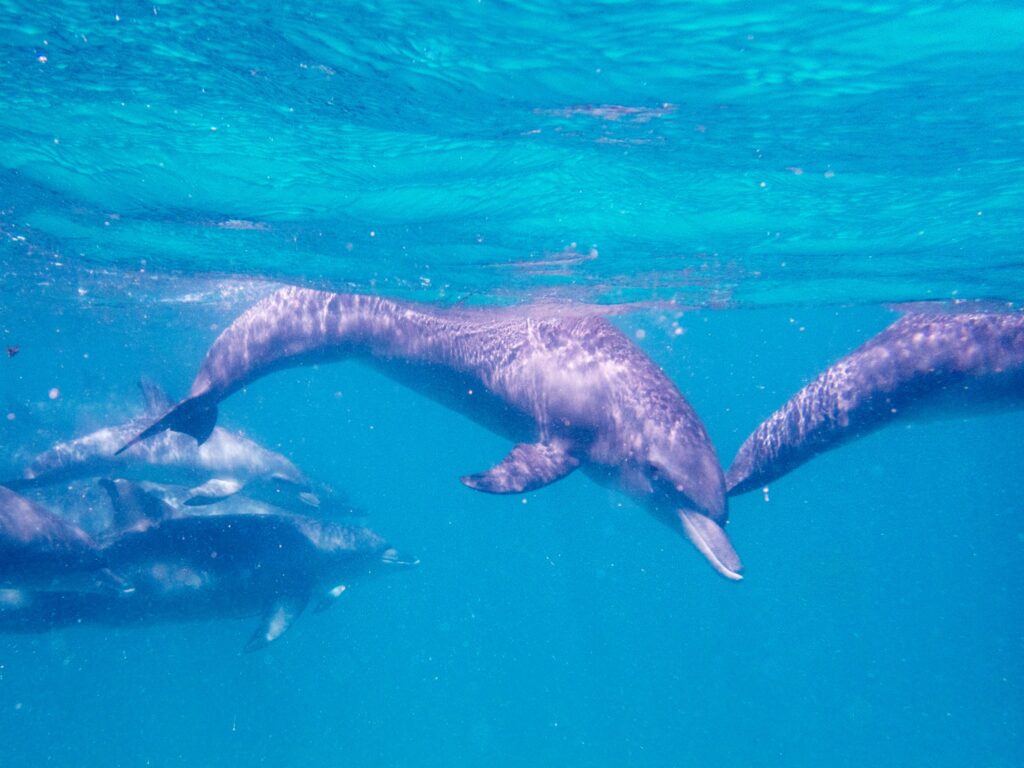
An interesting activity around the islands is snorkeling with dolphins or touring historical buildings on the island itself, including the old colonial fortress Fort São João Baptista.
The waters around the island are also known among divers. The waters of the Quirimbas archipelago hide many dive sites – from coral reefs to less explored locations where you can encounter rich marine life of the Indian Ocean. Unfortunately for us, at the time of our visit the only divemaster on the island was ill – he had malaria. So in the end there was no diving.
If none of the listed options appeal to you, there is one slightly unexpected “activity” – the local dogs. We were lucky to meet one such local dog. For reasons unknown to us he quickly took a liking to us and started following us everywhere we went. It wasn’t unusual for him to be waiting for us in front of the resort in the morning. It didn’t take long before he was nicknamed “Doggie” and became a lovely part of our days.
Local children and school
It wouldn’t be fair to write about Ibo Island without mentioning the local children. It is they who give the island’s narrow streets their typical, slightly chaotic but very lively atmosphere.
You bond with the local children very quickly – often before you even realize you’ve only been on the island a short time. To be precise – they are the ones who bond with us.
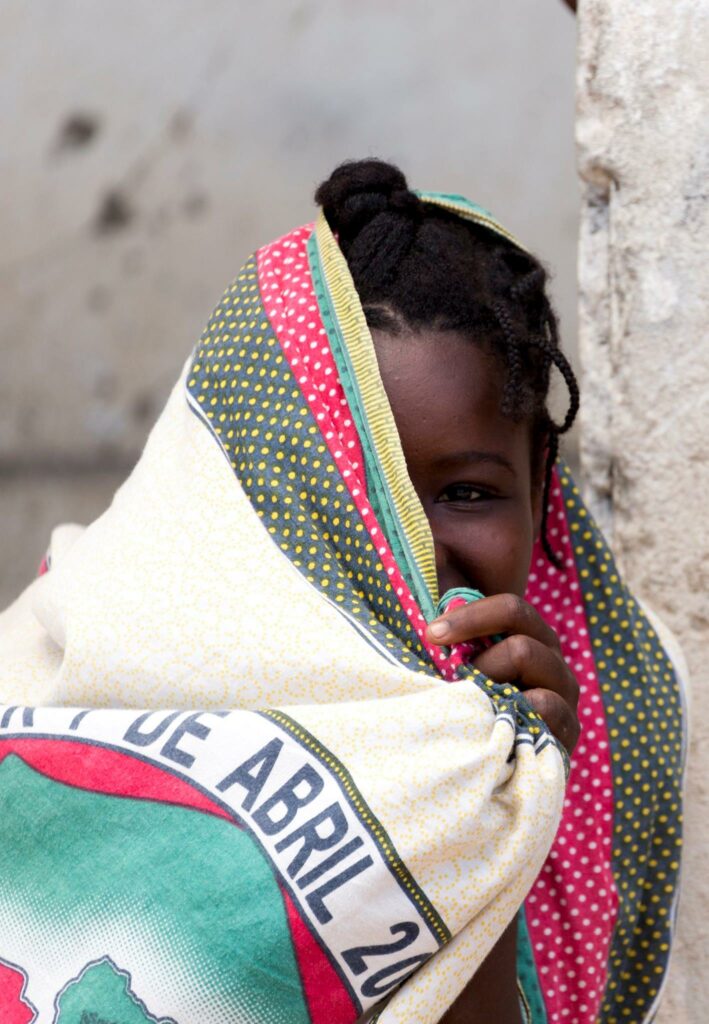
Most of them love having their photos taken. Occasionally you find someone who avoids the camera. We expected that the children – and other locals – would ask us for small gifts, so we prudently brought a supply of small toys we no longer needed at home.
In the end our expectations were not met and the children were genuinely surprised and full of joy when we gave them the toys. We won over not only the children but often their parents as well. We quickly became known across the island as “those tourists with toys.”
One day a young boy came up to me and, using gestures, asked if he could borrow the camera for a moment. I didn’t hesitate. I was all the more surprised by how quickly he understood how to use it. A few minutes later he was photographing his brother and managed to take a nice portrait.
While wandering the island we also visited the local school. The school system itself is different from ours, which didn’t surprise us. We were more surprised by the school uniforms. Seeing children in uniforms in such a remote corner of the world feels a bit surreal.

The school system in Mozambique has several peculiarities that may surprise a European. Classes are often very large and schools sometimes operate in shifts – one group of children attends in the morning and another in the afternoon. The language of instruction is Portuguese, although most children at home speak local languages. For many of them school is therefore the first place where they really learn Portuguese.
We were very pleased that the children also learn English here, and many of them did better than we expected. Thanks to that we learned a lot about their plans for the future. One boy was already saving money at a young age for later studies in nearby Pemba. Another wanted to become a fisherman like his father, but he will need a new boat because his father’s is already old.
The more time we spent on the island and the more we talked with locals, the more likable Ibo became to us.
When is the ideal time to visit the island
The climate in northern Mozambique is tropical and the year is mainly divided into two seasons – the rainy season and the drier season. The rainy season usually lasts roughly from December to April. During this time rains can be intense, inland roads turn to mud and transfers between islands or from the mainland to the islands can be more complicated.
On the other hand, the period from May to November is considered the best time to visit the Quirimbas archipelago. The weather is more stable, there is less rainfall and the ocean is usually calmer. This is also when most tourists come.
We visited Ibo Island in April, at the very end of the rainy season. During our stay we did experience several intense rains and one day it rained almost continuously, but most days were calm and sunny without strong winds.

At the same time, this helped us better understand how challenging it can be to operate on such a remote island during the peak of the rainy season. Roads are waterlogged, transfers more complicated, and life on the island slows down even more than usual.
On the other hand, visiting outside the main tourist season has its advantages. The island is even quieter, there are very few tourists and you practically have many places to yourself.
Return from the island

After the experiences of the difficult jungle journey to Ibo Island, we decided to choose a simpler form of transport for our departure. There is one regular flight from the island to the airport in the town of Pemba. It is a more expensive option, but also fast, comfortable and safe.
The airport on Ibo is very simple – more of a small dilapidated hut and a patch of flat grass than a classic airport. But prepare for an interesting experience. At the airfield the pilot in uniform will meet you, personally load your luggage into the small plane and then take off with you.
The reward for this mode of return was a beautiful view from the plane of the Quirimbas islands scattered across the turquoise waters of the Indian Ocean.
Conclusion
Ibo Island is not a destination for everyone. It is not a place of luxury hotels or a lively nightlife. Quite the opposite – life here flows slowly and simply.
Perhaps that is why the island has retained the atmosphere of a place somewhat outside the modern world. And we hope it stays that way for a long time.