
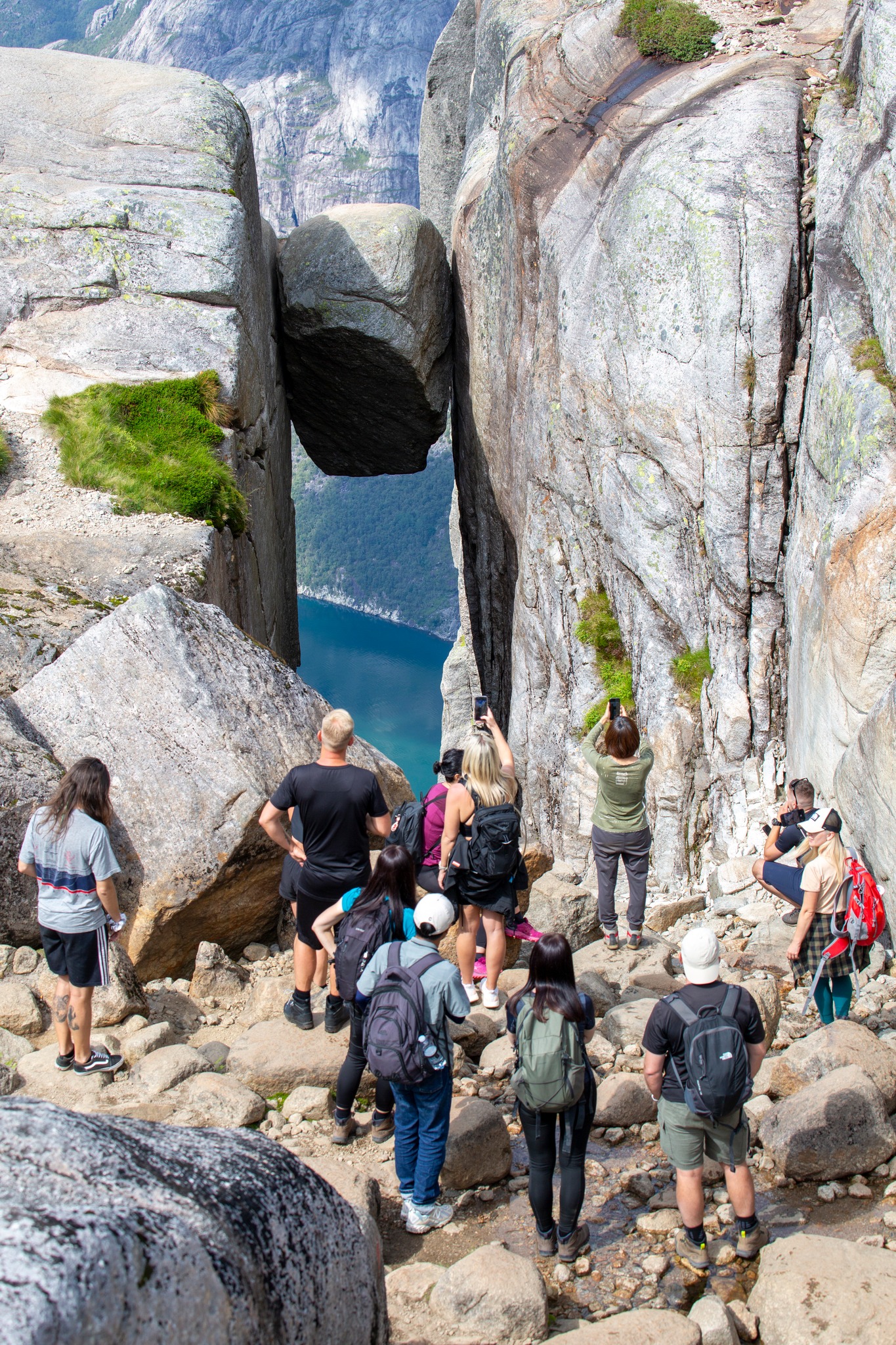
Kjeragbolten is one of those places you know long before you even set foot in Norway. The photograph of a boulder wedged between two rocks, hanging a thousand meters above the fjord’s surface, circulated the world and became a symbol of Norway’s wild nature, courage and freedom.
For us, visiting this place was almost a must. Not only because of the rock itself, but also because of the route, which leads through dramatic landscape full of cliffs, small lakes and views of the Lysefjord. We were also curious how our dog Ibo would handle this iconic hike. The trek to Kjeragbolten is technically manageable, but at times steep and exposed, so we were curious how we would manage it as a three-person party.
Morning introduction
We arrived in the area by the Lysebotn fjord early in the morning from the east via the narrow, winding road number 4224. The drive itself was a powerful experience – from the relatively green parts of Norway we gradually reached more mountainous areas. The road was lined with sheep and the early morning rays added to the exceptional nature of the scenery.
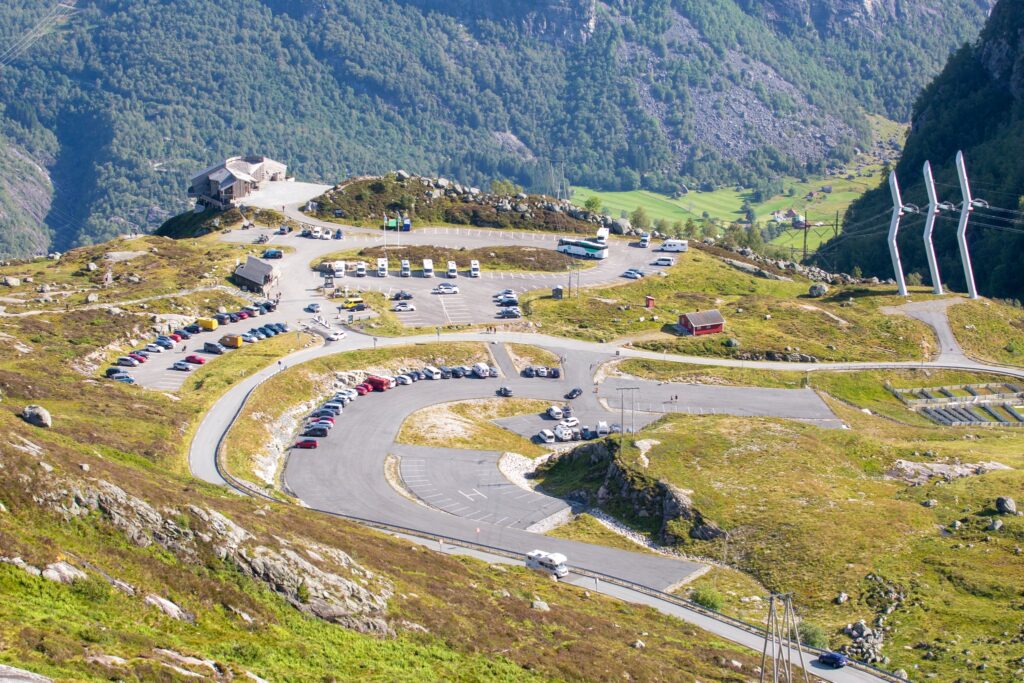
The road descends via famous switchbacks down to the village of Lysebotn. However, we parked a few kilometers away from the official parking lot above the fjord. Although the official trail to Kjeragbolten starts from that parking, parking there costs around €25 per day, so we chose an alternative option.
In the area you can find another parking lot, about just under 2 km up the road, which is completely free. There’s no marked path from it, but you can connect to the trail by a simple traverse. You don’t have to feel too guilty about moving off the marked path here. Movement in nature in Norway is very free and practically legal almost anywhere. A simple rule applies – your safety is entirely your responsibility.
After joining the official hiking trail leading to Kjeragbolten, traffic on the path thickens considerably. A considerable number of tourists head to the attraction. The trail is well maintained, clear and on several sections technically secured.
Along the way we pass the Kjerag Emergency Shelter – a simple structure that can literally save lives in bad weather or in case of unexpected problems.
Although the route is ‘comfortable’, it’s definitely not a walk in the park – even more so if you do it with a dog. Our Ibo handled it without problems, but you had to expect that he would take a dip in every pond along the route.
Steep ascent, steel cable and endless descent
After the initial kilometers comes the most demanding part of the trek – a steep ascent which is secured by a steel cable in exposed places. In wet or windy weather you need to be extra careful here, but the safety cable gives a sense of security.
After gaining the elevation, the terrain eases and a long, gentle, sometimes tiring descent toward the final destination follows. Mentally it’s an interesting section – you know you’re already ‘up’, yet the rock is still far away.
The reward, however, is the views of the Lysefjord, which are among the most iconic in all of Norway. Steep cliffs drop vertically into the depths and you fully realize the rawness and beauty of the Nordic nature here.
Kjeragbolten
Kjeragbolten itself is one of the most famous tourist destinations in Norway. The rock wedged between two cliffs hangs roughly a thousand meters above the surface of the fjord and looks almost unreal.
During our visit there were many tourists and people queued for the iconic photo on the rock. A fall from Kjeragbolten is undoubtedly fatal, but it’s interesting that despite the popularity of this place, only very few fatal accidents have been recorded. Everyone must weigh for themselves how far they want to go.
We return along the same route. The ascent that we had descended earlier now tests your fitness, but knowing that the goal is near makes everything somehow easier. However, the return didn’t go entirely without complications. On one of the slightly steeper sections Ibo decided to jump off a rock down to a lower slab. It was wet and slippery, so after landing he slid uncontrollably another about two meters down. The result was an injured paw and visible limping.
Therefore we preferred to cover the last meters to the car by carrying him in our arms. Fortunately, after a short time it turned out that the injury was not serious and did not require any veterinary intervention. One can only hope that Ibo learned a lesson from this incident.
Despite this small dramatic moment, the trek to Kjeragbolten was a powerful experience for us – not only because of the iconic rock, but also thanks to the company of our dog and the harsh Norwegian landscape that wins you over at first sight.